AI Chatbot for Plumbers: How to Stop Losing Emergency Jobs to Voicemail

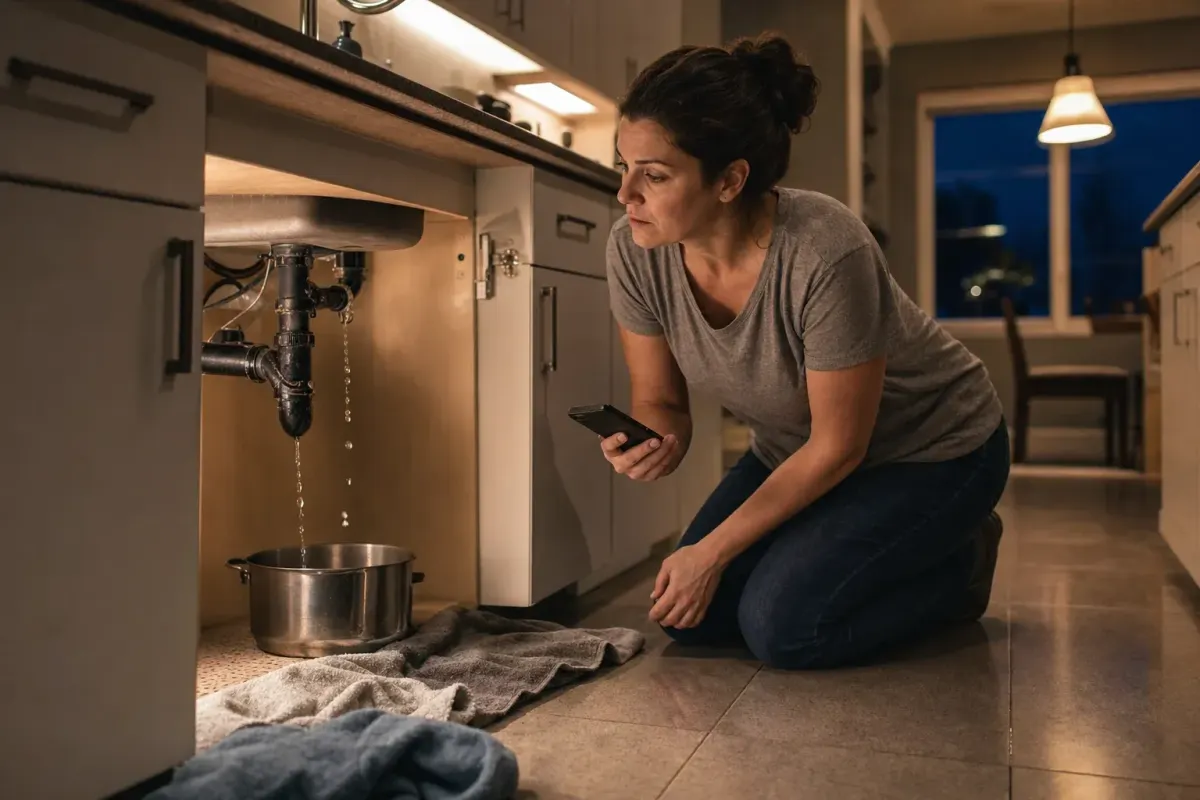
A burst pipe does not wait for office hours. Somewhere in your service area tonight, a homeowner is standing in two inches of water, phone in hand, searching for a plumber. They will contact three or four businesses in the next ten minutes. The first one to respond usually gets the job. If your answer is a voicemail greeting, you have probably already lost it.
The numbers behind this are uncomfortable. Industry call-tracking studies put the average missed-call rate for home-service businesses at around 27%, and for small operations it can run far higher. Roughly 62% of plumbing-related enquiries arrive outside normal working hours, exactly when nobody is at a desk. And when a caller hits voicemail, about 80% hang up without leaving a message. Most never try you again. With an average plumbing ticket sitting around $325 and emergency callouts averaging $450 or more, a handful of missed enquiries a week quietly adds up to tens of thousands of dollars a year.
The traditional fixes all have problems. An answering service costs hundreds a month and reads from a script. Hiring office staff for evenings and weekends makes no sense for a two-truck operation. Forwarding everything to your own mobile means you are quoting drain cleaning from under someone's sink at 9pm.
There is now a fourth option: an AI chatbot trained on your business that answers every written enquiry instantly, around the clock, on your website and your social channels. It sorts the burst pipe from the dripping tap, captures the job details including photos, and sends the urgent ones straight to your phone. This guide covers what a plumbing chatbot can genuinely do, a simple framework for setting one up, the honest ROI math, and how it compares to the phone-answering tools being sold to the trades right now.
The real cost of the enquiries you never see
Most plumbers measure missed work by missed calls, but that undercounts the problem in two directions.
First, the obvious layer: the calls. If your business takes 20 calls a day and misses 27% of them, that is roughly 160 missed calls a month. Even at a conservative 30% booking rate and a $325 average ticket, that is over $15,000 a month in work that rang your number and did not become a job. Industry analyses of plumbing businesses put the realistic annual loss from missed calls alone at $50,000 or more once you strip out duplicates and repeat callers.
Second, the layer almost nobody measures: the enquiries that never become calls at all. A growing share of homeowners, especially younger ones, will not phone a tradesperson as their first move. They visit your website, check your Google profile, or message your Facebook page. They want to know three things before they ever dial: do you cover my area, roughly what will this cost, and can you come today. If your website cannot answer those questions at 9:40pm, they close the tab and try the next plumber on the list. You never see this loss in your call log because it never reached the phone.
Then there is the admin tax on the enquiries you do catch. The first five minutes of almost every plumbing conversation is identical. Where are you located. Do you charge a callout fee. Do you work on gas water heaters. Can you send someone Saturday. Answering those questions one at a time, between jobs, with wet hands, is the least valuable use of a skilled tradesperson's day. It is also the easiest part of the business to automate, because the answers never change.
What an AI chatbot for plumbers can actually do
The word chatbot still makes many tradespeople think of the useless scripted widgets from a few years back, the ones that could only offer four buttons and a phone number. Modern AI chatbots are a different tool. You train them on your own business information, your services, prices, service area, and policies, and they hold a natural conversation drawing on that knowledge. Here is what that looks like in practice for a plumbing business.
Answer the questions that decide whether someone contacts you. Service area, callout fees, hourly versus fixed pricing, which jobs you take on, whether you handle gas, how soon you can typically attend, payment methods, guarantees. The bot answers in plain language, instantly, at any hour, from the information you gave it. No more typing the same reply about your callout fee for the hundredth time.
Capture the job, not just the contact. A trained bot collects what your dispatcher would ask: the problem, the property type, the suburb, access details, name and best contact number. FastBots also lets customers upload photos mid-conversation, which matters enormously in plumbing. A photo of the leaking valve or the corroded water heater tells you in five seconds whether this is a 30-minute fix or a half-day job, before you commit a van to the trip.
Sort the emergency from the routine. The bot can be instructed to treat certain problems differently. Burst pipe, sewage backup, no water, major leak: surface your emergency number immediately and capture the address. Dripping tap, slow drain, quote for a bathroom renovation: gather the details and book it into the normal pipeline. This sorting is the single most valuable thing automation does for a plumber, and it is the core of the framework below.
Respond on the channels homeowners actually use. The same trained bot can cover your website, WhatsApp, Facebook Messenger, and Instagram DMs from one knowledge base. A homeowner who messages your Facebook page at 10pm gets the same accurate answer as one using your website chat.
Send leads to you the moment they land. Every captured enquiry can be emailed to you or your office instantly, and through Zapier, the bot can push job details into thousands of other apps, including field-service tools like Jobber or Housecall Pro, create calendar entries, or fire a notification to your phone. With Zapier AI Actions, the bot can trigger those steps mid-conversation, which is how appointment booking gets automated end to end.
One honest boundary before we go further: FastBots is a text-based platform. It does not answer phone calls, and plumbing is still a phone-heavy trade. The right way to think about a chatbot is not as a replacement for your phone but as a second front door that is always open. It catches the text-first majority of younger homeowners, the after-hours website visitors, and the social media enquiries, while your phone keeps doing what it does. For voicemail overflow, the simplest fix is to mention your website chat in your voicemail greeting so stranded callers have somewhere to go right now.
The Two-Lane Dispatch Desk: a framework for plumbing chatbots
Most chatbot advice treats every enquiry the same. Plumbing does not work like that. A flooded kitchen and a quote request for a new bathroom suite are different businesses wearing the same phone number. One is won or lost in minutes; the other is won or lost on price and trust over days. Your chatbot should run them down two different lanes. We call this the Two-Lane Dispatch Desk, and it has four stages.
Stage 1: Answer
Every enquiry, every channel, every hour, gets an instant first response. This stage is pure speed. The bot greets the visitor, answers their direct questions from your knowledge base, and asks the one question that determines everything that follows: what is happening with your plumbing right now? The goal is that no enquiry, ever, waits until morning for a first reply.
Stage 2: Sort
Based on the answer, the conversation enters one of two lanes.
The emergency lane is for active water damage, sewage, total loss of water, or anything the customer describes as urgent. Here the bot has one job: connect this person to a human as fast as possible. It surfaces your emergency phone number prominently, captures the address and callback number in case the call does not connect, and can pass your approved safety-first instruction, such as where to find the main shutoff valve. What it must never do is improvise repair advice or triage severity on its own. Anything involving a smell of gas gets one scripted response: stop, leave the property, and call the gas emergency line. You write these rules; the bot follows them.
The routine lane is for everything else: quotes, maintenance, non-urgent repairs, renovation enquiries. Here speed matters less than completeness. The bot gathers the job details, requests a photo where useful, answers pricing and availability questions, and moves to capture.
Stage 3: Capture
In the routine lane, the bot collects the full job record: problem description, photo, property details, suburb, preferred timing, name, and contact details. FastBots' built-in lead-capture form emails each lead to you automatically, so a 9pm enquiry about a leaking shower is sitting in your inbox, fully detailed, when you pick up your phone at 6:30am.
Stage 4: Dispatch
Captured jobs need to land wherever you actually manage work. For some plumbers that is an inbox and a wall calendar, and email notifications are enough. For others it is Jobber, Housecall Pro, ServiceTitan, or a Google Calendar. FastBots connects to those through Zapier and Make rather than natively, which takes about twenty minutes to wire up once and then runs by itself. If you want the bot to book appointments directly into your calendar mid-chat, Zapier AI Actions handles that.
The point of the two lanes is discipline. Emergencies get a human fast and nothing slows that down. Routine work gets fully captured and nothing about it interrupts your evening. Most plumbing businesses lose money in both lanes today for opposite reasons: emergencies leak out through slow first response, and routine enquiries leak out through incomplete follow-up.
Why multi-channel coverage matters more in the trades than almost anywhere else
A plumbing enquiry can start anywhere. A neighbour shares your Facebook page in a local group. A property manager finds your website. A previous customer forwards your WhatsApp number. A renter DMs your Instagram after seeing a job photo you posted. Each of those people expects an answer in the channel they chose, and most will not switch channels to chase you.
This is where the niche plumber-marketing tools show their limits. Most are built around exactly one channel, usually the phone. A voice agent that answers your calls does nothing for the homeowner typing into your website chat at midnight, and a website-only widget does nothing for your Facebook page. Covering each channel with a separate tool means separate monthly bills and, worse, separate answers, because each tool gets trained, updated, and forgotten separately.
The platform approach trains one bot on one set of business information and deploys it everywhere: website, WhatsApp, Messenger, Instagram, even Telegram and Slack if you use them. Update your callout fee once and every channel answers correctly five minutes later. For a small business without an office manager, one source of truth is the difference between automation that helps and automation that becomes another thing to maintain.
It also future-proofs the spend. If your enquiry mix shifts over the next two years, say WhatsApp keeps growing in your area, you switch on a channel rather than shopping for another subscription. Plumbers who serve diverse neighbourhoods get one more advantage: FastBots supports 95 languages and auto-detects what the customer writes in, so a tenant who is more comfortable in Spanish or Polish gets answered properly without you doing anything.
The ROI math for a typical two-truck plumbing business
Chatbot vendors love vague promises, so here is the explicit arithmetic. Plug in your own numbers.
Assume a two-truck operation generating 120 written enquiries a month across website chat, Facebook, Instagram, and WhatsApp. That is four a day, modest for a business with steady local search traffic and an active Google profile.
Industry data says roughly 60% of plumbing enquiries arrive outside business hours. Be conservative and call it 40% for written channels: 48 enquiries a month currently landing while nobody is watching. Without automation, most get a reply the next morning at best. If even half of those people have already booked someone faster, that is 24 lost opportunities a month. At a 50% booking rate on recovered enquiries and a blended average ticket of $350 (mixing routine work with the occasional $450+ emergency), recovering them is worth roughly 12 jobs and $4,200 a month.
Now discount it hard. Assume the bot only genuinely rescues a third of those lost opportunities, because some people would have waited for you anyway and some were never serious. That still leaves 8 recovered jobs and about $2,800 a month, or $33,600 a year.
Against that, the cost: the FastBots Essential plan is $39 a month, or $33 a month billed annually, which includes 2,000 message credits, two chatbots, and every channel integration mentioned in this article. Add the hour or two it takes to train the bot on your website and price list. The breakeven question is not whether the bot recovers eight jobs a month. It is whether it recovers one job a quarter. Everything beyond that is margin.
There is a second return that does not show up in the math: the interruptions you stop absorbing. If the bot answers thirty service-area and callout-fee questions a week, that is thirty moments you stayed under the sink instead of reaching for your phone. For owner-operators, that is the difference you feel first. If you want to track the full picture properly, we have published a complete guide to measuring chatbot ROI with formulas and a dashboard you can copy.
How to set up FastBots for your plumbing business: a 7-step playbook
You do not need a developer, and the first working version takes about an afternoon.
Step 1: Gather your knowledge. Your website URL, your price list or rate card, your service-area list, your FAQ answers, and your policies (callout fees, guarantees, payment terms). FastBots trains on crawled web pages, PDFs, Word docs, spreadsheets, and even YouTube videos, so use what you have.
Step 2: Create the bot and train it. Paste your website URL and the crawler pulls your pages in. Upload the price list. The bot can answer questions about your business within minutes of this step.
Step 3: Write the two-lane rules. In the bot's instructions, define the emergency lane: which problems count as urgent, what the bot says, your emergency number, your approved shutoff-valve guidance, and the fixed gas-smell script. Then define the routine lane: what details to collect and when to ask for a photo. Set the tone while you are there. Plain, friendly, and local beats corporate every time.
Step 4: Switch on lead capture. Configure the lead form to collect name, phone, suburb, and problem description, and set leads to email you or your office instantly.
Step 5: Install on your website and connect your channels. The website embed is one line of code, or a plugin if you run WordPress. Then connect Facebook Messenger, Instagram, and WhatsApp so the same bot covers your social enquiries.
Step 6: Wire the dispatch. Connect Zapier or Make and push captured jobs into your field-service software or calendar. If you book jobs directly, set up Zapier AI Actions so the bot can schedule mid-conversation.
Step 7: Test like a customer, then tighten weekly. Message the bot with your ten most common real enquiries, plus a fake emergency, and check every answer. After launch, skim the chat history once a week. Wrong or missing answers become training updates in two minutes. The bot gets noticeably better every week you do this.

Niche plumber tools vs FastBots: an honest comparison
The trades are being aggressively sold AI right now, mostly voice agents that answer your phone. Some are good products. The question is what you need and what it costs.
| Voice AI answering (Rosie, Sameday, Avoca) | Lead-capture suites (LeadTruffle) | Template chat widgets | FastBots | |
|---|---|---|---|---|
| Core channel | Phone calls | Phone + SMS text-back | Website only | Website + WhatsApp + Messenger + Instagram + Telegram + Slack + email |
| Typical price | $49 to $449+/mo, some usage-billed or quote-only | $229 to $629/mo plus $299 onboarding, lead caps per tier | $30 to $150/mo | From $39/mo flat, 2,000 message credits |
| Trained on your business data | Varies, often scripted flows | Partially | Rarely deep | Yes, your site, docs, and price list |
| Photo upload from customers | No | Limited | Rarely | Yes, mid-conversation |
| Emergency vs routine sorting | Yes on higher tiers | Yes | No | Yes, via your instructions |
| Field-software integration | Native on premium tiers | Native on some | No | Via Zapier and Make |
| Answers your phone | Yes | Yes | No | No |
The honest read: if missed phone calls are your single biggest leak and you are ready to spend $300 to $600 a month, a voice agent is a rational purchase, and tools built specifically for high-volume home-service operations do that job well. But for most one-to-three-truck plumbing businesses, the affordable move is to fix the written channels first, where the tooling costs a tenth as much and the setup is an afternoon. Many plumbers will eventually run both: a voice tool on the phone line and one chatbot covering everything typed. If you are comparing FastBots against build-it-yourself agent platforms, we keep an honest comparison on our Voiceflow alternatives page.
The same logic applies across the trades. The playbook in this article works nearly unchanged for construction companies and cleaning services, where after-hours quote requests follow the same pattern.
Common mistakes plumbers make with their first chatbot
Training it once and walking away. The bot is only as current as what you taught it. Prices change, service areas expand, and the chat history shows you exactly what customers asked that the bot could not answer. Ten minutes a week keeps it sharp.
Letting it improvise on safety. Out of the box, a general AI model will happily suggest DIY fixes. Yours must not. Lock the emergency-lane scripts down in the instructions: approved shutoff guidance only, gas smells get the gas emergency line, everything else routes to your phone.
Hiding the emergency number behind the conversation. In the emergency lane, the phone number appears in the first response, not after five questions. The capture details are a fallback for when the call does not connect, never a gate in front of it.
Treating every lead the same after capture. A captured emergency that gets a callback at 9am is a failure; a captured quote request answered at 9am is a success. Your follow-up routine needs the same two lanes the bot has.
Forgetting the channels beyond the website. The website widget is the obvious first install, but for many plumbers the Facebook page is where the local enquiries actually arrive. Connect the social channels in week one, not month six.
Expecting it to replace the phone. It will not, and it is not supposed to. It catches everything the phone misses and everyone who was never going to call in the first place.
FAQ
What does an AI chatbot for plumbers actually cost? Niche tools for the trades run from about $49 a month for basic voice answering to $629 or more for full lead-capture suites, often with onboarding fees and per-lead caps. A multi-channel text platform like FastBots starts at $39 a month flat, with a free plan to test on.
Can a chatbot handle plumbing emergencies? It can recognise one and respond correctly: show your emergency number immediately, capture the address and callback details, and pass on your approved safety guidance such as locating the shutoff valve. It should never diagnose severity on its own or offer repair advice, and you control that through its instructions.
Can customers send photos of their plumbing problem? Yes. FastBots supports file and image uploads inside the conversation, so a customer can send a photo of the leak or the fixture and you can scope the job before dispatching a van.
Will it work with Jobber, Housecall Pro, or ServiceTitan? Not natively, but through Zapier and Make the bot can push captured job details into those tools, create calendar bookings, and trigger notifications. The connection is a one-time setup of about twenty minutes.
Does it answer phone calls too? No. FastBots is text-based: website chat, WhatsApp, Messenger, Instagram, Telegram, and Slack. If most of your missed work comes through the phone line specifically, a voice agent is the complementary tool for that job.
How long does setup take for a plumbing business? A working first version takes an afternoon: train on your website and price list, write the emergency and routine instructions, switch on lead capture, and embed the widget. Connecting social channels and Zapier adds an hour or two more.
Do I need a website to use it? No. The bot can run on WhatsApp, Messenger, and Instagram without a website widget, though a website install is worth having since that is where local search traffic lands.
What if the bot cannot answer a question? It tells the customer it will pass the question to the team and captures their contact details, so the enquiry is never lost. On the Business plan, the Knowledge Assistant flags every question the bot could not answer so you can add the correct response to its training.
Stop paying for the leads you already get
Most plumbing businesses do not have a lead problem. They have a response problem. The enquiries are arriving, through search, through referrals, through the Facebook page, and a large share of them land while you are under a floor or asleep. Every one that goes unanswered for twelve hours was paid for, by your marketing spend or your reputation, and then quietly handed to a competitor.
An AI chatbot does not fix everything. It will not answer your phone and it will not unblock a drain. What it does is keep your front door open around the clock for a tenth of what the trades-specific tools charge, sort the floods from the drips, and put every job worth winning in your inbox with the details and the photo already attached.
We built FastBots so a business owner can set this up without writing a line of code. Train it on your website this afternoon, run the two-lane setup from this guide, and see what was leaking past you. There is a free plan to test with and no contract on any tier. Start with the FastBots plumbing chatbot page and have it answering your customers tonight.