Your Guide to Live Chat Software for Ecommerce

Imagine having a digital sales expert on every single page of your online store, ready to help a customer the moment a question pops into their head. That's the power of modern live chat software for ecommerce. We see this not just as another support tool, but as a proactive engine for growth that can drive sales and build the kind of trust that keeps your customers coming back.
Why Live Chat Matters for Your Store

The way people shop online has changed. Your customers expect immediate answers and personalized help, much like they would get in a physical store. Waiting for an email response can be a deal-breaker when a competitor is just one click away.
This is where live chat makes a real difference. It bridges the gap between someone passively browsing your site and having a helpful, interactive conversation. It effectively turns your website from a static product catalog into a dynamic sales floor.
Think of it as the digital version of a great store associate who knows exactly when to ask, "Can I help you find something?" Instead of letting a visitor with a question leave your site, you can engage them on the spot, solve their problem, and guide them toward a purchase.
Data Shows Real Growth
This shift is more than just a trend; it's a reflection of a rapidly growing market. The global live chat software market was valued at around USD 1.07 billion in 2026 and is projected to reach USD 1.79 billion by 2032, largely fueled by the growth of ecommerce.
For businesses, this translates to tangible results. When you provide the instant, helpful interactions that today's shoppers expect, you're not just a store anymore. You become a trusted advisor, which is key to improving conversion rates and building lasting customer loyalty.
Core Capabilities of Ecommerce Live Chat Software
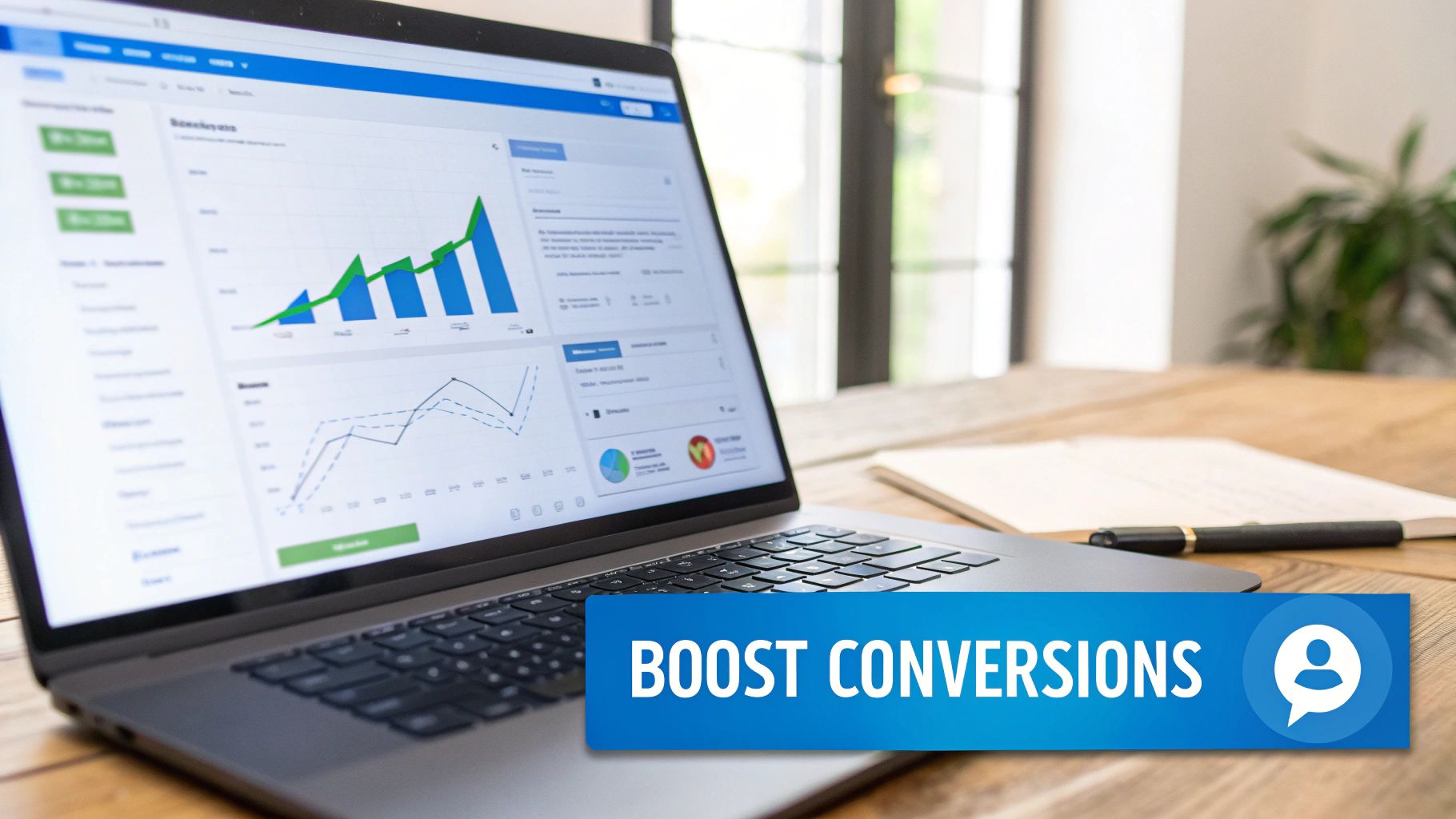
When you look for live chat software for ecommerce, you need a suite of features built for the fast-paced world of online retail. Let's break down what separates a simple add-on from a genuine growth engine for your business.
Boost Conversions and Average Order Value
One of the most powerful things live chat does is directly boost sales. When customers get immediate answers about product features, sizing, or shipping, their confidence to click "buy" typically increases.
For example, imagine a visitor at your online boutique hesitating over a jacket. A proactive chat can pop up offering to confirm their size or share a video of the material. This small, helpful nudge is often all it takes to move that item into their shopping cart. In fact, many reports suggest customers who use live chat can spend significantly more per purchase than those who don’t.
Build Lasting Customer Loyalty
Loyalty is built on the entire experience, not just a good product. Live chat is a fantastic tool to improve customer experience, creating the kind of loyalty that drives repeat business. When your customers know they can get help in a flash, they feel valued and are more likely to return.
Consider a tech gadget store. A customer has a quick question about setting up their new device. A fast, helpful chat session that solves their problem in minutes leaves a lasting positive impression, turning a one-time buyer into a loyal fan. You can learn more about the benefits of live chat for ecommerce in our detailed guide.
Must-Have Features in Your Live Chat Software
To achieve these results, you need the right tools. Look for proactive chat triggers that engage customers at key moments, such as when they are lingering on a product page or hesitating at checkout. This can be a game-changer.
Automation and AI are also crucial. An AI chatbot trained on your product catalog can answer common questions 24/7, freeing up your team for more complex issues. For a deeper look, check out our guide on the 10 must-have features in an AI chatbot creator.
Finally, ensure the software integrates with your other tools, like Shopify or WooCommerce, and provides solid analytics. Without data on chat volume, response times, and conversion rates, you're just guessing.
How to Implement Live Chat in Your Store

Adding live chat to your ecommerce store isn't a complex project. It's about making a few smart choices that align with your brand and business goals. We'll walk you through the essential steps to create a seamless experience that feels like a natural part of your store.
Step 1: Customize Your Chat Widget
First, your chat widget needs to look like it belongs on your website. Most modern platforms offer extensive customization options. Tweak the colors, fonts, and logo to match your site’s design perfectly.
Next, write welcome messages that reflect your brand's voice. Whether you're fun and casual or professional and direct, this first impression counts.
Step 2: Place the Widget Strategically
You don't need the chat widget on every single page. Place it on high-intent pages where a customer is most likely to have a question.
Key locations include product pages (for feature questions), pricing pages (to clarify plans), and the checkout process. A widget at checkout can tackle last-minute concerns about shipping, directly fighting cart abandonment.
Step 3: Build Your Knowledge Base
For an AI-powered chatbot to be helpful, it needs information. This knowledge base is what your AI uses to provide accurate answers. You can often train it by simply uploading existing documents or pointing it to relevant pages on your site.
Start with the essentials: your shipping policies, return procedures, and product details. This initial training will empower the AI to handle most common questions from day one.
Platforms like FastBots.ai make this process incredibly straightforward. You can upload data and configure your bot’s personality in just a few minutes, without needing any technical skills.
Actionable Takeaway: Implementation Checklist
Before you go live, run through this quick checklist to ensure a successful launch.
- [ ] Customize Widget: Have you updated the widget's colors, logo, and welcome message to match your brand?
- [ ] Define Placement: Have you chosen the key pages where the chat widget will appear?
- [ ] Train the AI: Have you uploaded core documents (FAQs, policies, product info) to the knowledge base?
- [ ] Set a Persona: Have you configured the chatbot's tone to align with your brand voice?
- [ ] Establish Handover: Do you have a clear process for when a chat needs to be escalated to a human agent?
What to Watch Out For: Limitations and Considerations
While live chat is a powerful tool, it's not a magic fix. If it's handled poorly, it can create more frustration than it solves. To build trust with your customers, it’s important to be aware of the potential trade-offs and plan for them.
One of the most common pitfalls is slow response times from human agents. A long wait can be worse than having no chat at all. This often happens due to understaffing or limited hours of operation, which defeats the purpose of offering an "instant" channel.
Another issue to watch for is providing inconsistent or incorrect information. This can happen if your AI isn't trained properly or if your human agents don't have access to a centralized knowledge base. Inaccurate answers can quickly erode customer trust.
A purely AI-driven solution offers 24/7 availability but may struggle with highly complex or emotional customer issues. Conversely, a human-only team provides empathy but is costly and not always available. A hybrid model, where AI handles routine queries and escalates complex ones to a human, is often the most effective approach.
Conclusion: Your Next Steps
Embracing live chat software for ecommerce is about more than just adding a new feature. It's a strategic move to meet modern customer expectations, reduce friction in the buying process, and build lasting relationships.
By providing instant, helpful answers, you can significantly boost conversions and foster the kind of loyalty that turns one-time buyers into repeat customers. The key is to choose the right tool, implement it thoughtfully, and avoid common pitfalls.
Ready to see how this can transform your customer conversations and drive more sales? With a modern platform, you can build a custom AI chatbot trained on your own data in minutes, no coding needed.
Start your free trial today and see the difference for yourself.