A Practical Guide to Live Chat Software Comparison

Choosing the right live chat software isn't just an IT decision; it's a strategic move that can directly impact your sales and customer loyalty. This is no longer a simple support widget tucked in the corner of your website. It’s a frontline tool for turning curious visitors into committed buyers.
Our detailed live chat software comparison will walk you through picking the perfect platform for your business. We'll look at the core features, the role of AI, and what to watch out for to help you make a smart choice.
Why the Right Live Chat Tool Is a Game Changer

We live in a world of instant answers. Your choice of live chat software is now a defining part of your customer experience. It’s evolved far beyond a basic support channel and has become a central hub for marketing, sales, and service—all increasingly supercharged by AI and automation.
This isn't just a hunch; the market data backs it up. The global live chat software market was valued at $755.23 million in 2020 and is on track to hit $1.7 billion by 2030. This growth is largely fueled by e-commerce, where shoppers demand immediate support that old-school channels just can't deliver.
Driving Sales and Capturing Leads
One of the first places you'll see a real impact from live chat is your sales pipeline. When a potential customer is on your pricing page with a quick question, a real-time answer can be the nudge that turns them from a prospect into a customer. It closes the gap between consideration and conversion.
For example, an e-commerce store might use a proactive chat to pop up when someone has items in their cart for more than five minutes. A simple "Hey, need any help checking out?" can be enough to overcome last-minute hesitation and slash cart abandonment rates. Delivering a first-class sales experience is about being there in the moment, and live chat is your best tool for the job.
Boosting Customer Loyalty and Satisfaction
Beyond the initial sale, live chat is a powerhouse for building lasting customer relationships. It gives your customers a direct, personal line to you, making them feel heard and valued. Fast, effective support can turn a potentially frustrating experience into a surprisingly positive one.
When a customer gets an issue resolved in two minutes via chat versus two days via email, their perception of your brand improves dramatically. That speed and convenience are what modern customer service is all about. More businesses are seeing the benefits of using live chat platforms for customer support, from better team efficiency to soaring satisfaction scores.
Comparing Core Capabilities of Live Chat Platforms
When you start digging into live chat software, you quickly realize they aren't all created equal. Sure, most offer a basic chat window, but the real difference lies in what's happening behind the scenes. To find a tool that moves the needle for your business, you have to look past the surface-level features.
The biggest split comes down to intelligence and automation. Some tools are just a straightforward way for your team to talk to customers in real time, which is a solid start. But the more advanced platforms use AI to manage entire conversations, answer questions, and even qualify leads before a human agent ever gets involved. This is the key difference between scaling your support and simply overwhelming your team.

AI Chatbots Versus Rule-Based Bots
One of the first forks in the road you'll hit is the type of chatbot on offer. A rule-based chatbot is essentially a flowchart. It follows a fixed script and can only respond to specific keywords or predefined paths. It’s useful for simple, repetitive tasks, like pointing a user to your pricing page.
An AI-powered chatbot, like the ones you can build with FastBots.ai, is a whole different beast. It’s trained on your actual business content—your website, help docs, and product info. This allows it to understand context and answer complex, unscripted questions with genuine accuracy. A customer can ask, “What’s your return policy for items bought on sale?” and the AI bot can pull the precise answer from your knowledge base, 24/7.
A rule-based bot is like a directory assistance operator who can only connect you to a specific department. An AI chatbot is like an experienced team member who knows the company inside and out and can answer nuanced questions on the spot.
The Importance of Seamless Human Handover
No matter how smart a chatbot gets, some conversations will always need a human touch. That’s why a smooth human handover process is non-negotiable. When a customer's question gets too complex or they're clearly frustrated, the AI needs to be able to seamlessly pass the chat—along with the full conversation history—to a live agent.
A clunky handover is a massive friction point. Nothing makes a customer angrier than having to repeat their problem to a human after they just spent five minutes explaining it to a bot. The best systems make this transition invisible. For a deeper dive into what separates the best from the rest, check out our guide on the top live chat software choices for 2024.
Integration Ecosystems and Omnichannel Support
Modern customer service doesn't just live on your website. The ability to integrate with the tools you already use and the channels where your customers are is critical. Connecting live chat with messaging apps like WhatsApp and Facebook Messenger is completely changing the game, accounting for over 50% of new growth in the market. (Explore more data on live chat market growth).
Look for platforms with a rich integration ecosystem, especially those that connect with tools like Zapier or Make.com. This lets you sync your live chat with your CRM, email marketing software, and help desk systems. Imagine a new lead from a chat conversation automatically getting added to your HubSpot CRM and dropped into a follow-up email sequence. That's the power of a connected system.
Live Chat Capability Comparison Matrix
This side-by-side comparison shows key capabilities across popular live chat software categories, helping you identify which features are essential for your business.
| Capability | Basic Live Chat | AI-Powered Platform (e.g., FastBots.ai) | Enterprise Suite | Why It Matters for You |
|---|---|---|---|---|
| Automation Level | Manual responses only | AI-driven conversations, lead qualification, 24/7 support | Complex, multi-step workflows | Frees up your team from repetitive questions and provides instant support. |
| Chatbot Type | None or simple rule-based | Conversational AI trained on your data | Custom-coded, rule-based & AI hybrids | Determines whether you can answer complex, unscripted questions or just basic FAQs. |
| Human Handover | Basic transfer | Seamless handover with full context | Integrated with advanced ticketing systems | A smooth handover prevents customer frustration and improves resolution times. |
| Integrations | Limited, often native only | Extensive via Zapier/Make, APIs, direct integrations | Deep, custom enterprise integrations (e.g., Salesforce) | Connects your support function to your entire tech stack, automating workflows. |
| Deployment Channels | Website only | Website, WhatsApp, Messenger, Telegram, and more | Fully omnichannel, including SMS and in-app | Meets your customers where they are, instead of forcing them to your website. |
| Scalability | Best for small teams | Highly scalable for SMBs and growing teams | Built for large, multi-departmental organizations | Ensures the tool can grow with you without breaking the bank or your processes. |
| Analytics | Basic metrics (chat volume, response time) | Conversation insights, user behavior, lead data | Advanced, customizable BI dashboards | Helps you understand what your customers are asking and how to improve your service. |
This matrix should give you a clearer picture of what to expect. The right choice isn't about getting the most features; it's about finding the right type of tool that aligns with your team's size, technical resources, and ultimate business goals.
How to Implement Live Chat: A Step-by-Step Guide
So, you're ready to get started. Implementing live chat software, especially an AI-powered one, can seem daunting, but it's more straightforward than you might think. We'll break it down into a few manageable steps.
Step 1: Train Your AI On Your Own Content
The first step with modern AI platforms like FastBots.ai is giving your bot a brain. You can upload PDFs, spreadsheets, and even link to your website, giving the AI a massive knowledge base to work with.
This means your bot can provide instant, context-aware answers 24/7. Your customers get the information they need right away, which frees up your human agents to handle high-value conversations. It’s not about replacing people; it's about empowering your team. For instance, an e-commerce bot can juggle thousands of questions about return policies during a holiday rush, while a B2B software bot can qualify leads by asking smart questions about company size and needs.
Step 2: Build Autonomous Workflows with Automation
Beyond just answering questions, modern live chat tools can take action. This is where automation kicks in, connecting your chats to the other software you use. Using tools like Zapier or Make.com, you can build powerful, hands-off workflows.
Think about the entire customer journey. A visitor asks your chatbot a few questions and gets qualified as a solid lead. Through an integration, the bot can check an agent’s calendar, offer up available time slots, and book the meeting right then and there—all without a human lifting a finger.
You can set up workflows for:
- Lead Syncing: Automatically push contact details from chats into your CRM, like HubSpot or Salesforce.
- Appointment Booking: Let customers schedule calls or demos directly inside the chat window.
- Support Tickets: Create a new ticket in your help desk software like Zendesk when a chat needs escalation.
- Email Follow-ups: Add new contacts to a specific email nurture sequence in Mailchimp.
These automated actions create a smooth engine for engagement and sales. The same ideas apply across different channels, too. If you want to see how this works on social media, you can explore resources on Instagram Direct Message automation.
Step 3: Deploy Across Your Key Channels
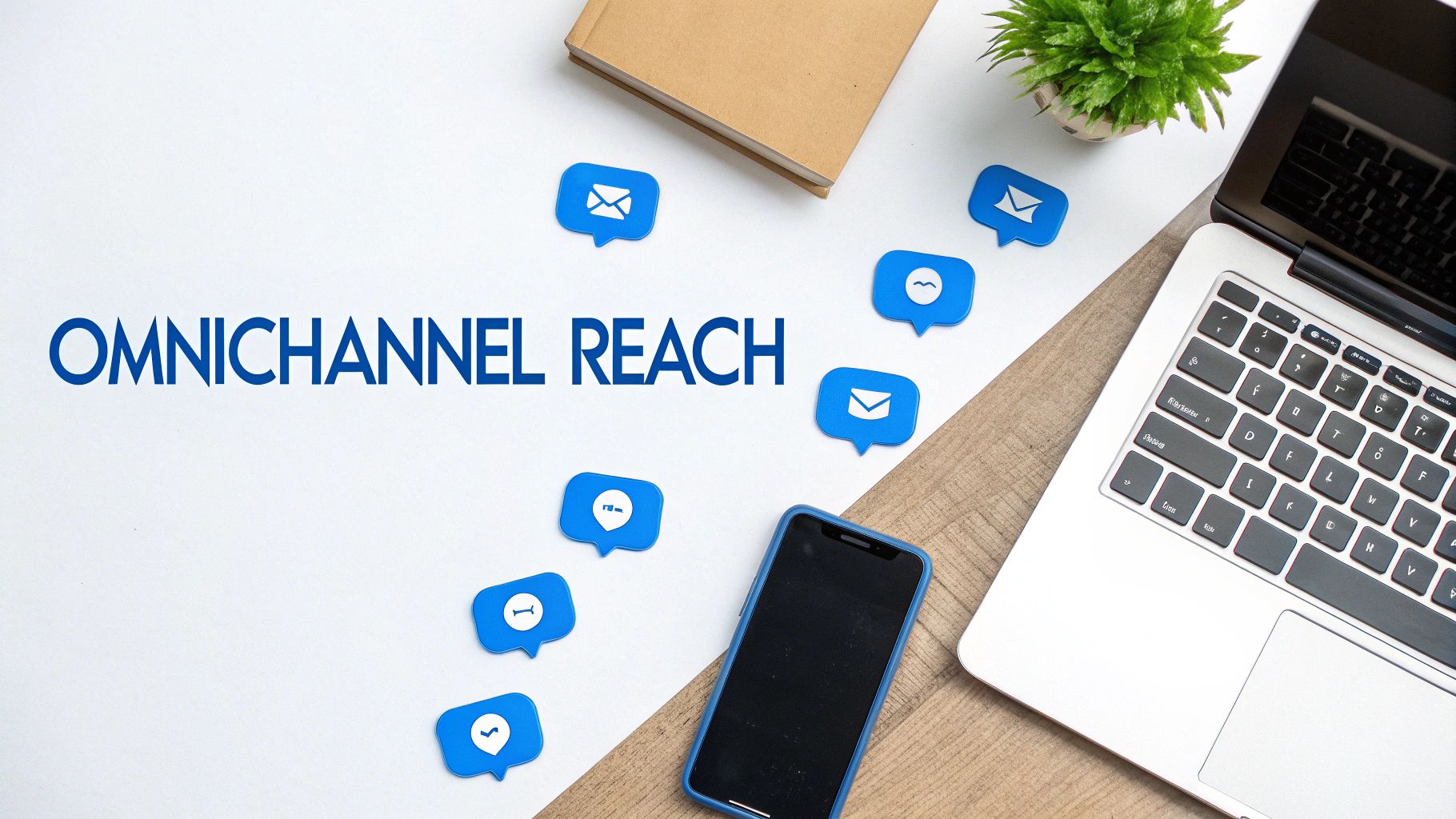
A website widget is just the beginning. Real conversations today are scattered everywhere. An omnichannel presence means delivering a consistently great experience whether someone is on your website, pinging you on Facebook Messenger, or connecting through WhatsApp.
The goal is to make getting help feel completely effortless. If a customer has to leave their favorite app to go hunt down the "Contact Us" page on your website, you've already added unnecessary friction. Platforms like FastBots.ai are built for this, offering native integrations for major messaging apps so you can deploy one smart chatbot across every touchpoint.
What to Watch Out For: Limitations and Considerations
Live chat software can feel like a game-changer, but it’s not a silver bullet. To make a smart investment, you need to look past the flashy features and be realistic about the potential trade-offs.
One of the quickest ways to frustrate customers is by setting the wrong expectations. Be transparent about when a bot is handling the conversation versus a human. If you're not available 24/7, make your business hours clear. This simple honesty builds trust.
The Hidden Effort of Training and Maintenance
While many platforms are "no-code," a truly effective AI system needs a proper strategy. You’ll have to invest time training your AI chatbot on your company’s knowledge so it gives helpful answers. A poorly trained AI can do more harm than good, creating a dead-end experience that erodes trust.
This isn't a "set it and forget it" tool; it needs ongoing monitoring and tweaking. A chatbot is only as smart as the data you give it. An initial investment in curating high-quality training materials—like detailed FAQs and product guides—will pay off tenfold.
Navigating Security and User Experience Hurdles
Don't overlook data security. When you’re handling customer information, you must be certain the platform complies with regulations like GDPR. This is non-negotiable for industries like finance or healthcare.
Finally, the handoff from a chatbot to a human agent is a make-or-break moment. A clunky process where customers have to repeat their issue is a fast track to a terrible experience. The best systems make this transition feel invisible, giving the human agent the full chat history and context. Our guide on how to pick the perfect live chat platform digs deeper into these considerations.
Conclusion: Making Your Final Choice
Alright, let's put all this theory into practice. Choosing the right tool in a crowded market can feel overwhelming, but a simple framework makes all the difference. This checklist is designed to guide you through a proper live chat software comparison.
Actionable Takeaway: Quick Checklist for Choosing Software
Before you sign up, run through this quick checklist to vet your options.
- Define Your Primary Goal: Are you trying to increase lead conversions, reduce support tickets, or provide 24/7 service? Your "why" dictates which features are mission-critical.
- Evaluate AI Capabilities: Can the AI learn from your specific business content? Is the handover to a human agent seamless and context-aware?
- Check Integrations and Channels: Does it support the channels where your customers actually are (like WhatsApp or Messenger)? Does it connect with your CRM and help desk, perhaps through tools like Zapier?
- Verify Security and Compliance: Is the platform compliant with regulations like GDPR? How is customer data stored and protected?
- Assess Pricing and Scalability: Does the pricing model make sense for your budget? Can the platform grow with you without forcing you into an expensive enterprise plan?
The last, and arguably most important, step? Run a trial. Nothing beats testing the software with real-world scenarios from your own business to see how it truly performs.
Ready to see how an AI-powered chatbot can transform your customer engagement? FastBots.ai lets you build a custom chatbot trained on your own data in minutes. Start your free trial today and experience the future of live chat.