Lead Generation Chatbots: A Guide to Smarter Conversions

Let's be honest: the old-school lead capture form isn't cutting it anymore. It’s a passive, one-sided experience that puts all the work on your website visitors, often creating a roadblock right when they’re most interested. Lead generation chatbots are flipping that script, swapping lifeless forms for dynamic, 24/7 conversations that engage and guide your potential customers.
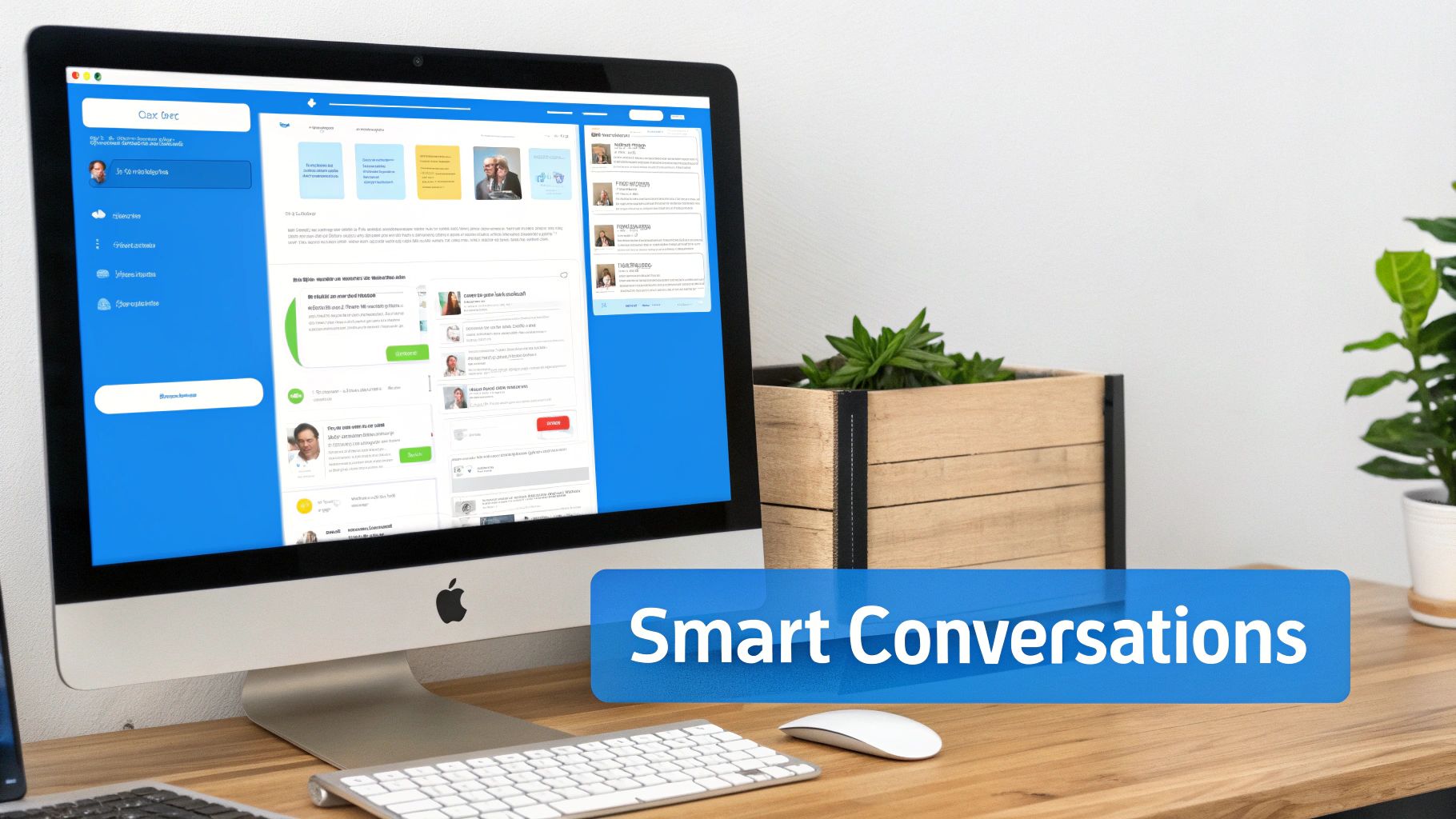
From Static Forms to Smart Conversations
Think about the last time you filled out a "Contact Us" form. You punched in your details, hit submit, and then… crickets. You were left waiting, wondering if your message even made it through. This one-way street is a classic drop-off point for potential leads.
This is where conversational AI completely changes the game. Imagine a visitor lands on your site, and instead of being met with a form demanding their info, they’re greeted by a helpful assistant. This bot can instantly answer questions, figure out what they need, and collect their details through a simple, natural chat.
It’s a fundamental shift from a system that passively waits for leads to one that actively creates them.
The Problem with Traditional Forms
For years, web forms were the only game in town, but they’re riddled with issues that can hurt your bottom line. They often feel like homework, offer little value in return, and are a big reason why average website conversion rates can be disappointing.
Here’s a quick rundown of where they typically fall short:
- High Friction: Every field a user has to fill out is another opportunity for them to give up and leave.
- Impersonal Experience: A form treats every visitor exactly the same, ignoring their unique questions.
- Delayed Gratification: People send their info into a black hole with no immediate feedback or clarity on what happens next.
- Poor Data Quality: Rushed users often make typos or leave fields blank, giving your sales team bad data.
The Conversational Advantage
In stark contrast, lead generation chatbots turn this process into an interactive experience. They connect with visitors at their peak moment of interest, giving them instant answers and building rapport from the very first click. A well-designed chatbot can turn a casual browse into a productive conversation, just like a great salesperson would.
For businesses looking to make this jump, learning about strategies like Mastering Live Chat for Business Growth can be a great first step. This approach isn't just about capturing leads; it's about qualifying them in real time.
By asking the right questions, a bot can figure out if a visitor is a good fit for your business before their details ever land in your CRM. This saves your sales team from chasing dead ends and lets them focus on high-quality, sales-ready prospects. You can even take this a step further and build a complete no-code conversational landing page bot, replacing the entire page with an interactive dialogue.
Why Chatbots Are a Lead Generation Powerhouse
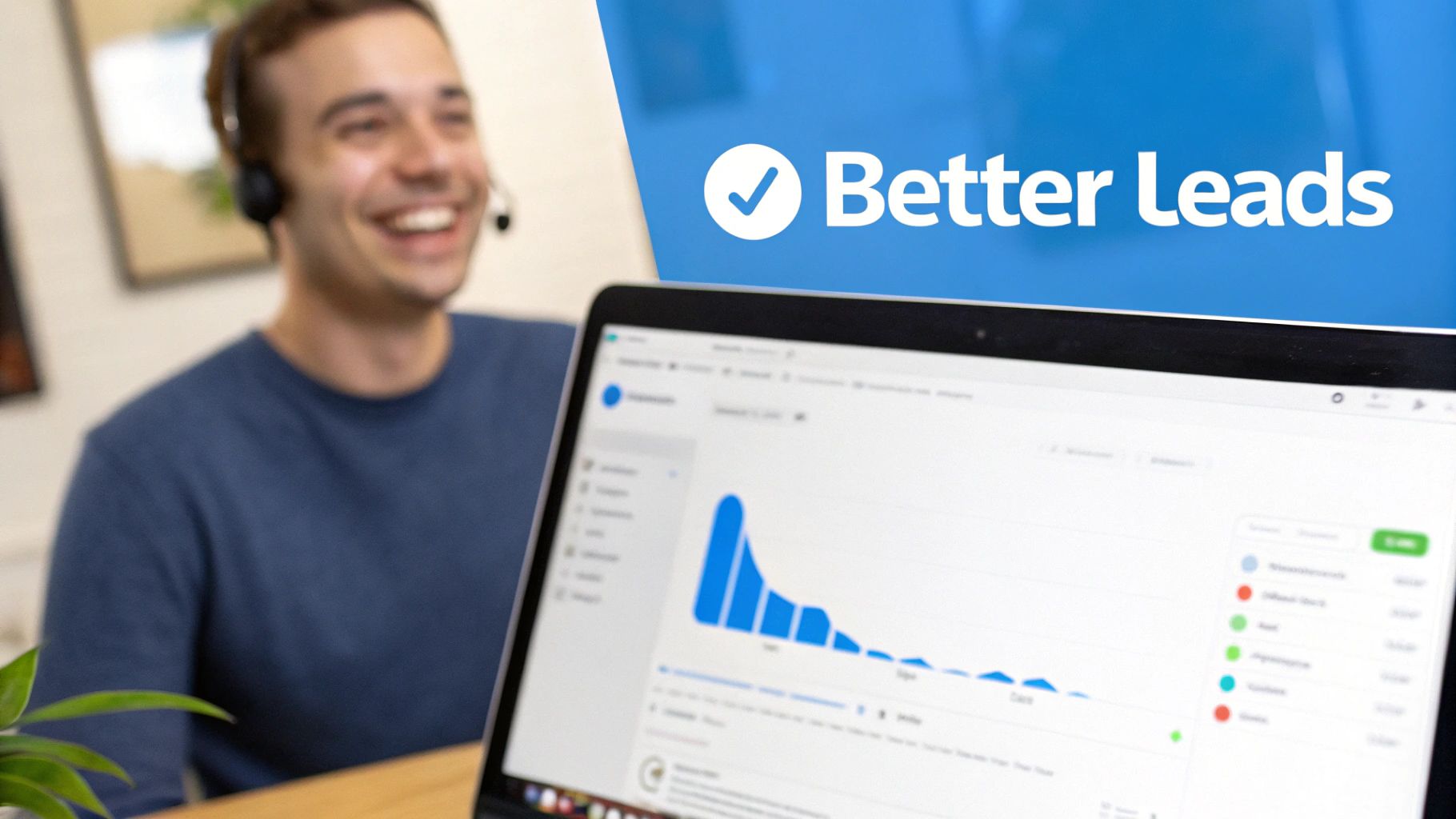
So, what's the real impact of switching from a static form to a smart chatbot? It’s not just about being trendy. Using lead generation chatbots is a strategic move with clear, measurable benefits for your sales pipeline.
The first thing you'll likely notice is a jump in conversions. Think about it: when someone lands on your site, their interest is high. A chatbot engages them right then and there, catching them before they get bored and click away from an impersonal form.
Boosting Conversion Rates and Lead Quality
Chatbots smooth out the lead capture process by offering instant answers and a guided experience. Instead of making people dig for information, you’re serving it up through a simple chat. That proactive touch is what keeps potential customers on your site and nudges them toward taking the next step.
The numbers back this up. Some studies show that websites using AI chatbots have seen a significant increase in conversion rates. Better yet, leads that come from a chatbot often convert at a higher rate than form submissions, and many businesses report that chatbot leads are higher quality. You can explore more chatbot conversion statistics to get the full picture.
For example, a marketing agency we know switched their "Request a Quote" form to a chatbot. The bot asked a few simple qualifying questions about budget and services needed. They saw a 40% increase in qualified leads within the first month because the bot filtered out unqualified inquiries and provided instant value.
This boost in quality is where chatbots really shine. They don't just grab an email address; they can qualify leads on the spot. A well-designed chatbot acts as your frontline sales development rep, available 24/7. It asks the right questions to understand a visitor's needs, budget, and timeline, ensuring your sales team’s time is spent on genuinely promising opportunities. We have a guide that breaks down exactly how chatbots qualify leads with targeted questions.
Achieving Operational Wins and Scalability
On top of better lead metrics, chatbots offer serious operational perks. For starters, think about scale. A single chatbot can juggle hundreds of conversations at once without ever dropping the ball or slowing down.
No human team could match that. By automating the front end of the conversation, you free up your people from repetitive tasks. This lets them focus on solving complex problems and building relationships with high-value leads. The result? A lead generation engine that runs 24/7, more efficiently and cost-effectively.
Anatomy of a High-Performing Chatbot
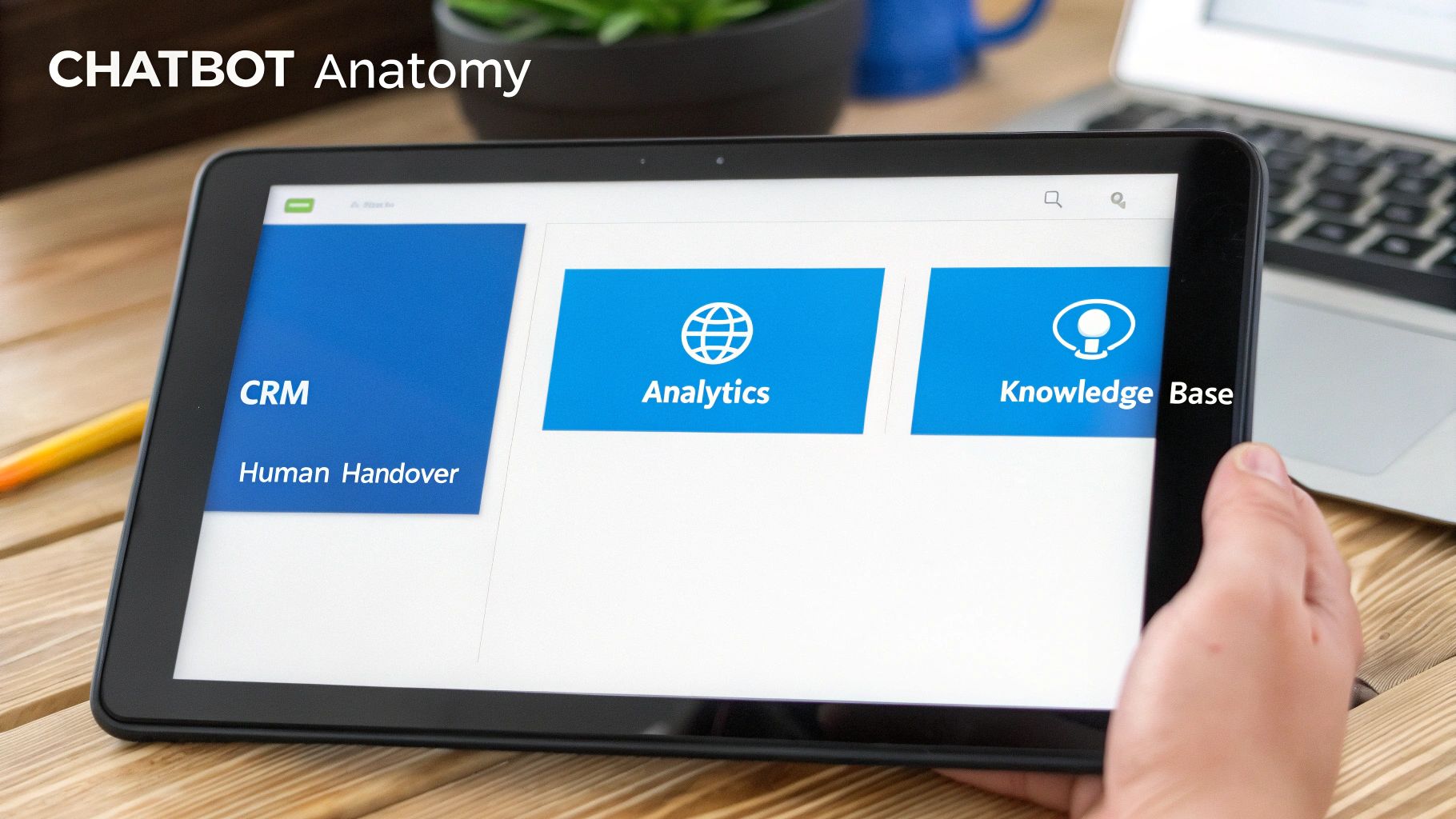
Not all lead generation chatbots are created equal. Some are just glorified contact forms asking the same dull questions. Others are genuinely smart conversation partners that actively move your business forward. Knowing the difference is key to getting real results.
Let's look at the essential components that turn a basic bot into a lead-generating machine.
Custom Knowledge Base
The most important part of any chatbot is its brain—the knowledge base it pulls answers from. A generic bot gives generic answers, which is a fast track to frustrating your visitors. A high-performing chatbot, on the other hand, is trained on your specific data.
At FastBots.ai, we let you build a custom knowledge base from all sorts of sources. You can train your bot using:
- Website Content: Just drop in a URL, and the bot learns everything on your site.
- Documents: Upload PDFs, DOCX files, and spreadsheets with product specs or pricing.
- Multimedia: You can even feed it YouTube video transcripts to teach it from your video content.
This ensures your chatbot gives accurate, context-aware answers that sound like they come from your brand. It can handle detailed product questions with confidence because it's speaking from your single source of truth.
Seamless Integrations
A chatbot that can't talk to your other business tools is a conversational dead end. For a lead generation chatbot to be truly useful, it must connect with the software you already use, especially your Customer Relationship Management (CRM) system.
When a bot qualifies a hot lead, that info needs to get to your sales team immediately. Integrations, often handled through platforms like Zapier or Make.com, automate this process. A new lead can instantly add a contact in HubSpot, create a deal in Salesforce, or ping your team on Slack. This eliminates manual data entry and makes sure no lead goes cold.
Intelligent Human Handover
Automation is great, but wisdom is knowing when to bring a human into the loop. Some questions are too complex for a bot, and some high-value leads deserve the personal touch of a sales rep. This is where a human handover feature is non-negotiable.
A smart chatbot knows when to pass the baton. For example, if a user asks about enterprise pricing or mentions an urgent, complex problem, the bot can smoothly transfer the chat to a live agent. This creates a seamless experience for the customer and makes sure your most valuable opportunities are handled by your best people.
What to Watch Out For: Limitations and Considerations of a lead generation chatbot
While chatbots are powerful, it's important to be realistic. A chatbot is only as good as the data it’s trained on. If your website content is outdated or your documents are a mess, the bot's answers will reflect that. You’ll need to commit to keeping its knowledge base fresh.
Also, integrations require some setup. While tools like Zapier make it much easier, you still need to map out your workflows to get data flowing to the right places. For example, you must decide which chatbot responses trigger a new lead in your CRM versus just an email notification.
Finally, a human handover only works if you have people ready to respond. You need a clear process for who responds and when. A chatbot can’t fix a broken internal process; it can only highlight where the cracks are.
How to Build Your First Lead Generation Chatbot
Ready to dive in? Building your first lead generation chatbot is more approachable than it sounds, especially with modern no-code platforms. You don't need to be a developer to get a bot live that captures and qualifies leads for you 24/7.
The real work isn't in the code; it's in the strategy. It’s about figuring out your goals, sketching out a conversation that helps people, and making sure the bot integrates smoothly into your existing sales workflow.
Let's walk through the key steps to get your first bot off the ground.
Define Your Primary Goal
Before you write a single line of dialogue, ask yourself: what is the main goal? A clear objective will shape every decision you make, from the questions your bot asks to the tools it needs to connect with.
Is the primary mission to book more sales demos? Grow your email list? Or just filter out unqualified inquiries from the serious ones?
Start by pinpointing the essential info your sales team needs. For a B2B company, that might be company size, job title, and the specific problem they're trying to solve. For a service business, it could be their budget and project timeline. Nail this down first.
Craft a Natural Conversation Flow
The soul of a great chatbot is its script. You want the chat to feel less like a form and more like a helpful conversation. Ditch the robotic, corporate-speak and aim for a tone that sounds like your brand.
Kick things off with a friendly greeting that tells the user what the bot can help with. From there, guide them with simple questions and clickable buttons. This makes the experience quick, easy, and painless. For a deeper dive, our step-by-step guide to creating your own chatbot has you covered.
Test, Launch, and Refine
Once you've built your bot, run through the conversation yourself. Look for awkward phrasing or dead ends. Then, have a coworker test it with fresh eyes—they'll catch things you missed.
After launching, your job isn't done. Check your chat logs regularly. Where do people get stuck? What unexpected questions are they asking? Use these insights to tweak your questions and improve the flow over time. A chatbot is never "done." By tracking key chatbot analytics and KPIs, you can see exactly how it’s performing and where to make improvements.
Actionable Takeaway: Quick Checklist for Your First Bot
Here’s how you can apply this in your business. Use this checklist to build your first bot.
- Set a Goal: What is the #1 action you want a user to take? (e.g., Book a demo, download a guide).
- Identify Key Info: List the 3-4 pieces of information you must have to qualify a lead.
- Map the Conversation:
- Write a welcome message that sets expectations.
- Outline your qualifying questions (use buttons for speed).
- Decide on the final call-to-action.
- Train and Customize:
- Feed the bot your website content and key documents.
- Match its colors and avatar to your brand.
- Integrate Your Tools: Connect the bot to your CRM or email marketing software.
- Schedule a Review: Block out time once a month to review chat logs and analytics for improvement opportunities.
Where Conversational Marketing is Headed Next
If you think lead generation chatbots are just a passing trend, think again. We're in the middle of a major shift, and the conversational AI we're seeing today is paving the way for interactions that are smarter, more proactive, and feel genuinely personal.
The engine driving this change is the advancement in Large Language Models (LLMs). These are the complex brains teaching chatbots to understand context, pick up on sentiment, and navigate the nuances of human language. This means we're moving past the clunky, script-based bots of yesterday and into an era of truly dynamic conversations.
The Rise of Proactive Engagement
One of the most exciting developments is the move from reactive to proactive chatbots. Instead of just waiting for a visitor to say hello, the bots of tomorrow will intelligently initiate conversations based on user behavior.
Imagine a visitor has been lingering on your pricing page for over a minute. A bot could pop up with a perfectly timed message like, "Hey, I see you're looking at our plans. Can I help you compare features?" That kind of relevant, in-the-moment engagement is a powerful way to connect with high-intent leads.
Hyper-Personalization and a Seamless Journey
The future of conversational marketing is also deeply personal. By plugging into your CRM and other data sources, chatbots will be able to tailor conversations to a visitor's history with your brand. A loyal customer will get a different welcome than a first-time visitor.
This personalization won't be stuck on your website, either. It will follow the customer across channels, creating one unified journey. A chat that starts on your homepage could be picked up later via WhatsApp or Messenger, with the bot remembering every detail. As these experiences evolve, it's worth keeping an eye on the debate between chatbots vs. human interaction.
This isn't just a futuristic fantasy; it’s the next chapter being written now. The global chatbot market is expected to grow significantly, showing just how vital conversational AI is becoming. You can learn more about the chatbot market's expansion and the forces behind it.
By leaning into these advancements, you can build a lead generation machine that not only meets customer expectations but consistently stays one step ahead.
Conclusion: Start the Conversation
Moving from static forms to lead generation chatbots is more than a technical upgrade; it's a strategic shift toward meeting your customers where they are. It’s about providing instant value, qualifying leads efficiently, and freeing up your team to focus on what they do best: closing deals.
The technology is more accessible than ever, and the potential benefits—from higher conversion rates to better-quality leads—are too significant to ignore. By starting with a clear goal and focusing on creating a genuinely helpful experience, you can build a chatbot that becomes one of your most valuable marketing assets.
Ready to build a lead generation chatbot that works for you 24/7? FastBots.ai makes it simple to create, train, and launch a custom AI assistant on your website in minutes. Start your free trial today and see the results for yourself!