How Much Do AI Bots Cost? A Guide to Pricing and ROI
When you ask, "How much do AI bots cost?" the honest answer is a massive range—from free to well over $150,000.
For a small business, a powerful chatbot might only set you back a few hundred dollars a month, or maybe even nothing at all. But for a large enterprise needing a completely custom solution, it's a significant investment. This isn't meant to be confusing; it's all about matching the tool to the job.
This guide will break down the core factors that drive AI bot costs, helping you figure out which solution is the right fit. We'll explore the vast difference between simple no-code platforms and deeply integrated, custom-built bots so you can match your budget to your business goals.
Why AI Bot Costs Vary So Much
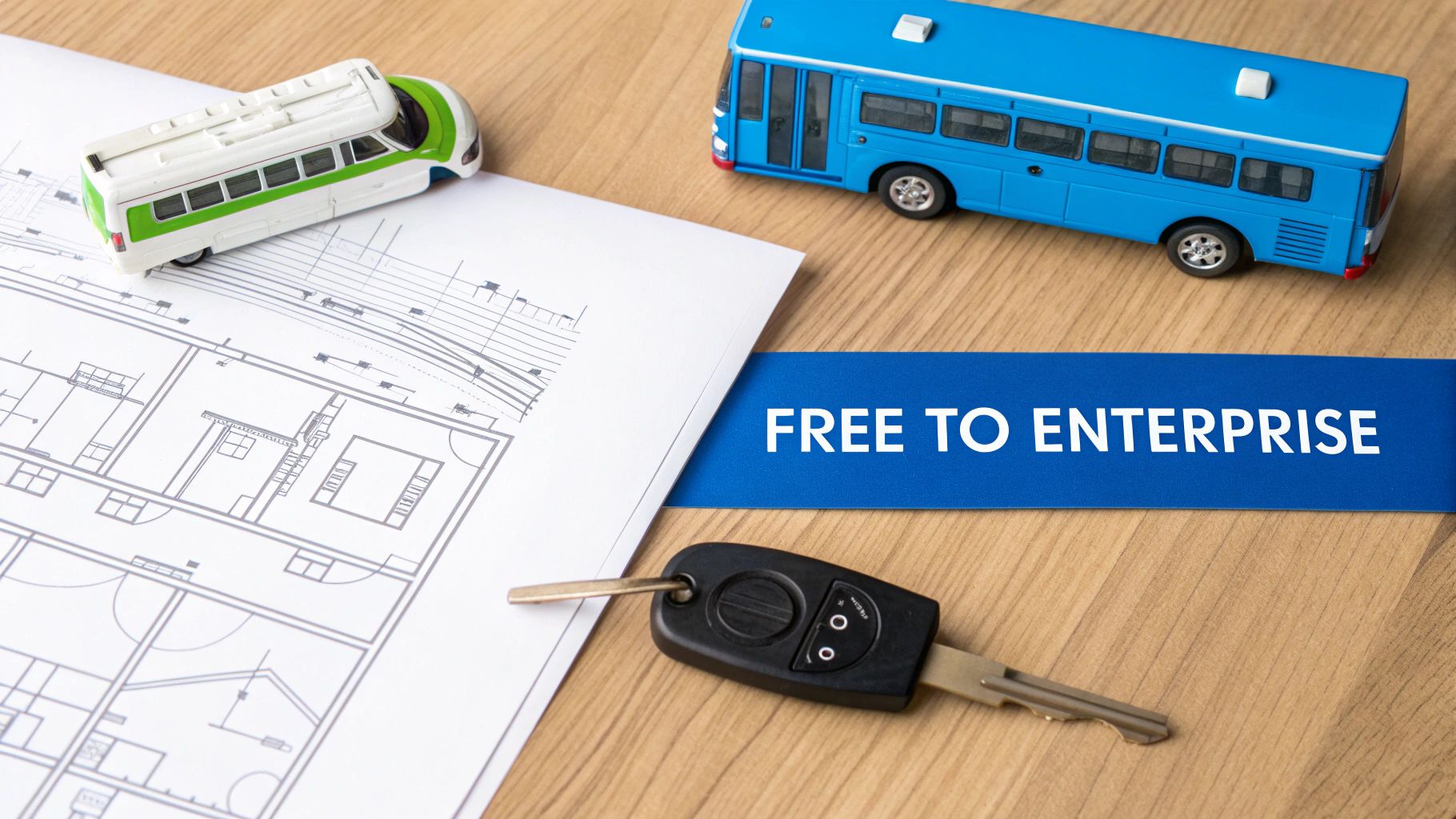
Think of it like getting around town. You could hop on a free public bus (a free SaaS plan), lease a reliable car for a monthly fee (a paid subscription), or even commission a custom-built vehicle (a bespoke development project). The price you pay depends entirely on where you're going and what you need.
The final price tag for an AI bot really boils down to a few key things. These are the elements that determine whether you'll land on the "free" end of the spectrum or find yourself investing in a six-figure project.
- Complexity and Capabilities: A bot that just answers basic FAQs from a single PDF will cost far less than one that plugs into your CRM, processes customer orders, and understands nuanced emotional cues. More power typically means more investment.
- Deployment Model: Are you using a ready-made SaaS platform where the development costs are shared among thousands of users? Or are you hiring a team of developers to build a solution from the ground up, just for you?
- Ongoing Maintenance and Training: An AI bot is rarely a "set it and forget it" tool. The total cost of ownership has to include updates, retraining the AI with new information, and ongoing technical support.
To help you visualize the two main paths, here’s a quick comparison of what to expect.
AI Bot Cost At a Glance: SaaS vs Custom Build
| Factor | SaaS AI Bot Platforms | Custom AI Bot Development |
|---|---|---|
| Typical Cost | $0 - $500/month. Some enterprise plans can be higher. | $20,000 - $150,000+ one-time, plus ongoing maintenance. |
| Setup Time | Minutes to a few hours. No code required. | 3-12+ months. Requires a dedicated development team. |
| Maintenance | Included in the subscription. Handled by the provider. | Your responsibility. Requires ongoing developer resources. |
| Best For | SMBs, startups, non-profits, or departments needing a quick solution. | Large enterprises with complex, unique integration needs. |
As you can see, the path you choose has a huge impact on both the initial and long-term investment required. To get a feel for the wider impact of this technology, some find it helpful to look into topics like AI and the future of grant funding for broader context.
SaaS Platforms: The Accessible Path to AI Automation
For most businesses wondering "how much do AI bots cost?", a SaaS (Software-as-a-Service) platform is the smartest and quickest way in.
Think of it like this: you could try to build your own movie theatre from scratch, or you could just subscribe to a streaming service. SaaS is the streaming service. You get instant access to powerful tech for a predictable monthly fee, skipping the massive upfront investment and technical headaches.
This approach changes the game. Instead of hiring a team of developers, you can jump onto a no-code platform like FastBots.ai and build a surprisingly sophisticated bot trained on your own data—from PDFs to website content—in just a few minutes.
Common SaaS Pricing Models
Once you start exploring SaaS chatbot platforms, you'll see a few common ways they structure their pricing. Getting a handle on these will help you compare your options.
- Tiered Plans: This is the most popular model. It's like a menu, offering different feature sets and limits at various price points. A basic tier might be free or cheap, while higher tiers unlock advanced capabilities.
- Per-Seat Pricing: You'll often see this with platforms that include live chat. The cost is tied to how many human agents will be using the system. The AI chatbot might then be an add-on cost for each "seat."
- Usage-Based Pricing: With this model, you pay for what you use. Your bill is directly tied to consumption, whether that’s measured per conversation, per API call, or per "resolution."
Generally, you can expect small business plans to land somewhere between $15 and $500 per month. For bigger companies, enterprise-level subscriptions can range from $1,200 to $5,000 monthly. The predictability makes budgeting a whole lot easier.
To get a better sense of the financial health of these cloud-based AI solutions, it’s also worth looking at the landscape of leading SaaS investors. Their interest is often a good signal of the market's long-term potential.
Custom Development: The High-Investment Solution
While SaaS platforms are a great fit for most businesses, some large enterprises have needs that off-the-shelf software just can't handle. This is where custom development comes into play—the high-investment path to building a bespoke AI bot from scratch.
Think of it like hiring an architect to design a custom building. You get total control over every feature and workflow, but it comes with a much steeper investment in both time and money. This route is typically for organizations with specific, large-scale needs that justify the expense.
Breaking Down the Major Cost Drivers
So, what makes a custom-built AI bot so much more expensive? You're not just paying for the finished product; you're funding a long, complex process that requires a team of specialized talent.
The initial investment for a high-quality, custom business bot typically starts around $10,000 and can climb past $80,000. For highly advanced systems, it's not unusual to see costs soar above $150,000.
Here are the main expenses you'll run into:
- Developer Salaries: You need a team of AI engineers, backend developers, and UX designers, and their salaries make up the biggest chunk of the cost.
- AI Model Training: A custom bot often needs its model trained from the ground up on huge, proprietary datasets. This is a highly specialized and costly process.
- Complex Integrations: We’re not talking about simple Zapier connections here. This involves deep, custom API development to link the bot with legacy enterprise systems and secure internal databases.
- Compliance and Security: For industries like healthcare (think HIPAA) or finance, building a bot that meets strict regulatory standards adds a huge layer of complexity—and cost—to the project.
The decision to build a custom AI bot is less about technology and more about business strategy. It only makes sense when a unique operational need gives you a competitive edge you can't get from an existing SaaS solution. If you're weighing your options, our guide on why businesses hire ChatGPT developers for custom work can offer some extra clarity.
What to Watch Out For: Hidden Costs and Trade-Offs
When you ask, "how much do AI bots cost?" it’s easy to fixate on the monthly subscription. But that number is just the starting point. To get a real sense of the total investment, you have to look at the other costs and trade-offs.
Common Hidden Costs and Limitations
Many businesses are surprised when extra charges pop up after they've already committed. These costs aren't always obvious at first glance, but they can inflate your overall spend if you're not ready.
Here are a few things to watch for:
- One-Time Setup Fees: Some vendors charge a fee to get your bot up and running, which might cover initial configuration or guided onboarding.
- Integration Charges: While many platforms include standard integrations, linking up with complex or older systems often requires custom API work. This can add a significant amount to your initial budget.
- Team Training: Your team needs to learn how to manage conversations, update the bot’s knowledge, and analyze its performance, which sometimes means paying for dedicated training sessions.
- Overage Fees: Be very wary of plans with tight conversation limits. Exceeding your monthly chat volume can turn a cheap plan into a budget-breaker with just one spike in website traffic.
The Trade-Offs of Cheaper Plans
Grabbing a lower-priced plan seems like a smart way to start, but it’s crucial to understand what you might be giving up. For example, some entry-level plans might not let the bot hand off a tricky conversation to a human agent—a make-or-break function for providing great customer service.
A low-cost plan can look like a bargain until you hit a wall because it’s missing a critical feature. Our guide on how to measure the ROI of your chatbot can help you figure out which features really move the needle for your business.
Actionable Takeaway: A Quick Checklist
To make sure you don't get caught by surprise, run through this checklist to get a more accurate picture of your total investment before you commit.
- Ask About Setup Fees: Directly ask the sales team: "Are there any one-time setup, onboarding, or implementation fees I should know about?"
- Clarify Integration Costs: List your must-have tools (CRM, helpdesk, etc.) and ask: "Are integrations with these systems included in this plan, or do they cost extra?"
- Check Conversation Limits and Overage Fees: Find out the exact monthly conversation limit and ask, "What is the cost per conversation if we go over our limit?"
- Confirm Feature Access: List your non-negotiable features (e.g., human handover, WhatsApp integration) and confirm they are included in the plan you’re considering.
Calculating the Real ROI of Your AI Bot
An AI bot isn’t just an expense; it's an engine for growth. To really understand its value, you have to look past the monthly fee and figure out its return on investment (ROI). This is what justifies the cost and lets you measure success over time.
Calculating ROI forces you to think beyond simple cost-cutting. It’s about connecting the bot's day-to-day performance to what really matters: lead conversions, customer happiness, and the tangible value of having 24/7 support.
Moving Beyond Simple Cost Savings
The easiest win to spot is how an AI bot slashes operational costs. By taking over repetitive tasks, it frees up your human team to focus on more complex, high-value work.
For example, many support teams spend 30% of their time answering the same ten questions over and over. An AI bot can handle nearly all of those, instantly freeing up those hours without you having to hire anyone new.
Identifying Key Performance Indicators
To see the full picture, you need to track specific Key Performance Indicators (KPIs) that the bot directly influences. The right metrics depend on your goals.
- Increased Efficiency: Look at the drop in first-response time and the number of support tickets the bot deflects from your human team.
- Higher Lead Conversion: Track how many qualified leads the bot generates. A bot on a pricing page can proactively engage visitors and book demos.
- Improved Customer Satisfaction (CSAT): Keep an eye on your CSAT scores. Getting instant, 24/7 answers to common questions almost always leads to happier customers.
Tracking these KPIs helps you put real numbers to the bot’s performance. For a deeper dive, our guide on how to measure the ROI of your chatbot for business growth lays out a complete framework.
Real-World Example: An e-commerce store set up an AI bot just to handle "Where is my order?" questions. This one simple task deflected 40% of their support tickets, freeing up the team to focus on pre-sales questions. The result was a 15% increase in average order value within three months.
Your AI Bot Planning Checklist
So, you're ready to make a move. Answering the question "how much do AI bots cost?" isn't about finding a single number. It's about having a clear plan.
Phase 1: Define Your Goals and Scope
Before you even look at a pricing page, you have to know what problem you're trying to solve. Don't start with the tool; start with the purpose.
Ask yourself these questions:
- What's the main goal? Are you trying to cut support tickets? Capture more leads? Answer the same five questions 24/7?
- Who is this bot for? Is it for new visitors or existing customers? The audience changes everything.
- What are the "must-haves"? Make a short list of non-negotiables, like a human handover option or a specific integration.
Phase 2: Assess Your Internal Resources
Next, take an honest look at your team and your tech. This is where you decide if you need a simple, no-code platform or something that requires more tinkering.
Consider these factors:
- Technical Skill: Do you need a completely no-code solution that anyone can manage? Platforms like FastBots.ai are built exactly for non-technical users.
- Time Commitment: How much time can your team spend setting up and maintaining this bot each week? Most modern SaaS bots need very little hands-on time after the initial setup.
- Existing Systems: What software does this bot need to connect to? List your CRM, helpdesk, or any other critical tools.
Phase 3: Calculate a Realistic Budget
Now we can finally talk numbers. This means looking beyond the sticker price and thinking about any add-ons or usage fees that could pop up.
A good rule of thumb is to add a 10-15% buffer to whatever plan you're eyeing. This little cushion covers you if a marketing campaign causes a spike in traffic or if you decide you need a premium feature later.
Final Questions About AI Bot Costs
Even with the numbers laid out, you probably still have a few questions. Let's tackle some of the most common ones we hear.
Can I actually get a good AI bot for free?
Yes, you absolutely can. Many platforms offer free tiers that are genuinely functional plans, perfect for new startups or anyone who needs to handle basic FAQs. A solid free plan typically gives you one bot, a decent number of monthly chats, and the ability to train it on your own content.
Seriously, how long does it take to set up one of these bots?
With modern no-code platforms, you can legitimately go from signing up to having a trained bot live on your site in under 10 minutes. The process is built for non-developers and is usually as simple as uploading a PDF or a website URL, tweaking its personality, and then copying a small piece of code onto your site.
What's more important: a low monthly fee or more features?
This boils down to your specific goals, but value should always trump price. A rock-bottom monthly fee is a bad deal if the bot can’t do that one critical thing you need, like integrating with your CRM.
It’s almost always better to pay a little more for a plan that nails your core problem. Make a "must-have" list of features first, then find the most cost-effective plan that checks all those boxes. That’s how you make a smart investment.
Ready to see how an AI bot can transform your business without breaking the bank? With FastBots.ai, you can build a custom-trained AI assistant in minutes. Start for free and launch your bot today!