Conversational Marketing Guide: Strategies, Examples & Tools for 2026
The ultimate conversational marketing guide for 2026. Learn core strategies, see real-world examples, and explore the top tools to automate lead generation.

What is conversational marketing?
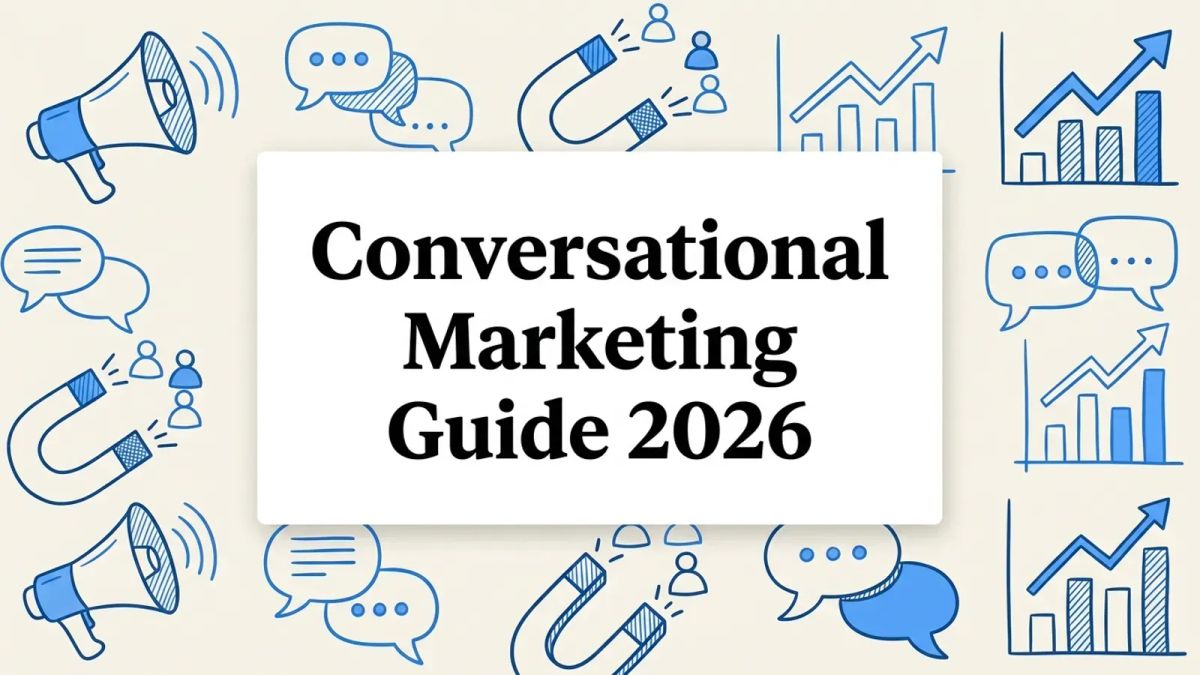
Conversational marketing is a customer-centric and dialogue-driven approach to marketing that uses real-time, two-way interactions (like chatbots, live chat, and messaging apps) to engage website visitors, capture leads, and guide buyers through the customer journey faster than traditional forms and static landing pages.
TL;DR: Conversational Marketing in 2026
- Shift from Forms to Chat: Buyers in 2026 expect instant answers. Conversational marketing replaces static lead-capture forms with interactive chatbots.
- Multi-Channel Engagement: True conversational marketing happens where your customers are—on your website, WhatsApp, Telegram, Instagram, and Slack.
- AI-Powered Personalisation: Modern conversational marketing relies on AI (like LLMs) to understand intent and context, offering hyper-personalised responses rather than rigid decision trees.
- Real ROI: Implementing an AI chatbot can reduce customer acquisition costs, qualify leads 24/7, and shorten sales cycles.
- Human Handoff is Vital: The best strategies blend AI efficiency with human empathy, transferring complex queries seamlessly to live agents.
In the fast-paced digital landscape of 2026, the traditional marketing funnel is broken. Buyers no longer want to fill out a 10-field form and wait 24 hours for an SDR to email them back. They want answers now. If they don't get them from your website, they will bounce to a competitor who can provide immediate gratification.
This is where conversational marketing steps in. It's not just a buzzword; it's a fundamental shift in how businesses communicate with their prospects and customers. By leveraging AI-powered chatbots and real-time messaging, brands can create authentic, helpful, and instant interactions that drive conversions and build loyalty.
In this comprehensive guide, we will explore the core strategies, real-world examples, and top tools you need to build a successful conversational marketing strategy in 2026.
1. The Core Principles of Conversational Marketing
To succeed with conversational marketing, you must move beyond the mindset of "broadcasting" your message and instead focus on facilitating a dialogue. Here are the foundational principles:
Engage Instantly
The modern buyer has zero patience. When a visitor lands on your pricing page or a specific product feature page, a proactive chatbot should engage them immediately with a relevant question. For example, instead of a generic "How can I help you?", a bot on a pricing page might ask, "Are you trying to figure out which plan fits your team size?"
Understand and Qualify
Conversational marketing is not just about answering questions; it's about qualifying leads in real-time. By asking the right questions, an AI chatbot can gather essential information (company size, budget, specific pain points) and route high-quality leads directly to your sales team's calendar.
Recommend and Convert
Once the bot understands the visitor's needs, it can recommend specific content, products, or next steps. This personalised approach significantly increases conversion rates compared to forcing visitors to navigate your site manually.

2. Why Traditional Forms Are Dying
For decades, the B2B marketing playbook was simple: drive traffic to a landing page, gate a whitepaper behind a form, and hope the prospect fills it out. But in 2026, this approach is failing for several reasons:
- High Friction: Forms require effort. Visitors are increasingly reluctant to hand over their email addresses without immediate value.
- Delayed Response: Even if a prospect fills out a form, the delayed response time (often hours or days) means their buying intent has cooled.
- Lack of Context: Forms provide static data. They don't capture the nuance of a buyer's specific question or objection.
Conversational marketing flips this model. By using an AI chatbot, you can capture lead information naturally within the flow of a conversation, offering immediate value (answers) in exchange for their contact details.
3. Developing Your Conversational Marketing Strategy
Building a successful conversational marketing strategy requires careful planning and execution. It's not enough to simply slap a chat widget on your homepage.
Map the Customer Journey
Identify the key touchpoints where visitors interact with your brand. Where are they dropping off? Where do they typically have the most questions? These are the prime locations for conversational interventions.
Define Your Chatbot Persona
Your chatbot is an extension of your brand. Does it have a formal tone, or is it more casual and friendly? With platforms like FastBots.ai, you can easily customise your bot’s personality, tone of voice, and knowledge sources to align perfectly with your brand identity.
Build Omnichannel Experiences
Your customers don't just exist on your website. They use WhatsApp, Instagram, Telegram, and Facebook Messenger. A true conversational marketing strategy encompasses all these channels. This is where multi-channel AI chatbots shine, allowing you to deploy the same intelligent assistant across every touchpoint.
4. Analysing the Conversational Marketing Tool Landscape
Choosing the right platform is critical. Let's look at some of the leading conversational marketing and AI chatbot platforms available in 2026, acknowledging their genuine strengths.
Tidio
Tidio has long been a favourite for small ecommerce businesses, particularly those using Shopify.
- Strengths: Excellent native ecommerce integrations, a very intuitive visual flow builder, and strong live chat capabilities. It's a great choice for small merchants who want to blend simple automation with heavy manual live chat.
- Considerations: Can become expensive as traffic scales, and its AI capabilities, while improving, sometimes lag behind dedicated LLM-first platforms.
Botpress
Botpress is a powerful platform designed for developers and technical teams who want granular control over their chatbot's logic.
- Strengths: Highly customisable, strong developer ecosystem, and deep integrations via code. If you have a development team and need complex, highly specific workflows, Botpress is incredibly robust.
- Considerations: It has a steep learning curve. Non-technical marketing teams may struggle to deploy and iterate quickly without developer support.
Chatbase
Chatbase popularised the "train a bot on your data" concept and remains a strong contender for simple use cases.
- Strengths: Extremely easy to set up. You can upload a PDF or link a website and have a basic bot running in minutes. Great for simple FAQ deflection.
- Considerations: It can lack the advanced multi-channel deployment and complex routing features required by larger marketing and sales teams.
FastBots.ai
FastBots.ai is designed specifically as a comprehensive AI chatbot platform for businesses and agencies that need powerful, unrestricted AI capabilities across multiple channels.
- Strengths: FastBots allows you to build a multi-channel AI chatbot trained on your website content, documents, and even live web data. It natively integrates with WhatsApp, Telegram, Instagram, Facebook Pages, and Slack. You can choose between leading LLMs (OpenAI, Anthropic, Google), ensuring the best performance for your specific use case. It also features seamless human handoff and a robust white-label agency offering. For businesses wanting 24/7 support and lead generation without the developer bottleneck, FastBots provides an all-in-one solution.
- Considerations: While powerful, businesses looking only for a basic manual live-chat tool without AI automation might find it more feature-rich than they require.

5. Real-World Conversational Marketing Examples
How are businesses actually using this in 2026?
1. The Proactive Pricing Page Assistant
A SaaS company noticed high bounce rates on their pricing page. They deployed an AI chatbot that proactively asked, "Need help comparing our Pro and Enterprise plans?" This simple intervention increased their trial signups by 22%, as the bot instantly clarified feature differences and captured lead information for the sales team.
2. The WhatsApp Lead Generation Funnel
A real estate agency moved their primary lead generation from website forms to WhatsApp. By using a WhatsApp chatbot integration, prospects could scan a QR code on property listings, instantly receive property details via WhatsApp, and schedule viewings—all handled automatically by the AI before a human agent stepped in to close the deal.
3. The 24/7 E-commerce Concierge
An online retailer trained their AI chatbot on their entire product catalogue and return policy. The bot not only handled routine "Where is my order?" queries but also acted as a personal shopper, recommending products based on the customer's natural language requests (e.g., "I need a blue dress for a summer wedding under $100").
6. How to Implement Conversational Marketing with FastBots.ai
Getting started doesn't require a six-month IT project. Here is how you can launch a strategy quickly:
- Audit Your Content: Gather the URLs, PDFs, and FAQs that contain the answers your customers need.
- Train Your Bot: In FastBots, simply paste your URLs or upload your documents. The platform's advanced crawler will ingest the data.
- Set the Persona: Define how you want the bot to speak. Professional? Witty? Helpful?
- Deploy Across Channels: Copy the widget code to your website, and connect your WhatsApp, Telegram, or social media accounts with a few clicks.
- Monitor and Refine: Use the FastBots dashboard to review chat history. Identify questions the bot struggled with and update your training data to continuously improve performance. Remember, our platform offers a free plan allowing up to 50 messages a month, so you can test the waters risk-free.
7. The Future of Conversational AI in Marketing
As we look beyond 2026, the lines between marketing, sales, and support are blurring. Customers expect a unified experience. Conversational marketing is the glue that holds this experience together.
With advancements in AI models (like GPT-5 and Gemini 2.5), chatbots are becoming increasingly context-aware, capable of handling complex, multi-turn negotiations and highly nuanced customer service scenarios. The businesses that adopt these technologies now will build a significant competitive advantage in customer acquisition and retention.
Frequently Asked Questions (FAQ)
What is the difference between conversational marketing and inbound marketing?
Inbound marketing is the broad strategy of attracting customers through valuable content (blogs, SEO, social media). Conversational marketing is a specific tactic within inbound marketing focused on engaging those visitors in real-time dialogues once they arrive, typically using AI chatbots to shorten the sales cycle.
Can an AI chatbot completely replace my sales team?
No. AI chatbots are designed to augment your sales team, not replace them. They handle the repetitive tasks—answering basic FAQs, qualifying leads, and booking meetings—freeing up your human sales reps to focus on building relationships and closing complex deals. The best systems, like FastBots, include seamless human handoff.
How do I measure the ROI of conversational marketing?
Key metrics include Lead Capture Rate (how many chats result in a captured email/phone number), Meeting Booked Rate, Deflection Rate (how many support tickets were resolved without human intervention), and ultimately, the revenue generated from leads sourced via the chatbot.
Is conversational marketing only for B2B companies?
Absolutely not. While B2B companies use it heavily for lead generation and qualification, B2C and ecommerce brands use conversational marketing extensively for product recommendations, cart abandonment recovery (often via WhatsApp or SMS), and post-purchase support.
How long does it take to train an AI chatbot?
With modern platforms like FastBots.ai, training takes minutes, not months. You simply provide the URLs of your website or upload your documents (PDFs, Word docs, CSVs), and the AI automatically ingests and learns the information, ready to answer questions immediately.
Are AI chatbots secure for handling customer data?
Yes, reputable platforms prioritise security. FastBots, for instance, uses secure OAuth2 mechanisms, ensures no credentials are in the code, and utilises infrastructure that is SOC2 and GDPR compliant to protect your and your customers' data.
Do I need to know how to code to build a chatbot?
Not anymore. While platforms like Botpress require technical knowledge, no-code solutions like FastBots.ai allow marketing teams to build, train, and deploy sophisticated multi-channel AI chatbots without writing a single line of code.
8. Key Benefits of Conversational Marketing
Adopting a conversational marketing strategy offers a multitude of benefits that directly impact the bottom line. Let's break down the most significant advantages for businesses in 2026.
Increased Lead Generation Rates
Traditional landing pages with static forms often see conversion rates hovering around 2% to 5%. In contrast, businesses using proactive conversational marketing often see engagement and conversion rates double or triple. When a visitor is asked a relevant, contextual question ("Are you looking for pricing for a team larger than 10?"), they are far more likely to engage than if they are presented with a blank form. This interactive approach lowers the barrier to entry, making it easy for prospects to provide their details within the natural flow of a conversation.
Shortened Sales Cycles
The B2B sales cycle can be notoriously long. A prospect downloads a whitepaper, gets put into a drip campaign, eventually replies to an email two weeks later, and then finally books a demo. Conversational marketing compresses this timeline. An AI chatbot can answer a prospect's technical questions, qualify their budget, and book a meeting on a sales rep's calendar all within five minutes of the prospect landing on the website. This immediate gratification capitalizes on the buyer's highest point of intent.
24/7 Availability Across Global Time Zones
Your website never sleeps, but your sales and support teams do. With an AI chatbot, you offer a consistently excellent experience to visitors regardless of what time zone they are in. A prospect browsing your site from Tokyo at 3 AM local time receives the same immediate, accurate, and helpful responses as a prospect browsing from London at 10 AM. This "always-on" capability ensures you never miss a lead due to office hours.
Deep Customer Insights
Every conversation your chatbot has is a goldmine of data. Unlike static forms that only capture the fields you explicitly ask for, conversational logs reveal exactly what your customers are thinking, the exact vocabulary they use to describe their problems, and the specific objections they have before buying. By analyzing chat histories in your FastBots.ai dashboard, your marketing team can uncover content gaps on your website, discover new product feature requests, and refine your overall messaging strategy.
Enhanced Customer Experience and Satisfaction
Modern consumers value speed and convenience above almost everything else in digital interactions. When an AI chatbot instantly resolves a query—whether it's finding the right product variant or answering a complex shipping question—it creates a frictionless, positive experience. This immediate resolution builds trust and affinity with your brand.
9. Common Pitfalls to Avoid in Conversational Marketing
While the benefits are clear, implementing conversational marketing without a strategic plan can lead to frustrating customer experiences. Avoid these common mistakes:
The "Dead-End" Chatbot
Nothing is more frustrating for a user than a chatbot that says, "I don't understand," and offers no path forward. A well-designed conversational strategy always includes a fallback mechanism. If the AI cannot confidently answer a question, it should gracefully offer to transfer the chat to a human agent, take a message, or provide a link to the help center. With FastBots, the human handoff feature ensures that complex or sensitive queries are seamlessly transitioned to your team.
Over-Automating Complex Sales
While AI is incredibly powerful, high-ticket B2B sales still require human empathy, negotiation, and relationship building. Do not try to automate the entire sales process from initial visit to final contract signing. Use conversational marketing to handle the top and middle of the funnel—answering FAQs, gathering requirements, and qualifying the lead. Once the lead is qualified, hand it over to an account executive.
Being Too Pushy or Intrusive
Proactive engagement is good, but bombarding every visitor with a pop-up chat window the second the page loads can be annoying. Use contextual triggers. For example, trigger the chatbot to open only after a visitor has spent 30 seconds on the pricing page, or when they show exit intent. The intervention should feel helpful, not interruptive.
Neglecting Bot Maintenance
An AI chatbot is not a "set it and forget it" tool. Your business evolves, your pricing changes, and your customers will inevitably ask questions you hadn't anticipated. You must regularly review your chat transcripts to identify areas where the bot struggled and update its training data accordingly. Continuous training is the secret to a highly accurate and helpful AI assistant.
Pretending the Bot is Human
Always be transparent that the user is interacting with an AI. Attempting to trick visitors into thinking they are speaking with a human agent will backfire when the bot inevitably makes a mistake or responds too quickly. Transparency builds trust. You can still give your bot a personality and a name, but make it clear that it is a virtual assistant.
10. How to Craft the Perfect Chatbot Welcome Message
The welcome message is the digital equivalent of a retail store greeting. It sets the tone for the entire interaction. A generic "Hi, how can I help?" is a wasted opportunity. Here is how to craft welcome messages that drive engagement:
Context is King
The message should change based on the page the visitor is on.
- Homepage: "Welcome to [Brand]! Are you looking for product information or customer support?"
- Pricing Page: "Hi there! Need help figuring out which tier is best for your team's size?"
- Blog Post (e.g., about SEO): "Enjoying the post? Want to see how our tool can help you implement these SEO strategies automatically?"
Keep it Short and Punchy
Visitors are skimming your website; they will not read a paragraph of text in a chat widget. Keep your welcome message to one or two short sentences. Get straight to the point and make the value of interacting immediately clear.
Use Clear Calls to Action (CTAs)
Don't leave the user guessing what to do next. Use quick-reply buttons to guide them down specific paths. For example, offer buttons like "Book a Demo," "View Pricing," or "Talk to Support." This significantly reduces friction compared to requiring the user to type out their request.
11. Integrating Conversational Marketing with Your Tech Stack
To unlock the full potential of conversational marketing, your chatbot must not exist in a silo. It needs to connect seamlessly with the tools your team already uses.
CRM Integration
This is the most critical integration. When an AI chatbot captures a lead, that data must flow instantly into your CRM (like Salesforce, HubSpot, or Pipedrive). This ensures your sales team has the full context of the conversation before they reach out. FastBots integrates with over 8,000 apps via Zapier, making it simple to sync lead data to your CRM of choice.
Analytics and Tracking
To measure the ROI of your conversational marketing efforts, you need to track chatbot interactions just like you track page views or form submissions. Connect your chatbot platform to Google Analytics or your marketing automation platform to see how chat engagements influence overall conversion rates and attribute pipeline revenue to specific chatbot interactions.
Customer Support Ticketing
If the chatbot is acting as a first line of defense for customer support, it needs to integrate with your ticketing system (like Zendesk or Freshdesk). If a user has a complex issue the bot cannot resolve, the bot should automatically create a ticket with the full chat transcript attached, so the human support agent has all the context they need to solve the problem quickly.
Conclusion: The Era of the Conversation
Conversational marketing is no longer an optional tactic; it is the baseline expectation for digital consumers in 2026. The days of making buyers jump through hoops to speak with your business are over. By implementing a strategic, AI-powered conversational marketing approach, you can deliver the immediate, personalised experiences your customers demand, while simultaneously driving qualified leads and revenue for your business.
Whether you are a small business looking to automate routine FAQs or a large enterprise building complex, multi-channel sales funnels, platforms like FastBots provide the intelligent infrastructure needed to turn every digital touchpoint into a meaningful conversation. The future of marketing is not broadcasting; it's conversing. Are you ready to talk?