Build a Powerful Chatbot on WhatsApp: Your Complete Guide


Building a chatbot on WhatsApp is more than just a tech upgrade; it's about opening a direct line to your customers, right inside the app they use every day. By connecting to the WhatsApp Business Platform, you can launch an AI-powered assistant that handles customer questions, qualifies new leads, and offers support 24/7. You're meeting people exactly where they are.
Why a Chatbot on WhatsApp Is a Game-Changer
If you're wondering whether this is just another trend, the data tells a different story. This is a fundamental shift in how people want to talk to businesses. WhatsApp has billions of users worldwide, making it the primary channel for many. This proximity gives you a golden opportunity to engage in a way that’s personal, direct, and incredibly effective.
This move towards conversational commerce is driven by customers who are tired of waiting on hold or digging through clunky websites. They expect to get information as easily as they text a friend, and a WhatsApp chatbot makes that a reality for your business.
The Real-World Impact on Business Growth
The numbers behind this shift are significant. Over 175 million people message business accounts on WhatsApp every day. The engagement levels are often impressive, with open rates that can soar to 98%. Your messages get seen almost instantly, a world away from the hit-or-miss performance of a typical email campaign.
This isn't just about visibility; it's about driving real business results. A well-built WhatsApp chatbot is a powerhouse of automation, and the key marketing automation benefits translate directly into tangible growth.
- Boosted Sales and Conversions: Many e-commerce brands use these bots to guide customers through product options, answer last-minute questions, and even recover abandoned carts—all within the chat.
- Improved Customer Satisfaction: By providing instant answers to common questions like "Where's my order?" or "What are your hours?", you free up your team to tackle more complex, high-value conversations.
- Reduced Operational Costs: Automation handles repetitive tasks around the clock. This allows you to serve a growing customer base without needing to constantly expand your support team.
Actionable Takeaway: Quick Checklist
A great place to start is by identifying the top 3-5 questions your support team answers repeatedly. These are your low-hanging fruit for automation.
- List the questions.
- Write down the standard, correct answers.
- Use these as the first training data for your chatbot.
This will immediately lighten the load on your team and make customers happier.
This isn’t about replacing your team. It’s about making them more effective. When you automate the routine, you empower your human experts to focus on what they do best: building relationships and solving complex problems that need a human touch.
Choosing the Right WhatsApp Business API
Before you can build your chatbot on WhatsApp, you need to make a crucial decision about connecting to the WhatsApp Business Platform. You have two main paths, and the right one for you depends on your company’s resources, technical expertise, and future plans.
This choice is the foundation for everything that comes next, from how quickly you can get set up to your long-term maintenance costs. Getting it right from the start will make the entire process of launching your chatbot much smoother.
The Two Main API Options Explained
First is the On-Premises API. As the name suggests, this option puts you in the driver's seat. You are responsible for hosting, managing, and maintaining the API software on your own servers. This route offers maximum control, which is often a key requirement for large companies with strict data or compliance regulations.
The second—and far more common—option is the Cloud API, which is hosted directly by Meta. This approach significantly lowers the barrier to entry. Instead of wrestling with server configurations and updates, you just plug into an endpoint that Meta manages for you. It's a faster and less technical way to get started.
Weighing the Trade-Offs
Picking between these two isn't just a technical choice; it's a strategic one. Each path has its own set of pros and cons that will impact your business differently.
For example, a nimble startup trying to launch a chatbot quickly would likely find the Cloud API a perfect match. The setup is fast, and Meta handles all the backend maintenance, freeing up the startup’s small dev team to focus on creating a great user experience instead of managing servers.
On the other hand, a global financial institution might lean towards the On-Premises API. For them, the ability to host the solution within their own secure data centers and control every detail is non-negotiable for their security and compliance teams.
Key Insight: The choice between On-Premises and Cloud API really boils down to one question: Do you want to manage the infrastructure or just use it? Your answer will point you in the right direction.
To make things clearer, let's break down the key differences between the On-Premises API and the Cloud API. This table should help you quickly see which one aligns better with your business needs.
WhatsApp Business Platform API vs Cloud API: A Quick Comparison
| Feature | On-Premises API | Cloud API (Hosted by Meta) |
|---|---|---|
| Hosting | You host on your own servers or private cloud. | Hosted and managed by Meta. |
| Maintenance | Your team is responsible for all updates and upkeep. | Meta handles all updates and maintenance. |
| Setup Speed | Typically slower, requiring server provisioning and setup. | Much faster, allowing for rapid deployment. |
| Scalability | You are responsible for managing and scaling infrastructure. | Automatic scaling managed by Meta. |
| Cost | Higher initial setup and ongoing server/personnel costs. | Generally lower setup costs; pay-as-you-go model. |
| Control | Full control over the environment and data. | Less direct control over the underlying infrastructure. |
Ultimately, this side-by-side view shows a clear trade-off between control and convenience. The right choice depends on which of those two is more valuable to your operations.
What to Watch Out For: Limitations and Considerations
While the Cloud API is a fantastic option for most businesses due to its simplicity, you are trading some control for that convenience. Since Meta manages everything, you have less say over things like specific update schedules or server setups.
The On-Premises API, while offering total control, comes with its own challenges. You’ll need a dedicated technical team to manage servers, apply security patches, and handle software updates. This can add significant overhead that isn’t practical for smaller teams. For a deeper dive, check out our guide on how to choose the best WhatsApp Business API provider, which explores these nuances in more detail.
Your Blueprint for a Live WhatsApp Chatbot
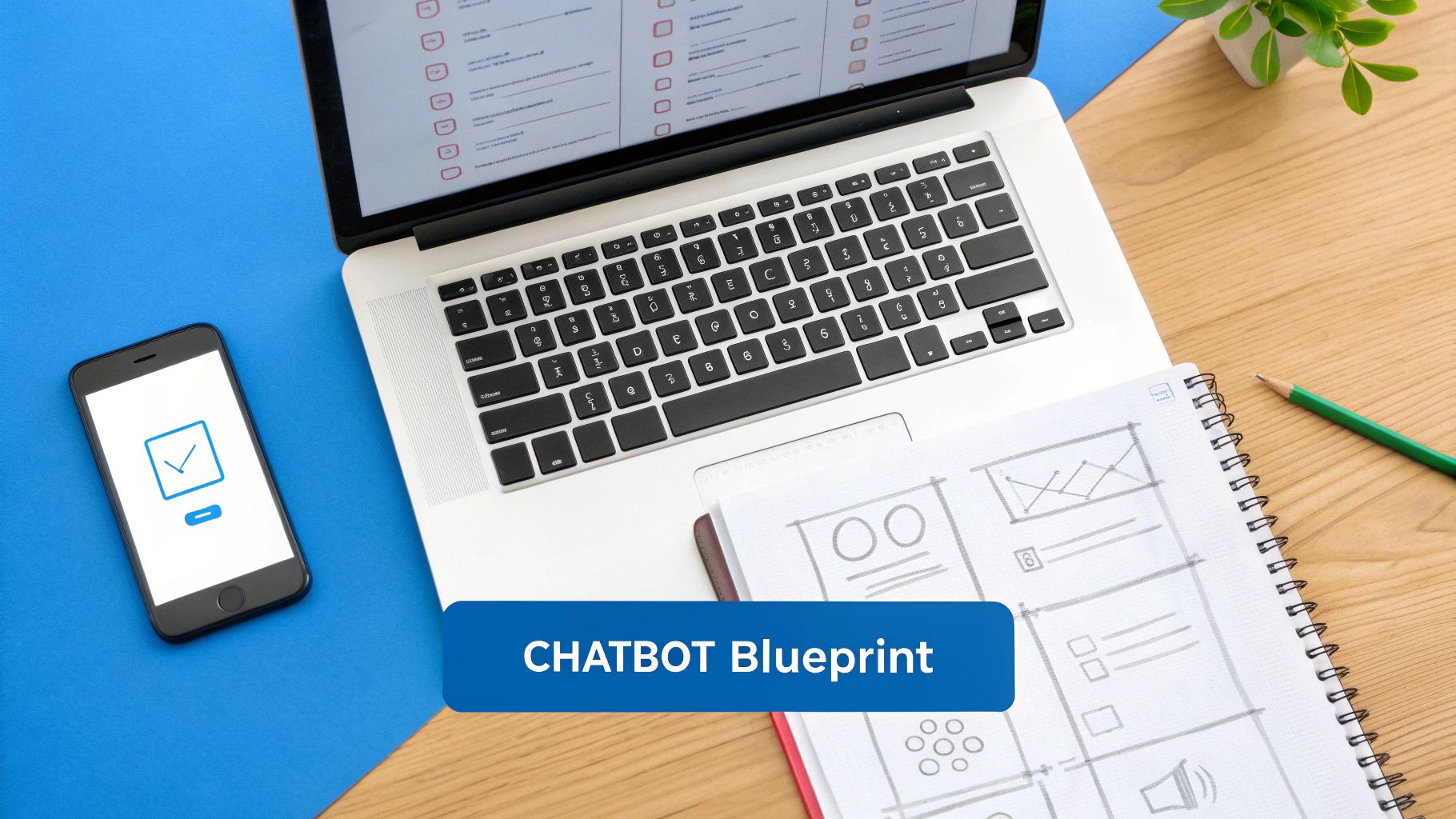
Alright, you've picked your API. Now for the exciting part: bringing your chatbot on WhatsApp to life. We're going to walk you through the entire implementation map, from getting your accounts squared away to designing that first conversation.
It might look like a lot, but it's really just a series of logical steps. We'll break it down into bite-sized pieces so you can go from a great idea to a fully functioning bot your customers will actually want to use.
Getting Your Account and Phone Number Ready
First, you need a WhatsApp Business Account (WABA). This is non-negotiable. You’ll set this up through the Meta Business Manager, and it acts as the official, verified identity for your business on the platform. Think of it as your business's passport for WhatsApp.
Next, you need a dedicated phone number. The key here is that you can't use a number already tied to a personal WhatsApp account. Many businesses simply get a new SIM card or use a virtual number service. This keeps everything clean and compliant.
Once you have the number, you have to get it verified. WhatsApp will send a code via SMS or a phone call to prove you own it. It's a critical step for building trust.
Connecting the API to a Chatbot Platform
With your verified account ready, it’s time to plug the WhatsApp Business API into a chatbot-building platform. This is where a no-code tool like FastBots.ai comes in. A platform like ours acts as the brain of your chatbot, letting you design conversations and manage data without writing any code.
The connection process is usually straightforward. You'll generate API keys from your Meta Business Manager and add them to your chatbot platform’s dashboard. This creates a secure link, giving the platform permission to send and receive messages on your behalf.
This connection is the bridge between WhatsApp's powerful messaging infrastructure and the AI intelligence that will power your customer interactions. Getting this right ensures a smooth flow of information.
Crafting and Approving Message Templates
Here's a key rule for WhatsApp: businesses can't just start conversations with users whenever they want. To initiate a chat or to re-engage someone 24 hours after their last message, you must use a pre-approved Message Template.
These are structured messages that you create and submit to Meta for review. The great part is they can include placeholders for dynamic info, like a customer's name, an order number, or an appointment time.
For instance, a shipping confirmation template might look like this: "Hi {{1}}, your order #{{2}} has shipped! You can track it here: {{3}}." Meta's approval is required to prevent spam and is a mandatory step for any proactive messages your chatbot on WhatsApp will send.
Training Your Chatbot with Custom Knowledge
This is where the magic happens. A chatbot is only as good as the information you give it. You need to train your AI on your specific business data so it can provide accurate and helpful answers.
Modern platforms offer a few ways to do this:
- Website Crawling: Simply provide your website URL, and the platform will automatically crawl and index your pages to answer questions based on your site's content.
- Document Uploads: You can upload PDFs, Word documents, or spreadsheets containing product catalogs, internal policies, or FAQs.
- Direct Text Input: For specific questions and answers, you can build a custom knowledge base directly within the platform.
Imagine a real estate agency uploading PDFs of property brochures. A user could ask, "What are the features of the property on Main Street?" and the chatbot could pull the exact details from the right document in seconds. That's the power of custom training.
Designing Conversation Flows and Human Handover
Finally, you need to map out the user's journey. You can design structured flows with menus and buttons to guide people, or you can build the bot to handle more open-ended, natural language questions.
A crucial part of this design is planning for a human handover. No bot can answer every question perfectly. You must have a clear process for when a conversation needs to be passed to a human agent.
This usually involves setting up triggers—like if a user types "speak to an agent" or if the bot fails to answer a question multiple times. The system should then seamlessly notify a team member and provide them with the full chat history. For more on this, check out our guide on chatbot conversation design to avoid common pitfalls.
Designing Conversations That Actually Convert
A top-tier chatbot on WhatsApp does more than just repeat pre-written answers. It should be a tool that actively guides customers, solves their problems, and ultimately drives business results. This is where conversational design—the art of mapping out chatbot interactions—comes into play.
Your goal is to build an experience that feels natural and genuinely helpful, not like talking to a clunky machine. A well-designed conversation can turn a simple question into a sale or a frustrated user into a loyal customer.
Beyond Basic Customer Support
Answering FAQs is a solid start, but the real power of a WhatsApp chatbot is its ability to handle more dynamic, high-value tasks. Think beyond just reacting to questions; a great bot can be proactive, engaging users at just the right moments.
Take an e-commerce store, for example. One of the biggest wins is abandoned cart recovery. Imagine a customer adds items to their cart but gets distracted. An hour later, your bot can send a friendly reminder to their WhatsApp: "Hey, it looks like you left something behind! Ready to complete your purchase?"
This single, well-timed message can be a game-changer. In fact, some businesses report that abandoned cart campaigns run via chatbot can see significant conversion rates, turning what would have been lost revenue into sales.
A Checklist for High-Impact Flows
Before you build, you need to plan. Mapping your conversations is the single most important step. Here's a quick checklist to help you design flows that deliver the best results.
- Pinpoint Your Top Use Cases: What are the most repetitive, high-volume tasks for your team? Start with lead qualification, appointment booking, or order status checks.
- Map the User's Goal: For each use case, what is the user trying to accomplish? Keep the conversation focused on getting them to that goal quickly.
- Use Rich Media: No one wants a wall of text. Use buttons for quick replies, lists for options, and product carousels to make the experience visual and interactive.
- Define a Clear Handover Point: Know exactly when the bot should pass the conversation to a human. This prevents user frustration and ensures complex issues are handled by an expert.
- Write with a Clear Persona: Define your bot's personality. Is it friendly and casual, or more professional? A consistent tone makes the interaction feel more human. For more on this, check out our guide to mastering chatbot conversation design.
The Power of Interactive Elements
A giant block of text is the fastest way to lose someone's attention. Luckily, WhatsApp supports interactive features that can make your chatbot conversations more engaging and efficient.
Quick-reply buttons, for instance, are perfect for guiding users. Instead of forcing them to type a full response, you can offer options like "Track my order," "Browse products," or "Talk to support." It reduces friction and makes the experience feel effortless.
Key Insight: The best chatbot interactions feel less like a Q&A and more like a guided conversation. When you use buttons and lists, you aren't just answering questions—you're actively helping the user discover what they need.
Product carousels are another great tool. A customer asking about running shoes could be shown a swipeable gallery of your top models, complete with pictures, prices, and a link to buy. Just like that, a simple support query can turn into a direct sales opportunity.
Common Pitfalls and How to Avoid Them

Jumping into a WhatsApp chatbot project is exciting, but it’s smart to go in with your eyes open. A few common stumbles can easily derail an otherwise great strategy. Knowing these challenges upfront will save you headaches down the road.
Let's be transparent about the limitations you'll face, from WhatsApp’s tight messaging rules to its unique pricing. An honest approach from the start is the key to building a compliant, cost-effective, and successful bot.
Navigating WhatsApp’s Strict Policies
WhatsApp is fiercely protective of its user experience, which means businesses have to play by their rules. The most important rule to understand is the 24-hour customer service window. Once a user sends you a message, you have exactly 24 hours to engage in a free-form conversation.
After that window closes, you can't just ping them whenever you want. To start a new conversation, you must use a pre-approved Message Template. This is WhatsApp's way of preventing spam, ensuring any business message is valuable and expected. Ignoring this can risk getting your account flagged or even blocked.
Another key policy involves promotional content. You can send marketing messages, but only to users who have explicitly opted in to receive them. Sending unsolicited ads is a fast way to get your number restricted.
Understanding the Pricing Model
Forget flat monthly fees. WhatsApp uses a conversation-based pricing model, which can be a bit confusing at first but is essential for forecasting your costs.
You are charged per 24-hour conversation, a session that starts the moment you reply to a user or send them the first message. The price for that session depends on two things:
- Who started it: User-initiated conversations (like a customer asking for support) are typically cheaper than business-initiated ones (like sending a promotion).
- The user's country code: Rates vary significantly from one country to the next.
Actionable Takeaway: Before you launch, do a quick calculation of your expected conversation volume. Split it between user-initiated vs. business-initiated chats and map it to your primary customer countries. This will give you a much clearer picture of your potential monthly spend.
Technical Hurdles and Human Oversight
Launching a chatbot isn't a "set it and forget it" task. Without proper planning, you can run into technical snags and deliver a frustrating user experience. One of the most common mistakes we see is skimping on testing.
You should always test your chatbot with a small group of real users before going live. This is where you'll catch awkward phrasing, broken flows, and incorrect answers before they affect your entire customer base. What sounds logical to you might be confusing to someone else.
Perhaps the most critical piece of the puzzle is the human handover. Sooner or later, your chatbot will encounter a question it can't answer or a customer who is too frustrated for automation. You must have a seamless process for escalating these chats to a human agent. This means your support team needs the tools to take over the chat, see the full conversation history, and solve the problem efficiently. Failing to plan for this creates a dead end for users. A great way to get ahead of these issues is to familiarize yourself with the 10 common chatbot mistakes and actively design your system to avoid them.
Got Questions About WhatsApp Chatbots? We’ve Got Answers.
When you’re thinking about adding a tool as powerful as a WhatsApp chatbot to your business, it’s natural to have a few questions. Getting straight answers is the first step toward making a confident decision. Let's tackle some of the most common things we get asked.
We'll clear up the practical details—from costs and phone numbers to the nitty-gritty of message templates and what happens when the bot gets stuck.
How Much Does a WhatsApp Chatbot Really Cost?
Breaking down the cost is pretty simple—it typically comes in two parts. First, you have the subscription for your chatbot platform, like the plans we offer at FastBots.ai. This gives you the tools to build, train, and manage your bot.
The second piece is WhatsApp's own conversation-based pricing, handled directly by Meta. You’re charged for each 24-hour conversation session, and the price changes depending on who started the chat. A conversation kicked off by a customer costs less than one your business initiates. These rates also vary by country, so it’s smart to check Meta's rate card for the regions you serve to get a realistic budget.
Can I Use My Personal WhatsApp Number?
The short answer is a firm no. The WhatsApp Business Platform is built for official business use and requires a phone number that isn't already tied to a personal WhatsApp or the standard WhatsApp Business app. This separation is non-negotiable for compliance.
To get started, you'll need a number dedicated solely to your chatbot. Many businesses buy a new SIM card for this, while others use a virtual number from an online provider. Either way works fine, as long as the number can receive an SMS or phone call for a one-time verification.
Key Takeaway: Using a dedicated number for your WhatsApp Business Platform account isn't optional—it's a must. It keeps your business chats separate, ensures you're playing by WhatsApp's rules, and gives your customers a clear, professional channel to reach you.
What Are Message Templates and Why Do They Matter?
Message templates are a core part of how the WhatsApp Business Platform works. Think of them as pre-approved, structured messages that your business must use to start a conversation with a customer or to reach out again more than 24 hours after their last message.
These templates are essential for any proactive outreach. For instance, you could set up templates for:
- Appointment Reminders: "Hi {{1}}, just a quick reminder about your appointment with us tomorrow at {{2}}. See you then!"
- Shipping Updates: "Great news, {{1}}! Your order #{{2}} has shipped and is on its way."
- Account Alerts: "Hello {{1}}, we detected a recent login to your account. If this wasn't you, please get in touch with support right away."
Every template has to be submitted to Meta for approval to ensure it isn’t spammy. This system is in place to maintain a high-quality user experience on WhatsApp.
What Happens When the Chatbot Fails?
Let's be realistic—no AI is flawless. Planning for the moment your chatbot doesn't know the answer is critical for good customer service. This is where a smooth human handover process saves the day. A well-designed system ensures a user never hits a brick wall.
The best way to handle this is by setting up clear triggers for when a human needs to step in. This could happen if a user types "talk to an agent" or if the chatbot gives a couple of unhelpful answers in a row. When triggered, the system should automatically notify a real person on your team.
A solid platform will give your support staff a single inbox where they can see the entire chat history. That context is gold—it lets the agent jump in without making the customer repeat their story. It turns a moment of potential frustration into a seamless, helpful interaction.
Ready to see how a chatbot on WhatsApp can change how you talk to customers? With FastBots.ai, you can build a custom AI agent, trained on your own business data, in just a few minutes.
Start your free trial today and deploy a smarter way to communicate.