Your Guide to Chatbots for Small Businesses In The USA

If you're a small business owner in the USA, you know your most valuable resource isn't money—it's time. A well-built chatbot for small business is like hiring a digital employee who works around the clock to answer questions, grab leads, and help customers. It’s not some fancy tech gimmick; it's a practical tool that automates the boring stuff so you can focus on what matters.
How a Chatbot Actually Helps Your Business
Think about how many times you’ve answered the same questions. "What are your hours?" "Do you ship to Texas?" "How do I book an appointment?" A chatbot handles all of these instantly. It's like having an extra team member who never sleeps, gets sick, or needs a vacation.
But this isn't just about saving a few minutes here and there. It’s about growing your business. When someone lands on your website at midnight, a chatbot can engage them, answer their questions, and collect their contact info. That person, who would have otherwise bounced, is now a qualified lead waiting for you in the morning.

Real-World Scenarios for US Businesses
Let's get practical. Here’s how this plays out for everyday American businesses:
The Local Bakery: A customer wants a custom cake at 10 PM. The chatbot walks them through flavors, sizes, and pricing, then captures the order details. The owner wakes up to a qualified lead instead of a missed opportunity.
The HVAC Contractor: The owner is on a job site, and their phone is buzzing. The website chatbot is busy answering questions about service areas and pricing. It even uses a calendar integration to book a consultation for the next day. No missed calls, and the schedule fills itself.
The Online Boutique: A shopper is on the fence about a purchase because they have a question about the return policy. The chatbot gives them a clear, instant answer. That little bit of friction is gone, and they complete the checkout.
The Tangible Business Outcomes
Using a chatbot isn't just a "nice-to-have" anymore; it's becoming standard practice for a reason. Recent reports show that a staggering 75% of small and medium-sized businesses are now investing in AI tools like chatbots to keep up. This shift is all about meeting customer expectations for instant, 24/7 service—something a chatbot delivers without breaking a sweat. You can discover more insights about small business AI adoption on Salesforce.com.
To put it simply, here’s a quick look at how a chatbot can tackle some of your daily headaches.
Chatbot Impact on Daily Business Operations
| Common Business Challenge | How a Chatbot Solves It | Real-World Outcome |
|---|---|---|
| Answering repetitive FAQs | Provides instant, pre-programmed answers to common questions | Frees up hours of your time each week |
| Missing leads after hours | Engages visitors 24/7 and captures their contact information | Increases lead capture rate significantly |
| High cart abandonment | Proactively answers questions about shipping, returns, or products | Reduces friction and boosts online sales |
| Booking appointments manually | Integrates with calendars to let customers self-schedule | Fills your calendar without back-and-forth emails |
This isn't an exhaustive list, but it highlights the immediate, practical value a chatbot brings to the table. It solves real problems that cost you time and money every single day.
The core value of a chatbot is simple: it buys back your most valuable resource—time. By automating repetitive conversations, it allows you to focus on strategy, customer relationships, and the parts of your business that only you can do.
Ultimately, getting a chatbot for your small business is a strategic move to build a more resilient and efficient operation. It helps you keep customers happy, capture more leads, and create a system for growth without the high cost of hiring more staff.
Defining Your Chatbot's Mission
Before you even start looking at chatbot platforms, you need to give your future digital employee a clear job description. A chatbot without a defined mission is like a staff member with no instructions—it might look busy, but it won’t get much done. The real goal here is to pinpoint the single most valuable task it can take off your plate.
Start by thinking about your day-to-day customer interactions. What are the questions you and your team answer over and over again? Nailing down these repetitive tasks is the first, most crucial step toward automating effectively.

Pinpoint Your Primary Goal
Every American small business has its own unique pain points. Your chatbot’s mission should tackle your biggest one head-on. Don't try to make it a jack-of-all-trades from the get-go; focus on one core objective to start.
Here are a few common missions for a chatbot for small business:
Answering FAQs Instantly: Knock out all those questions about your hours, location, return policies, or service areas. This frees up your team for the trickier stuff.
Qualifying Sales Leads: Have the bot ask a few screening questions to see if a website visitor is a good fit before it ever lands on your sales team’s desk.
Booking Appointments: Let it sync with your calendar to schedule consultations or service calls automatically. No more email back-and-forth.
Guiding Product Discovery: In an e-commerce store, the bot can act like a personal shopper, asking customers about their needs to help them find the perfect product.
This kind of focus is exactly what customers want. In fact, 64% of internet users say the most valued feature of a chatbot is its 24-hour service, and 55% just love getting quick answers to simple questions. For many US-based small businesses, especially in e-commerce, this instant support is a massive competitive advantage. You can dig into more chatbot statistics over on Slicktext.com.
Choose the Right Type of Chatbot
Once you’ve got a mission, you can pick the right tool for the job. Chatbots typically come in two flavors, each suited for different tasks and budgets. Getting this right is key to making a smart investment.
Rule-Based Chatbots: Think of these as the straightforward workhorses. You map out a "decision tree" of questions and pre-written answers. They are perfect for predictable queries like FAQs and are usually the most budget-friendly way to get started.
AI-Powered Chatbots: These are the smarter cousins. They use natural language processing (NLP) to understand what users are really asking, even with typos or weird phrasing. An AI chatbot is ideal for missions like qualifying leads or giving personalized product recommendations where the conversation is less predictable.
Pro Tip: Start simple. A well-designed, rule-based chatbot that perfectly nails one job is far more valuable than a complex AI bot that tries to do too much and ends up confusing everyone. You can always upgrade later.
Many modern platforms popular in the USA, like FastBots.ai, actually offer a hybrid approach. This lets you build a simple, effective bot quickly but gives you the option to layer in AI capabilities down the road. This kind of flexibility means your chatbot can grow right alongside your business without needing a huge upfront investment or a team of developers.
Giving Your Chatbot the Right Information
Think of your new chatbot like a brand-new employee. It's only as good as the training you give it. An empty bot is useless—it can't answer questions, qualify leads, or book appointments for you. The quality of its knowledge base is everything, which is why this prep stage is one of the most important things you'll do.
First things first, gather up your core business information. Don't overthink it. Just start by listing out the top 15-20 questions you and your team get hit with every single day. That list is pure gold; it's the foundation for a genuinely helpful chatbot.
Building Your Bot's Brain
Right now, your business information probably lives in a bunch of different places. It's scattered across your website's FAQ page, buried in old emails, sitting in service brochures, or maybe just stored in your head. The goal here is to pull all that knowledge together into a format your chatbot can actually use.
Document Your Services: Write down exactly what you offer. Include pricing, key features, and what makes you stand out from the competition. Keep the language simple and direct.
Map Out Your Processes: If you want the bot to qualify leads, you need to tell it what to ask. Document the exact questions you would ask a potential customer, like "What's your budget?" or "What's your project timeline?"
Compile the Essentials: Don't forget the basics. Gather your hours of operation, address, return policy, and shipping details.
Going through this process ensures your bot gives answers that are not only accurate but also consistent. Remember, your chatbot's performance is directly tied to the information it has access to, so it’s crucial to understand how to improve data quality right from the start.
A great chatbot is built on clarity. Before you upload any documents or write a single response, pretend you're explaining your business to a fifth grader. If it's simple enough for them to understand, it's perfect for your bot.
For a deeper look into the technical side of things, check out our guide on how to train a chatbot on your own data.
Defining Your Chatbot’s Personality
Facts are great, but your chatbot also needs a voice. This is your chance to make it feel like a real extension of your American small business, not some cold, robotic script. A consistent, on-brand personality builds trust and makes the whole interaction feel more natural and engaging for your website visitors.
Think about the vibe you want to create for your customers:
Friendly and Casual: This is perfect for a local boutique, a coffee shop, or a creative agency. Feel free to use emojis, warm greetings like "Hey there!", and a conversational tone.
Professional and Direct: A much better fit for a financial advisor, a law firm, or a B2B service provider. The language here should be clear, concise, and focused on getting the job done efficiently.
Helpful and Guiding: This works well for businesses with complex products or services, like software or specialized equipment. The bot can act as a patient, knowledgeable guide, walking users through their options step-by-step.
Getting this right ensures your chatbot for small business actually strengthens your brand instead of weakening it. It’s the difference between a frustrating dead-end and a genuinely helpful conversation that turns a curious visitor into a paying customer.
Deploying Your Chatbot on Your Website and Beyond
Alright, you’ve built your chatbot’s brain, given it a personality, and put it through its paces. Now for the fun part: putting your new digital employee to work.
The first and most obvious place for your bot to live is on your website, ready to greet every single visitor. This is its home base.
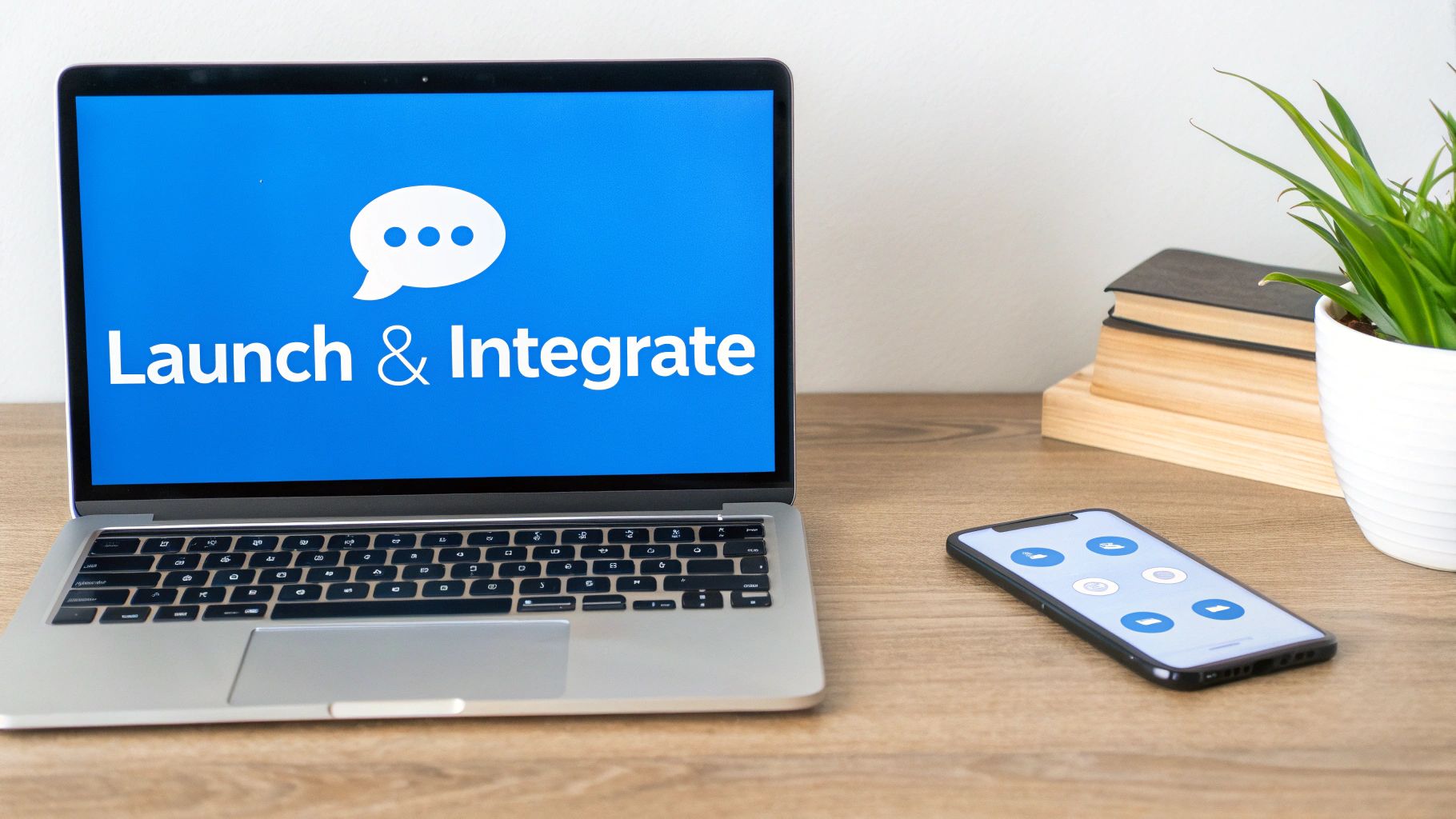
Getting a chatbot onto your site is usually a piece of cake. Most platforms, including FastBots.ai, give you a simple snippet of code. You just copy and paste it into your website’s header or footer. No developer needed—if you can edit a page on your site, you can get your bot live in minutes. Instantly, your website goes from a static brochure to an interactive lead-capturing machine.
Go Where Your Customers Already Are
While your website is home, the real power comes from meeting your customers on the platforms they use every single day. Don't make them come to you—go to them. Deploying your bot across social media is an absolute game-changer for engagement.
Think about the key channels for US businesses:
Facebook Messenger: This is a goldmine for local businesses. Customers are already checking your Facebook page for hours, updates, and directions. A bot can answer their questions right there and even take bookings without them ever leaving Messenger.
Instagram DMs: If you’re an e-commerce brand or a service provider, you know how flooded your DMs get with questions about products, appointments, or collabs. An AI assistant can handle that initial wave of inquiries, sorting the serious from the curious.
Your chatbot shouldn't be a destination; it should be a presence. By showing up on the platforms your customers already love, you remove all the friction and make it incredibly easy for them to do business with you.
Unlock the Real Magic with Integrations
Just having your bot live is one thing. The real magic happens when you connect it to the other software that runs your business. An integrated chatbot for small business isn't just a Q&A tool; it's an automation engine that plugs directly into your existing workflows.
This is where your bot stops just answering questions and starts actively growing your business. For a deeper look at how this works in the real world, check out our guide on the smart ways businesses are using AI chatbots.
Here’s how these connections create a powerful, hands-off system:
| Integration Type | Popular US Tools | What It Does for You |
|---|---|---|
| CRM Sync | HubSpot, Zoho, Salesforce | Automatically creates a new lead in your CRM the second the chatbot captures someone's contact info. Say goodbye to manual data entry. |
| Booking System | Calendly, Acuity Scheduling | Lets the chatbot check your real-time availability and book appointments directly on your calendar, firing off confirmations to both you and the client. |
| Email Marketing | Mailchimp, Constant Contact | Adds new leads from the chatbot straight to your email newsletter list, so you can start nurturing them right away. |
These integrations turn your chatbot into the central hub of your customer strategy. It can capture a lead on your website, create a contact in HubSpot, and schedule a follow-up call in Calendly—all while you’re focused on something else. This is how you build a system that truly works for you, 24/7.
Improving Your Chatbot Over Time
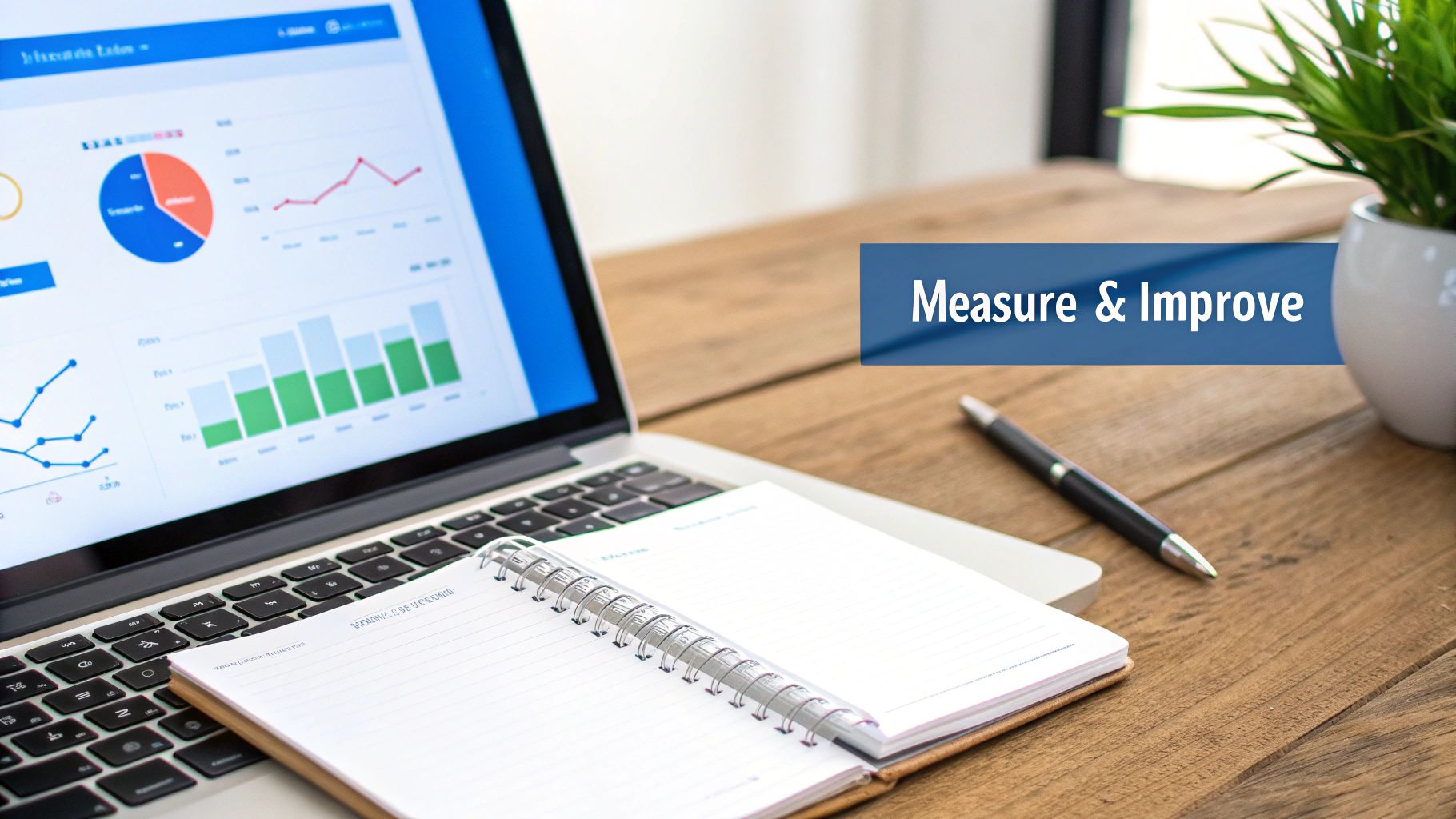
Getting your chatbot live is just the starting line. Think of it like a new employee—it needs ongoing attention to go from being just a helpful tool to an absolutely essential part of your team. The real magic of a chatbot for small business happens over time, as you watch how it performs and teach it to get even smarter.
This isn’t about getting lost in a sea of complex data. It’s about focusing on the numbers that actually matter to your business. How many leads did it capture? How many appointments did it book? These are the tangible results that prove your bot is pulling its weight.
Digging into Chatbot Analytics
Most chatbot platforms give you a dashboard with key metrics. Don't get overwhelmed. You only need to zero in on a few critical data points to see where you can make improvements.
A great place to start is simply reading the chat logs. See how real people are talking to your bot. Look for the conversations where users got stuck, seemed frustrated, or where the bot just couldn't find the right answer. This is direct, unfiltered feedback, and it's gold.
The "unanswered questions" log is your secret weapon. This isn't a list of failures; it's a goldmine of customer needs you didn't even know you had. It shows you exactly where the knowledge gaps are in your bot's brain.
Checking this log regularly helps you understand what your customers are really asking. This lets you update your chatbot's knowledge base, which in turn improves your entire customer service game.
Creating a Simple Improvement Cycle
You don’t need to be glued to the dashboard every day. A simple monthly check-in is usually more than enough to keep your chatbot performing at its best. During this review, just focus on a few key things.
One of the biggest metrics to watch is customer satisfaction. To make your bot better over time, you have to get a handle on measuring customer satisfaction. These insights will help you tweak the bot’s tone, helpfulness, and overall personality.
This process is becoming non-negotiable as customer expectations evolve. A recent study found that 67% of consumers have used a chatbot in the last year, and a massive 68% expect its expertise to be on par with a human.
People now trust and rely on bots for fast, accurate help. By continuously refining your chatbot, you make sure it meets these high expectations and remains a powerful asset for your business.
Common Questions About Business Chatbots
Even after seeing all the benefits, it’s smart to have a few questions. Bringing any new tool into your business is a big step, so let's get into the nitty-gritty and tackle the most common concerns American small business owners have when they first look at chatbots.
Getting solid answers to these questions will help you move forward with confidence, knowing you’re making the right call for your company.
What Is the Real Cost of a Chatbot for a Small Business?
First things first, let's bust a myth: chatbots aren't just for giant corporations with bottomless budgets. The technology has become incredibly affordable and accessible. Many top-tier platforms even offer free starter plans, which are perfect for testing the waters without spending a dime. You can build a basic bot and see its value for yourself.
When you're ready for more firepower, paid plans for a capable chatbot for small business usually fall somewhere between $20 to $100 per month. The price typically depends on advanced features and how many conversations the bot handles.
Think about it this way: for most small businesses, a powerful, lead-generating chatbot costs less than a daily fancy coffee. It's a tiny fraction of what you'd pay a part-time employee to cover after-hours questions.
Will a Chatbot Annoy My Customers?
This is a totally valid fear, but it’s usually based on memories of those clunky, robotic chatbots from years ago. Today’s bots are a different breed—they're designed to be conversational, genuinely helpful, and feel like a natural part of your brand. You get to control the tone and personality, making sure it sounds just like you.
The real key to keeping customers happy is just being straight with them.
Be upfront: Let people know they're talking to a bot. A simple "Hi, I'm the AI assistant!" works wonders.
Provide an escape hatch: Always, always have a clear and easy way for them to connect with a real person if they need to.
What’s interesting is that customer expectations are changing. A lot of people now prefer getting an instant answer from a bot for a simple question instead of waiting on hold for a human. Convenience is king.
Do I Need to Be a Tech Expert to Build a Chatbot?
Not at all. The best chatbot platforms for small businesses are built to be "no-code" or "low-code." That means they use intuitive, visual builders where you just drag and drop elements. If you can write an email or map out a simple flowchart, you've got all the skills you need.
It’s less like programming and more like teaching. You’re just giving the bot the answers to common questions and telling it when to share them. Most providers, including FastBots.ai, also give you pre-built templates and a ton of support to walk you through it.
How Do I Handle Customer Data and Security?
Protecting your customers' information isn't just a good idea—it's non-negotiable. Any reputable chatbot provider will make security a top priority, using things like data encryption and complying with major data privacy regulations. When you’re shopping around, look for a platform that’s transparent about its security practices.
For businesses in the US, a simple rule of thumb is to never collect highly sensitive information—like credit card details or Social Security numbers—directly inside the chat window.
Instead, your chatbot should guide users to your secure payment pages or encrypted online forms. This is a best practice that keeps their private data handled through the right channels, keeping them safe and your business protected.
Ready to see how a digital employee can completely change how you work? With FastBots.ai, you can build a custom AI chatbot trained on your business data in just minutes. Start capturing leads, answering questions 24/7, and reclaiming your valuable time. Build your free chatbot today!