Build a Chatbot For Instagram That Converts

So, what exactly is a chat bot for instagram? Think of it as an automated assistant that lives in your Instagram Direct Messages. It uses artificial intelligence to chat with users, answer their questions, qualify potential customers, and point them toward the right products—all day, every day. It's your brand's digital front-line support and sales agent, always on.
Why Your Brand Needs an Instagram Chat Bot
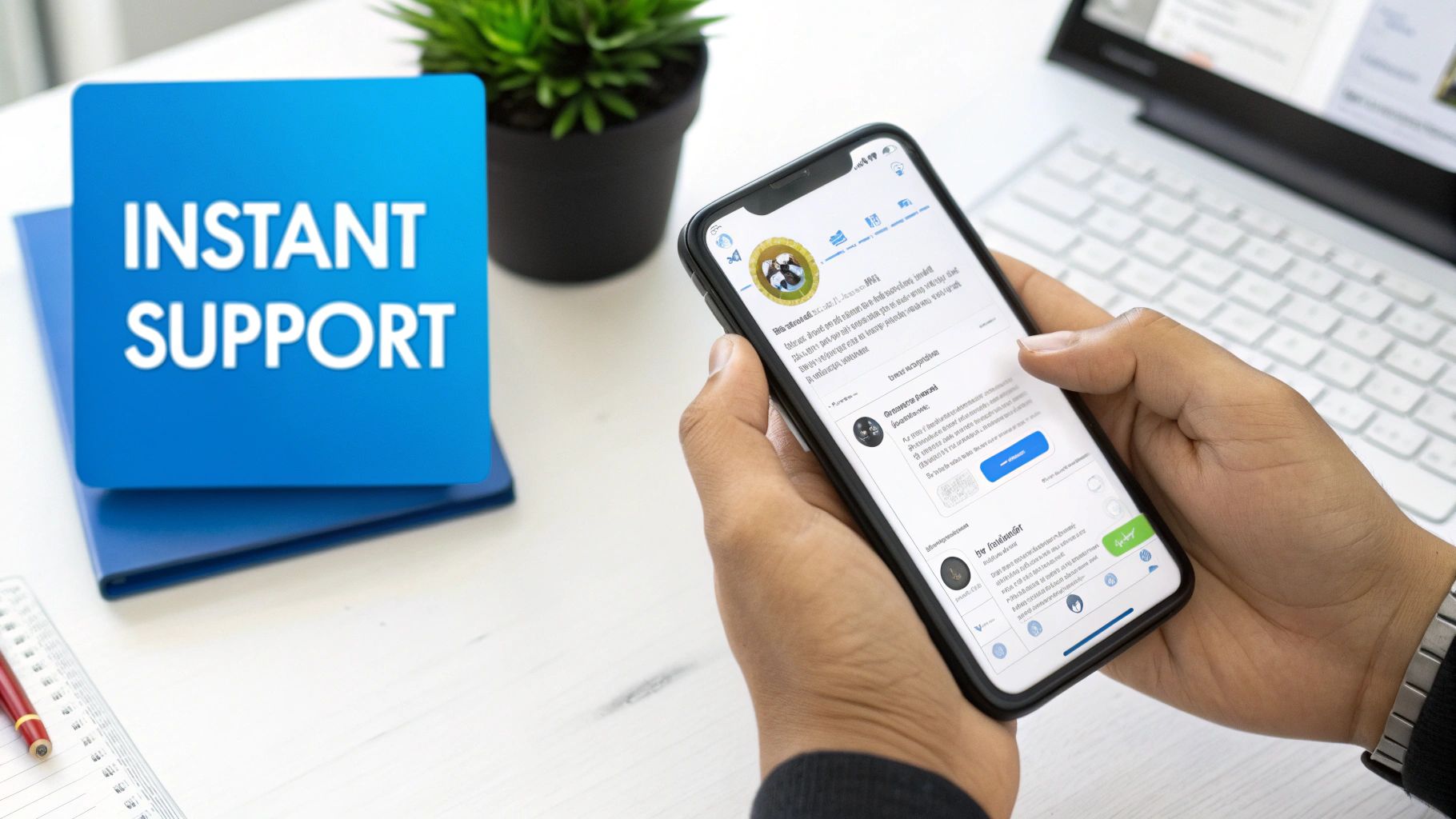
We live in a world of instant gratification. Customers expect immediate answers, and waiting hours for a reply just doesn't cut it anymore. An Instagram chat bot completely closes this gap, turning your DMs from a simple support channel into a proactive engine for growth.
It’s not just about speed, though. It’s about creating personalized experiences at a scale that a human team could never manage.
This kind of automation frees up hundreds of hours for your team. Instead of manually typing out the same shipping policy details for the tenth time today, they can focus on solving complex problems and building real relationships. The bot handles the repetitive stuff, so your people can handle the meaningful stuff.
The Tangible Business Impact of Automation
The value here isn't just theoretical; it's showing up in the numbers. The global chatbot market hit a value of $15.57 billion in 2024 and is expected to jump to $19.39 billion in 2025. That’s a massive growth rate.
This boom is driven by businesses on platforms like Instagram who are chasing flawless, 24/7 customer service.
The real power of an Instagram chat bot is its ability to meet the modern customer's demand for instant interaction. On a platform with billions of users, that's how you stand out and build real loyalty.
Ultimately, an Instagram chat bot is a powerful tool for turning followers into customers, slotting perfectly into modern lead generation social media strategies. When you engage users the second they show interest, you capture their attention when it's at its absolute peak.
To put it simply, here’s a quick look at the direct, measurable impact an automated chat solution brings to your Instagram presence.
Immediate Wins From an Instagram Chat Bot
| Benefit | Business Impact |
|---|---|
| 24/7 Availability | You never miss a lead or support query, no matter the time zone or your team's schedule. |
| Instant Responses | Drastically cut down response times and meet the need for speed that customers now expect. |
| Lead Qualification | The bot automatically asks screening questions to find high-intent prospects for your sales team. |
| Reduced Costs | Lower your overhead by automating answers to common questions, reducing the need for a large support staff. |
These benefits come together to create a more efficient, responsive, and profitable Instagram strategy.
From Answering Questions to Driving Sales
Imagine this scenario: a user comments on your post about a new product. Instantly, your bot slides into their DMs with a link to buy it. It can answer their follow-up questions about sizing and even offer a first-time buyer discount on the spot.
This entire journey—from initial interest to final conversion—happens automatically, without a single human touchpoint. By putting a bot in place, you're not just answering questions; you're actively boosting your brand visability and creating a far more interactive experience for your customers.
Your Pre-Launch Strategy and Checklist
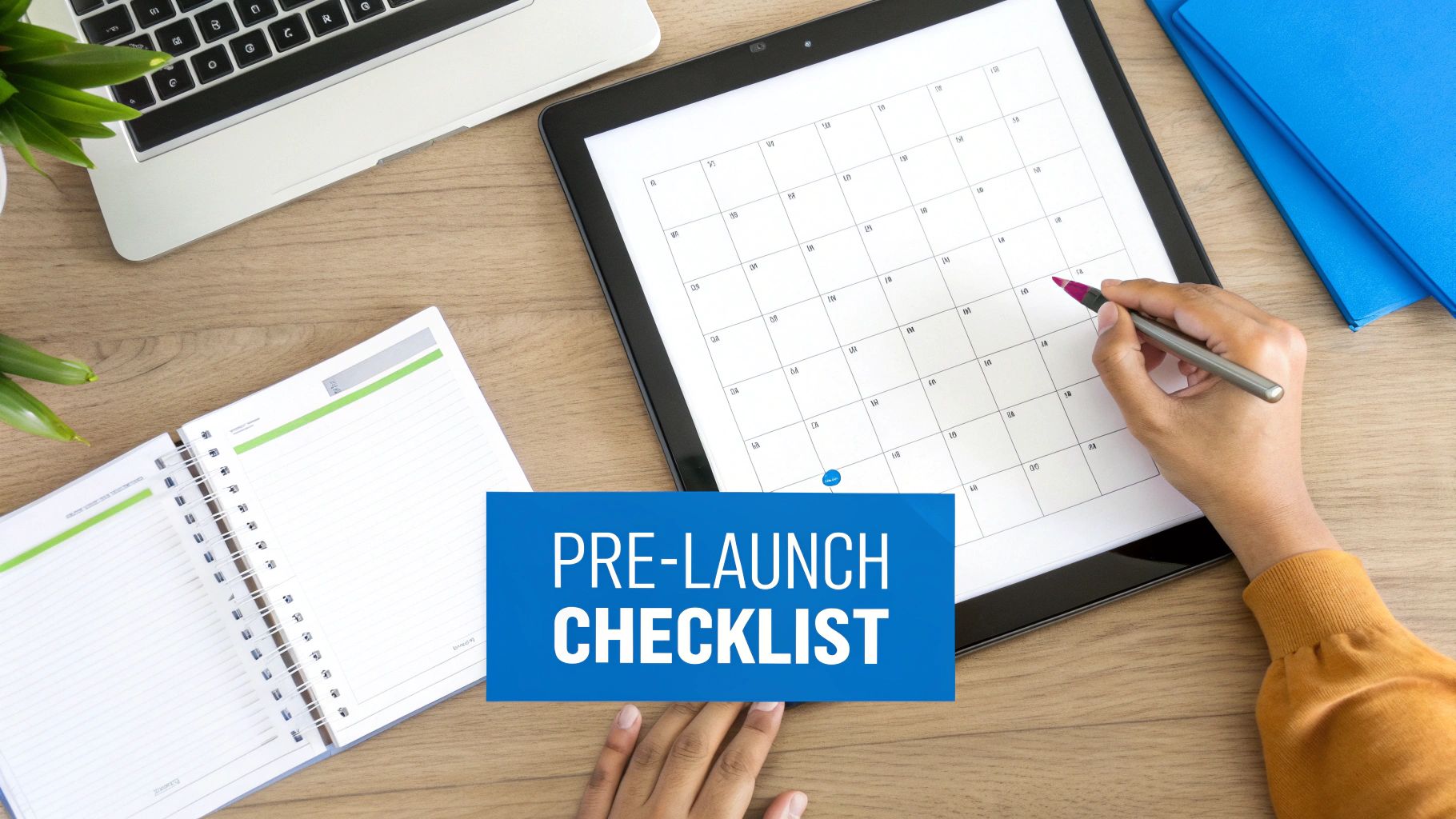
Jumping into a chatbot platform without a clear plan is a recipe for a clunky, frustrating user experience. It's tempting to start designing messages right away, but laying the proper groundwork first is what separates a gimmick from a genuinely useful tool.
Think of this as your pre-flight checklist. Getting these things right ensures your bot is built on a solid foundation, both technically and strategically.
Nailing the Technical Prerequisites
First things first, let's get the non-negotiable technical bits sorted. Your journey into Instagram automation begins with your account structure, and to use the official Instagram Messaging API—the only safe and sanctioned way to deploy a chatbot—you have to play by Meta's rules.
Your Instagram profile absolutely must be a Business Account. If you’re still using a Personal or Creator account, you'll need to make the switch in your settings. This is what unlocks the API access you need to connect to a platform like FastBots.ai.
Next, you need an active Facebook Business Page that you have admin access to. You have to link this Facebook Page directly to your Instagram Business Account. This connection is the bridge that lets third-party tools talk to your Instagram DMs securely.
Here’s the simple breakdown:
Instagram Business Account: This is the foundational requirement. No exceptions.
Linked Facebook Page: Your Instagram must be officially connected to a Facebook page you manage.
Admin Permissions: You must have full admin rights for the Facebook Page to authorize everything.
Honestly, failing to set this up correctly is the #1 reason integrations fail. Double-check that the accounts are properly linked in your settings before you do anything else.
What’s the Point? Defining Your Bot's Core Purpose
With the tech handled, we can move to the most important question you'll ask: What do you actually want this bot to accomplish? A bot without a clear goal is just noise. But a bot with a defined purpose becomes a powerful business asset.
Is your main objective to cut down on repetitive DMs and free up your customer support team? Maybe your goal is to capture more qualified leads from story replies. Or perhaps you want to guide users through a sales funnel, helping them find and buy products without ever leaving the app.
A well-defined objective is the north star for your entire bot-building process. It dictates the tone of your messages, the structure of your conversational flows, and the metrics you'll use to measure success.
For example, a boutique clothing store's bot might focus on showing off new arrivals and answering sizing questions to drive sales. In contrast, a SaaS company’s bot might prioritize booking demos by asking qualifying questions and integrating with a calendar tool. The goals are totally different, and so the bots will be, too.
Don't Sound Like a Robot: Crystallizing Your Brand Voice
Finally, remember that your bot is a direct extension of your brand. It should sound like you. Before writing a single line of dialogue, take a moment to define its personality. Is your brand voice playful and witty, or is it professional and straight to the point?
This is a critical step that people often skip. If your brand uses fun, casual language in its posts, you can't have a bot that sounds like a corporate machine. Consistency builds trust and makes the whole automated experience feel more natural for your audience.
Key Tone Considerations:
Formality: Will it use "Hey!" or "Hello"?
Emoji Use: Are emojis on-brand? If so, which ones feel right?
Proactiveness: Is it a passive helper that waits for questions, or an enthusiastic guide that makes suggestions?
Defining these elements now prevents a disjointed user experience later. Jot down a few key phrases and a general style guide for your bot to follow. This ensures every automated interaction reinforces your brand identity.
Choosing Your Platform and Designing Conversations
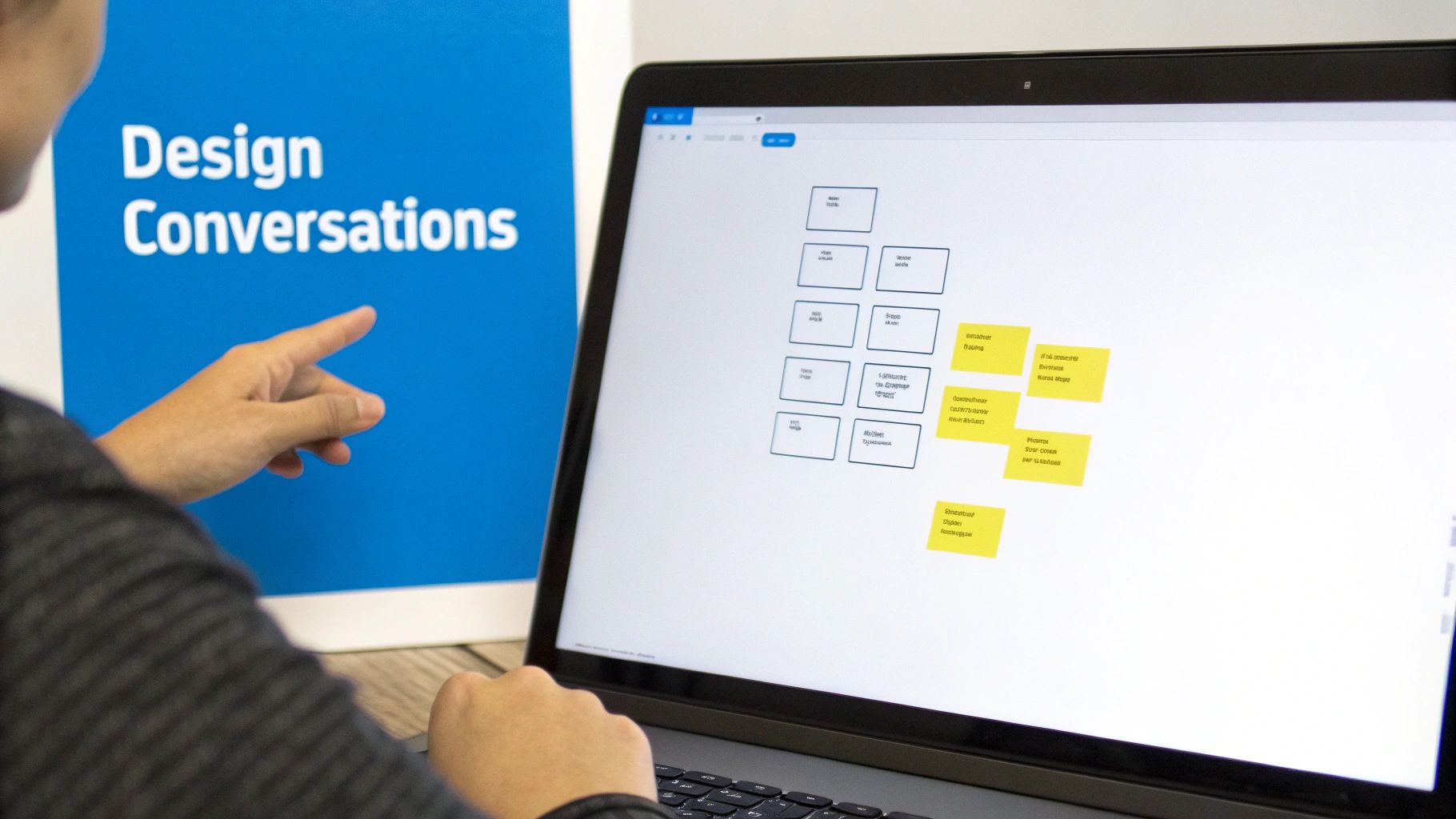
Alright, you've got your strategy mapped out. Now for the fun part: picking your tools and actually building the conversations your bot will have with customers.
This is where your vision starts to become a reality. The platform you choose is your command center, but the conversational flows you design? That’s the real heart of the user experience.
Selecting the Right Chatbot Platform
The market is flooded with options, which can feel a bit overwhelming. But honestly, it boils down to a few key things that matter for most businesses. You need a tool that your team can actually use without a computer science degree, that’s powerful enough to hit your goals, and that won't break the bank as you grow.
Let’s cut through the noise and look at three of the top contenders. These are all official Meta Business Partners, which is non-negotiable—it means they use the approved API and won't get your account in trouble.
ManyChat: This is often seen as the industry standard, and for good reason. Its visual, drag-and-drop flow builder is incredibly intuitive. It's also loaded with Instagram-specific features like Story Reply triggers and comment automation, making it a marketer's dream.
Tidio: Tidio really shines by blending live chat and chatbots into one clean inbox. If a human touch is a big part of your strategy, Tidio makes the handoff from bot to human agent seamless. It’s clean, user-friendly, and great for support-focused teams.
SendPulse: Think of SendPulse as a multichannel marketing machine. Its chatbot builder is integrated with email, SMS, and push notifications. It's a solid pick if you want an all-in-one solution for communicating with customers everywhere.
Feature lists are great, but the best platform is the one that fits your team's skills and your core objectives. Nearly all of them offer a free trial or a decent free plan, so I always recommend taking them for a spin before you commit.
Pro Tip: Don't sleep on platforms with good template libraries. Starting with a pre-built flow for something like lead generation or FAQs can save you dozens of hours and give you a proven framework to build on.
It's also worth noting that your audience is more than ready for this. AI chatbots are already a massive part of daily life. Meta AI has 500 million active users, and ChatGPT isn't far behind with 400 million. ChatGPT's growth is wild, with 4.6 billion monthly visits and a 123.35% year-over-year jump. People are actively seeking out AI conversations, putting your Instagram bot in a perfect position to meet them where they are.
Crafting Your First Conversational Flows
A "flow" is just the fancy term for the path a user takes when they talk to your bot. Good design is part art, part science—it needs to feel helpful and natural, not like you're talking to a brick wall. The best way to start is by building out a few core flows that tackle your main goals.
Your Welcome Message is absolutely critical. It’s your bot’s first impression. It needs to greet the user, quickly explain what it can do, and give them clear next steps. A simple "Hello" won't cut it.
Try something more like this: "Hey! Welcome to [Your Brand]. I can help you track an order, browse new arrivals, or connect you with a team member. What can I help you with today?"
This simple change immediately sets expectations and puts the user in the driver's seat.
Using Keyword Triggers for Instant Answers
Keyword triggers are your secret weapon for efficiency. Think of them as shortcuts. When a user sends a specific word or phrase, it automatically kicks off a pre-built response or flow. This is perfect for handling all those repetitive questions you get day in and day out.
Start by listing out the DMs you get most often. I'm willing to bet they fall into a few common buckets:
Pricing: "price," "cost," "how much"
Shipping: "shipping," "delivery," "track order"
Contact: "contact info," "email," "phone number"
For each group, build a tiny, focused flow that gives them exactly what they need. If someone messages "shipping," the bot can instantly reply with your policy, estimated delivery times, and a link to your tracking page. You'd be amazed at how many DMs this one feature can deflect from your inbox.
Blueprints for High-Impact Automation
Once you've got the basics down, you can move on to more advanced flows that drive real business results. These go beyond just answering questions—they're designed to drive action.
Blueprint 1: The Lead Magnet Flow
Trigger: A user replies to your Instagram Story about a new ebook with the keyword "EBOOK."
Bot Response: "Awesome! So glad you're interested. To send you the free ebook, I just need your best email address."
User Action: The user types in their email.
Bot Action: The bot confirms the email ("Got it! Your ebook is on its way to your inbox now.") and then...
Integration: ...automatically sends that email address to your CRM or email marketing platform.
Blueprint 2: The Support Triage Flow
Trigger: A user clicks a "Get Support" button on your profile or messages a keyword like "help."
Bot Response: "Sorry to hear you're having an issue! To get you to the right person quickly, what is this about?" It then shows buttons like "Order Issue," "Product Question," or "Other."
User Action: The user taps "Order Issue."
Bot Action: "Okay, can you please provide your order number?"
Integration: After grabbing the key details, the bot creates a support ticket in your helpdesk and pings a human agent with all the context.
Blueprints like these transform your bot from a passive receptionist into an active part of your marketing and support engine. For a deeper dive into building these kinds of automations, check out our guide on https://fastbots.ai/blog/how-to-make-a-no-code-ai-chatbot-for-instagram.
Integrating Advanced Workflows and Human Support
A truly powerful chat bot for instagram doesn't just stay inside your DMs—it acts as the central hub for your entire business ecosystem. By hooking it up to the other tools you already rely on, you go from simple Q&A to genuine, hands-off automation that captures leads and saves a ton of time.
This is where you start seeing some serious efficiency gains. We're talking about building automated workflows that eliminate the mind-numbing data entry and follow-up tasks that eat away at your team's day.
Unlocking Automation with Zapier and Make
Tools like Zapier and Make (which you might remember as Integromat) are the secret sauce here. They're the glue that connects your Instagram bot to thousands of other apps. They work on a simple "when this happens, do that" logic, letting you build out pretty sophisticated workflows without touching a single line of code.
Think of it like setting up a series of dominoes. When your chatbot captures a new lead, that one little event can kick off a dozen different actions across your software stack, all running silently in the background.
Let's walk through a real-world scenario for an e-commerce brand:
The Trigger: A user messages your Instagram page and gives their email address to the bot to grab a 15% discount code.
The Action: Zapier or Make instantly picks up this new lead information from your chatbot platform.
The Workflow: The integration immediately adds the user's name and email to your Klaviyo or Mailchimp list, maybe tagging them as an "IG Lead." At the same time, it can pop a new row into a Google Sheet to help you track the campaign's performance.
This whole chain reaction happens in seconds. Nobody on your team has to copy and paste anything, and that new lead is instantly dropped into your email nurture sequence. Getting these connections right is a huge part of smart growth; you can dig deeper by exploring campaign automation best practices that work across different channels.
Perfecting the Bot-to-Human Handover
Automation is a game-changer, but it’s not a silver bullet. You’ll always run into complex, sensitive, or high-intent conversations that need a real person to step in. A seamless handover from bot to human is absolutely critical for a good customer experience.
Remember, the goal isn't to replace your team—it's to supercharge them. The bot should act as a bouncer, handling all the routine questions and gathering the important info first. That way, when a human agent jumps in, they have all the context they need to solve the problem right away.
A well-designed bot-to-human handover ensures that automation handles the routine, freeing your team for the high-impact conversations that build relationships and close sales. It's the best of both worlds.
This hybrid model is key to keeping customers happy. It shows them you value their time by giving instant answers when possible and expert help exactly when it's needed.
Creating Smart Handoff Triggers
So, how does the bot know when to wave the white flag and call for backup? You need to set up specific triggers that automatically pause the automation and ping your team.
Here are a few essential triggers you should configure from day one:
Keyword-Based Alerts: Set up notifications for words that signal frustration or a complex problem, like "complaint," "broken," "refund," or the classic "speak to a human."
Sentiment Analysis: Many modern chatbot platforms can detect negative sentiment. If the bot senses a user is getting angry or frustrated, it can automatically create a support ticket and alert an agent.
High-Value Actions: Trigger an alert when someone asks about your most expensive products, enterprise plans, or custom quotes. This gives a sales pro the cue to jump in and deliver a personalized touch.
Flow Failure: If a user gets stuck in a conversational loop or fails to answer a question a few times, the bot should flag the chat for a human to review.
These smart alerts make sure no customer falls through the cracks. The bot does the heavy lifting, and your team is brought in at the exact moment their expertise will make the biggest impact. If you're curious how these automated flows can directly boost your bottom line, our guide on how to automate sales through Instagram DM chatbots dives into more specific examples.
Testing, Launching, and Optimizing Your Bot
Deploying your Instagram chatbot isn't the finish line; it’s the starting line for a continuous cycle of improvement. A bot that isn’t rigorously tested and consistently tweaked will quickly become more of a frustration than a help. This phase is all about refining the user experience based on real-world conversations.
The launch itself should be methodical, not a mad dash. Before you announce your shiny new bot to the world, conduct thorough internal testing with your team. Treat them like real customers and have them try to break things. Can they get the bot stuck in a loop? Do the keyword triggers fire correctly? Does the handover to a human agent work without a hitch?
This internal stress test is invaluable for catching obvious bugs and awkward phrasing before they ever reach your audience.
A Practical Framework for Pre-Launch Testing
To make sure your rollout is smooth, you need a structured approach. Don’t just send a few random messages and call it a day; systematically test every single conversational flow you’ve built.
Create a simple checklist that covers every possible path a user might take. It should include things like:
Welcome Message: Does it appear instantly for new conversations? Are the initial options or buttons clear and functional?
Keyword Triggers: Test every keyword you’ve configured. Don't forget to include common misspellings or variations to see how the bot responds. If your trigger is "shipping," also try "shiping" or "track order."
Conversational Flows: Go through each decision tree from start to finish. If you have a lead capture flow, check that the data is correctly passed to your CRM or Google Sheet.
Human Handover: Purposely test the triggers that are supposed to alert your team. Does the notification come through on Slack or your helpdesk? Does the bot successfully pause its automations?
Your bot is only as good as its weakest link. A single broken flow or failed trigger can derail the entire customer experience, so being meticulous here saves you major headaches down the road.
Turning On the Lights: Your Soft Launch
Once you’re confident in your internal testing, it’s time for a soft launch. Instead of a big announcement, you can quietly enable the bot and let it interact with real users organically for a few days. This gives you a chance to gather initial data in a lower-pressure environment.
This is a critical observation period. Monitor the first few dozen conversations closely to see how people actually interact with your bot, not just how you thought they would. You’ll quickly spot areas for improvement.
Obsessing Over the Right Analytics
After your bot is live, your chatbot platform's dashboard becomes your new best friend. It’s easy to drown in data, but focusing on a few key metrics will tell you almost everything you need to know about your bot's performance.
The most important metrics to track are:
Flow Completion Rate: What percentage of users who start a specific flow actually make it to the end? A low completion rate on your lead magnet flow, for example, is a huge red flag. Something's wrong.
User Drop-Off Points: Pinpoint exactly where users are abandoning conversations. If 70% of users exit after the bot asks for their email, your request might be too aggressive or poorly timed.
Unrecognized Inputs: Look at the phrases and questions your bot didn't understand. This is a goldmine for identifying new keywords you need to build flows for.
Human Takeover Rate: How often does a human need to intervene? A high rate might mean your bot's scope is too narrow or its answers aren't helpful enough.
This data is especially crucial in a bustling environment like Instagram. The platform's scale is immense; as of 2025, Instagram business accounts have surged to over 350 million, a 17% increase year-over-year. With users spending an average of 33 minutes daily on the app, your bot is competing for attention, making a frictionless experience essential. You can discover more insights about current Instagram user behavior trends on sqmagazine.co.uk.
From Data to Actionable Improvements
The final step is turning these insights into concrete actions. Optimization isn't a one-time fix; it's an ongoing process of tweaking and refining based on what the data tells you.
If you notice a significant user drop-off in a flow, try simplifying the language or reducing the number of steps. A flow with seven steps might perform better if you can cut it down to four. If users are frequently asking questions your bot can't answer, prioritize building out new flows to handle those common queries.
This iterative process of testing, analyzing, and improving is what transforms a decent Instagram chatbot into an indispensable tool for your business.
Got Questions About Instagram Chat Bots?
Jumping into automation on a platform as crucial as Instagram can feel a bit daunting, even with a solid plan. It's smart to have questions. Let's walk through the most common concerns we hear from business owners, so you can move forward feeling confident.
These aren't just hypotheticals—they're the practical, real-world questions people ask right before they decide to build their own chat bot for Instagram. Getting these answers straight is the key to a smooth launch.
"Will Using a Chat Bot Get My Instagram Account Banned?"
This is the big one. It's easily the most common fear we see, and it's completely understandable. The short answer? No, not if you do it right.
The key is to only use an official Meta Business Partner.
Platforms like FastBots.ai, ManyChat, or Tidio are built on Instagram's official API. Think of it as Meta giving them a green light to connect to your account securely and play by the rules. They aren't scraping your data or doing anything that violates Instagram's terms of service.
Where you get into trouble is with sketchy, unofficial tools that ask for your Instagram password. Those kinds of services often try to mimic human behavior in ways that Instagram's systems can easily flag as spammy or fake. If any tool asks for your login details instead of going through the official Facebook Page connection process, run the other way.
Stick to Meta-approved platforms. This is the single most important rule for keeping your account safe. Using the official API isn't just a good idea; it's the only way to guarantee you're compliant and protecting your brand.
"What's the Real Cost of an Instagram Chat Bot?"
This is another area where people are often surprised—it's far more affordable than most assume. The price really just depends on how big your operation is and what kind of features you need.
Most of the top chatbot providers have a generous free plan. These are perfect for small businesses just dipping their toes in, usually covering basic features for up to 500 or 1,000 contacts. This is more than enough to set up welcome messages and simple keyword replies without spending a dime.
When you're ready for more, paid plans typically start at around $15 per month. Stepping up to a paid plan is what unlocks the seriously powerful tools that drive real business results, like:
Unlimited contacts and conversations
Deeper integrations with your CRM, email software, or tools like Zapier
Advanced automation workflows for things like qualifying leads and building sales funnels
Removing the platform's branding from your bot's messages
The ROI is usually a no-brainer. If a $15/month bot saves your team just a couple of hours of work or snags even one new customer, it’s already paid for itself many times over.
"What Are the Most Effective Uses for an Instagram Bot?"
The possibilities are endless, but a few high-impact use cases consistently deliver the best bang for your buck. My advice? Instead of trying to make your bot do a million things at once, start by mastering these core functions.
Here’s where you'll see the biggest wins:
Instant Customer Support: Think about the questions you get over and over again. Shipping policies, store hours, return process—a bot can handle all of it, instantly. This frees up your inbox and gives customers the fast answers they crave.
Automated Lead Generation: This one is huge. Program your bot to offer a discount code, a free guide, or webinar access in exchange for an email. Just like that, you're turning Instagram followers into actual leads you can nurture in your sales pipeline.
E-commerce Sales Support: The bot can act like a personal shopper in the DMs. It can guide users to the right product pages based on what they're looking for and answer pre-purchase questions about sizing, materials, or availability. It’s a great way to nudge someone from "just browsing" to "checking out."
Focus on these proven strategies first. You’ll guarantee your bot provides immediate, measurable value to both your business and your customers.
Ready to build a powerful AI assistant for your Instagram DMs? With FastBots.ai, you can create a custom chat bot trained on your own business content in minutes, no coding required. Start automating support, capturing leads, and driving sales 24/7. Get started for free today!