Are AI bots legal? Your Practical Guide to Staying Compliant

So, are AI bots legal? The short answer is yes, absolutely. Using an AI chatbot for your business is completely legal, but it does come with a few important responsibilities you need to manage. Think of it less like navigating a minefield and more like following a clear set of rules for the road.
The global focus isn't on banning this technology. Instead, regulators want to ensure it's used with transparency and respect for user data—which are just good business practices, anyway.
Why This Matters: Understanding the AI Legal Landscape
When you deploy an AI chatbot, you're adding a powerful and perfectly legal tool to improve your customer experience. Most regulations simply require you to be honest with your users and protect their information. In other words, they're asking you to do the right thing.
AI bots are legal to use in major markets all over the world. In fact, it's predicted that over 1 billion people will be actively using AI tools like chatbots by late 2025. You can dig into the numbers in recent digital trend reports. This massive adoption shows that governments are typically encouraging responsible AI innovation, not trying to shut it down.

Core Capabilities: What AI Bot Legality Means for You
To help you understand the core legal concepts, we've broken them down into a simple table. This is a quick summary of the main areas you need to be aware of when you launch a chatbot for your business.
AI Bot Legality at a Glance
| Legal Area | What It Means for Your AI Bot | A Simple Action Step |
|---|---|---|
| Transparency & Disclosure | You must clearly tell users they're interacting with an AI, not a person. This builds trust and is a legal requirement in many places. | Add a welcome message like, "Hi, I'm the AI assistant for [Your Company]." |
| Data Privacy & Consent | If your bot collects personal information (like names or emails), you need the user's consent. You also have to explain how you'll use their data. | Link to your privacy policy in the chat window and ask for consent before collecting sensitive info. |
| Consumer Protection | Your bot cannot make false claims or engage in deceptive practices. You are responsible for the accuracy of the information it provides. | Train your bot on your own verified content using a platform like FastBots.ai to ensure accuracy. |
| Intellectual Property | You must have the right to use the content your bot is trained on. Using copyrighted material without permission is a serious legal risk. | Only upload documents, website content, and data that your business owns or has a license to use. |
Sticking to these principles isn't just about avoiding legal trouble. It's about building a better, more trustworthy experience for your customers from day one.
How to Implement: Navigating the Global AI Rulebook
Trying to understand AI regulations can feel like learning a new language, especially when every region seems to have its own dialect. The good news is that no matter where you look, the core principles are pretty consistent: be transparent, be fair, and be accountable for what your bot does.
This global conversation around AI isn't about slamming the brakes on innovation. The fact that we're seeing specific, targeted rules instead of broad bans is proof that AI bots are here to stay.

The US Approach: Focusing on Consumer Protection
In the United States, the playbook is usually to apply existing laws to new tech. Instead of drafting entirely new AI legislation, agencies like the Federal Trade Commission (FTC) lean on established consumer protection laws to keep things fair.
What does this mean for you? It means your AI bot has to be truthful. It can’t make false claims or mislead users, just like a human salesperson couldn't. This creates an environment where new ideas can flourish while still holding you responsible for your bot's actions.
The EU Approach: A Risk-Based Framework
Across the pond, the European Union has carved a more direct path with its landmark EU AI Act. This regulation sorts AI systems into different categories, from minimal to unacceptable, based on their potential to harm people.
Most chatbots used for customer service or marketing land squarely in the minimal-risk category. For these bots, the main rule is simple: transparency. You just need to make it crystal clear to users that they're chatting with an AI.
What about Global Privacy Laws?
Here's the non-negotiable part. If your bot talks to people in other regions, you have to play by their local data privacy rules. Getting this wrong can lead to some hefty penalties.
For any business using AI bots, getting a handle on AI regulatory compliance is a must. Two laws, in particular, should be on your radar:
- General Data Protection Regulation (GDPR): If your bot collects personal data from anyone in the EU, the GDPR applies to you. It means you need a legitimate reason to collect data, a clear privacy policy, and a way for users to exercise their rights.
- California Consumer Privacy Act (CCPA): This gives Californians more say over their personal information. Much like the GDPR, it's all about transparency and giving people control over their data.
What to Watch Out For: Limitations and Considerations
Even with the best intentions, it's easy to stumble into common legal and reputational traps. Answering the question "Are AI bots legal?" often boils down to steering clear of a few key mistakes.
A classic pitfall is making claims about what your bot can do that aren't quite true, a practice that consumer protection agencies are actively cracking down on. Another is getting lazy with data security, which can lead to costly breaches and vaporize user trust in an instant.
Overpromising and Under-delivering
One of the fastest ways to get into hot water is to misrepresent your AI bot's abilities. For instance, if your bot offers "expert financial advice" but isn't qualified to do so, you're creating a massive liability. The information your bot provides is legally seen as coming directly from your company.
The fix? Be precise and honest in your marketing and in the bot's own language. For example, a healthcare bot should state it provides general information, not a medical diagnosis, and always guide users toward a qualified professional.
Neglecting Data Security and Privacy
Protecting user data is non-negotiable. A common mistake is building your bot on a platform without serious security measures, leaving sensitive customer chats exposed. A single data breach can trigger crippling fines under laws like GDPR and do irreparable damage to your brand.
You have to treat chatbot conversations with the same level of security as any other customer data. That means choosing a platform that provides end-to-end encryption and is compliant with standards like SOC 2.
Ignoring Intellectual Property Rights
Another serious trap is training your bot on copyrighted material without permission. Just because something is online doesn't mean it's free for you to feed into your commercial AI model. This can drag you into messy and expensive intellectual property disputes.
The safest play is to train your bot only on content you own or have explicit rights to use. This means your own website content, product manuals, and internal documents. Using a platform like FastBots.ai that lets you restrict the bot's knowledge base to your own uploaded files is a simple way to sidestep this risk.
Conclusion: How to Move Forward with Confidence
Getting a handle on the rules is a big deal, but you don’t have to go it alone. Picking the right chatbot platform can make compliance feel almost automatic. A well-built, secure tool turns those complicated legal requirements into simple, built-in features.
Think of it like building a house. You could learn all the local building codes yourself, or you could hire an expert architect who has already baked them into the blueprints. A platform like FastBots.ai is that expert architect—security and compliance are built-in. For more details on this, check out our guide on how secure AI chatbots really are.

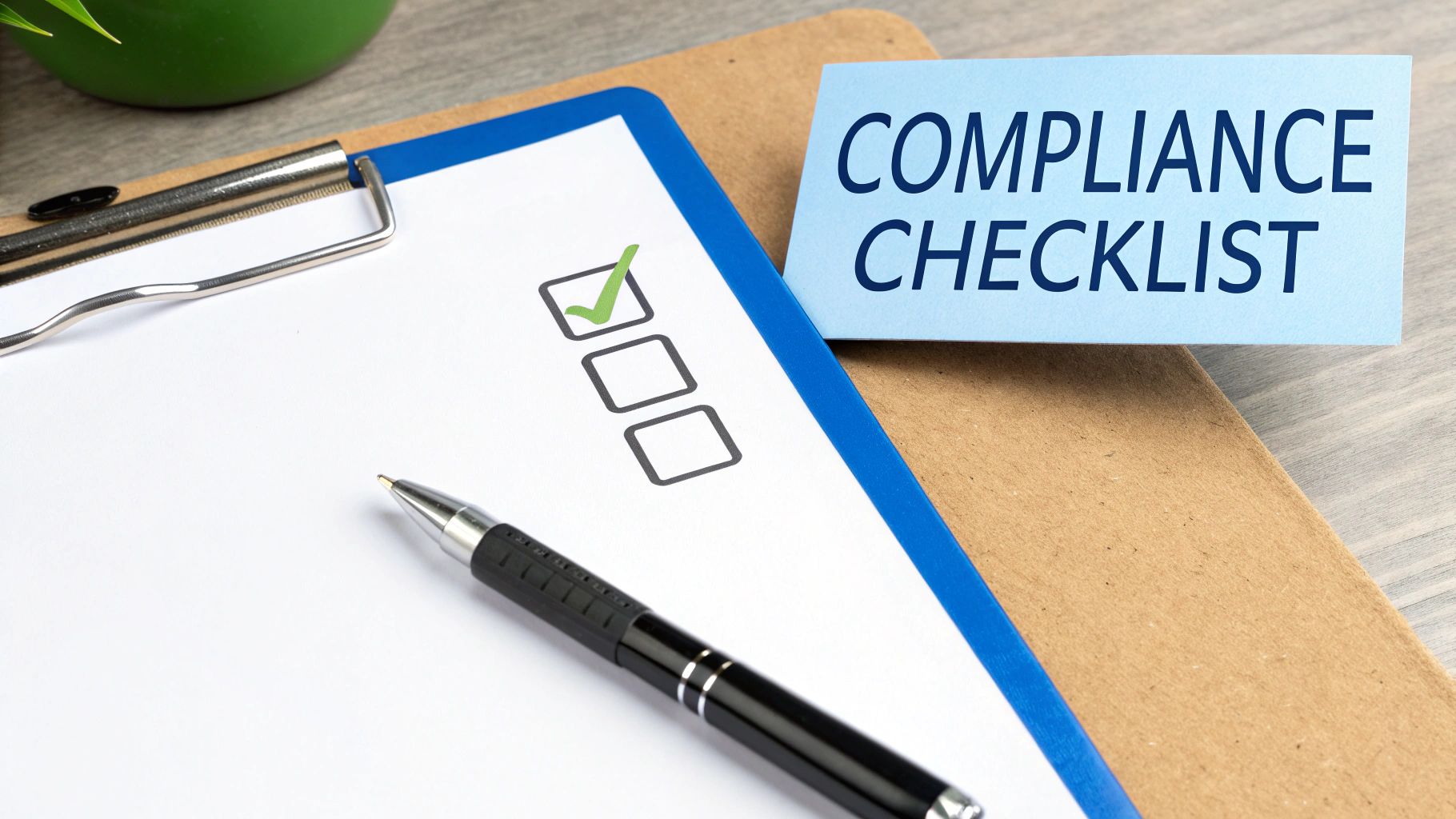
Actionable Takeaway: Your Quick Compliance Checklist
While the legal fine print varies, a few solid practices will keep you in the clear just about anywhere. Think of this as your universal checklist for ensuring your AI bots are legal.
- Always Disclose: Kick off every chat by letting the user know they're talking to an AI. No surprises.
- Get Clear Consent: Before you ask for any personal info, get the user's explicit permission and explain why you need it.
- Link Your Privacy Policy: Make your privacy policy easy to find right in the chat window. We've seen many businesses use this to build trust.
- Prioritize Data Security: Use a secure, compliant platform that encrypts data and meets major standards like SOC 2 and GDPR.
- Have a Human Handover: Make sure there's a simple way for users to connect with a person. Our post on using AI chatbots to improve compliance with regulations has some great tips on this.
Build your chatbot strategy around these pillars, and you can deploy your bot with confidence, knowing you're respecting users and staying on the right side of the law.
Ready to build a powerful, secure, and compliant AI assistant for your business? FastBots.ai gives you all the tools you need to launch a trustworthy chatbot in minutes. Start your free trial today and see how easy it is to automate support, capture leads, and delight your customers.