Your Guide to AI Outbound Calling for Modern Sales

Let's be honest: if your sales team is still grinding away with manual dialing, you're fighting an uphill battle. The old-school approach of reps spending hours on cold calls is losing its punch. It’s a numbers game, and it's nearly impossible to win when your main bottleneck is human capacity.
This is where AI outbound calling comes in. Think of it as a tireless, smart assistant for your sales and support teams. It's designed to automate those repetitive, top-of-funnel phone calls—like qualifying leads or setting appointments—so your human experts can jump in when it really matters.
Why AI Calling Matters for Modern Sales Outreach

Imagine giving your team a tool that can place thousands of initial calls a day, 24/7, without ever getting tired or discouraged. That’s the simple idea behind AI calling: automate the first touchpoint to sift through the noise and find genuinely interested prospects.
The Shift Towards Automated Communication
This isn't just a niche tech trend; it's a fundamental change in how businesses connect with their customers. Companies are getting on board because the advantages in scale and efficiency are simply too big to ignore.
So, what's driving this big shift?
- Sheer Scale: An AI agent can handle a call volume that would require a massive human team, making growth much more realistic.
- Perfect Consistency: Every single call follows your best script to the letter. No off-days or forgotten talking points—just a consistent brand message every time.
- Data-Driven Smarts: Every interaction gets logged and analyzed, giving you a goldmine of data to tweak your scripts and sharpen your strategy.
The growth here is significant. It's projected that by 2025, businesses will generate 30% of their outbound marketing messages using AI. That’s a nearly 98% leap from 2022, signaling a major pivot in how sales and marketing get done.
This move to automation goes beyond simple text messages or chatbots. The latest voice AI is so good that these automated conversations can sound incredibly natural and human-like. If you want to dive deeper into the tech, you can learn more about the rise of voicebots in customer service.
Ultimately, it’s about freeing up your skilled sales pros to do what they do best: build relationships and close deals with people who are already warmed up and interested.
Traditional vs. AI Outbound Calling: A Quick Comparison
To really see the difference, it helps to put the old and new methods side-by-side. The contrast shows why so many teams are making the switch.
| Feature | Traditional Outbound Calling | AI Outbound Calling |
|---|---|---|
| Scale | Limited by the number of human agents and their work hours. | Can make thousands of calls simultaneously, 24/7. |
| Cost | High labor costs (salaries, benefits, training). | Lower operational cost per call; scales without linear hiring. |
| Consistency | Varies by agent, mood, and time of day. | 100% consistent; follows the script perfectly every time. |
| Data Collection | Relies on manual notes and CRM entry; often incomplete. | Automatically logs call outcomes, transcripts, and analytics. |
| Lead Qualification | Time-consuming; reps spend hours on unqualified prospects. | Efficiently filters leads, handing off only warm prospects. |
| Downtime | Subject to breaks, sick days, and burnout. | Zero downtime; operates continuously without breaks. |
| Human Focus | Repetitive dialing and initial screening. | High-value tasks: closing deals and building relationships. |
This table makes it clear: AI isn't here to replace skilled salespeople. It’s here to take over the robotic, repetitive parts of the job so they can focus on what humans do best.
The Core Capabilities of AI Voice Agents
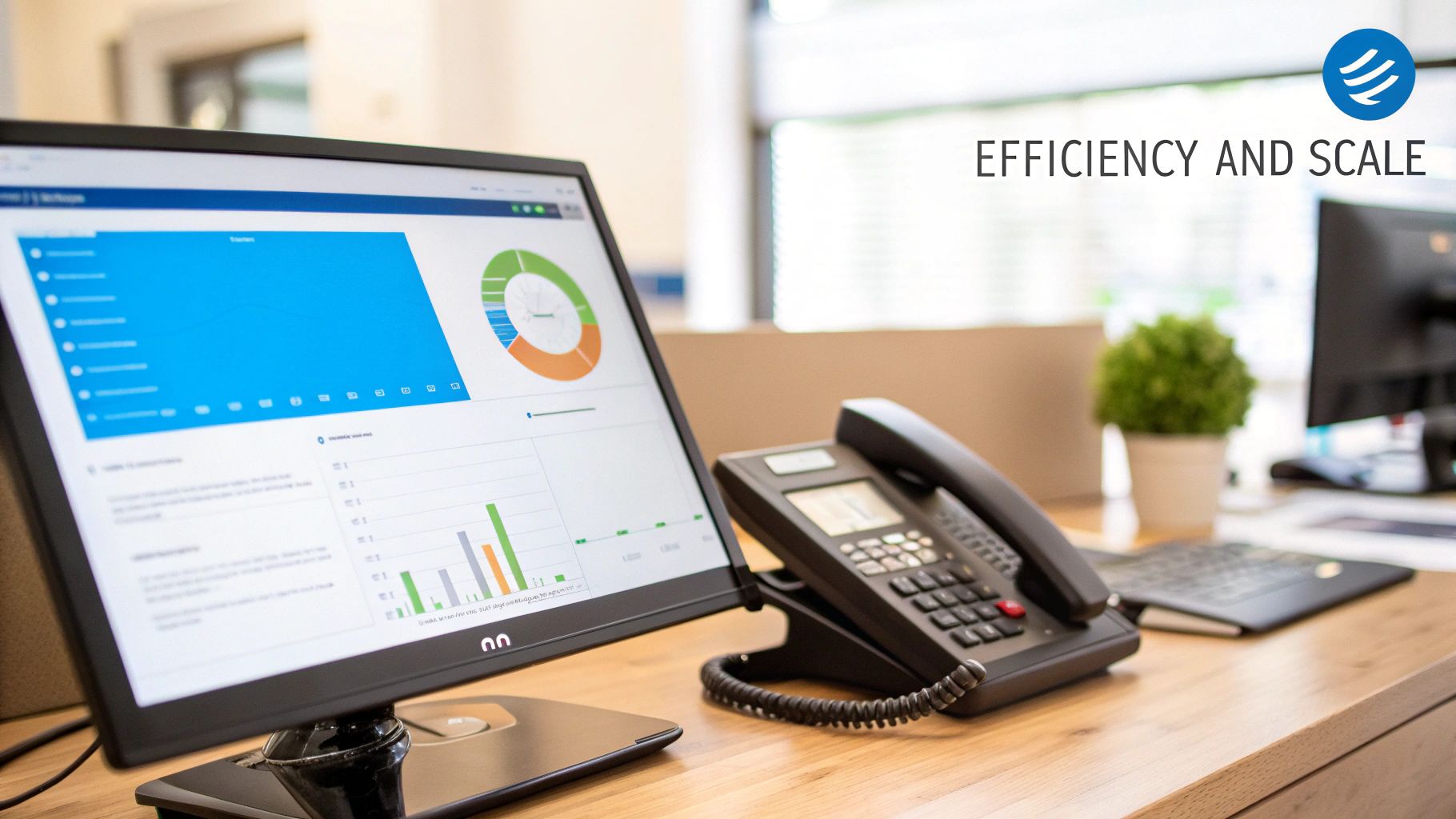
When you start looking at AI voice agents for your outbound strategy, the advantages are not subtle. This isn't just about dialing more numbers; it's about making smarter, more efficient, and far more cost-effective calls that actually get results. The benefits ripple through your entire outreach process.
Let's get straight to the biggest one for most businesses: dramatic cost reduction. Hiring, training, and retaining a team of human sales reps is a significant expense. AI voice agents can work for a fraction of that cost, which suddenly makes large-scale outreach possible for companies that couldn't afford a large call center.
This cost gap is a key driver for the adoption of ai outbound calling. An AI agent might cost around $500 a month. In contrast, a human rep typically costs somewhere between $4,000 and $5,500 per month. That's a potential cost reduction of up to 90%, a figure that recent industry analyses have highlighted. Explore more data on AI versus human agent costs on Sidetool.co.
Unlocking Operational Efficiency
Beyond the money you can save, AI brings a level of operational efficiency that a human team simply can't match. An AI can make thousands of calls at the same time, 24/7, and it never gets tired, burned out, or has a bad day. This means your lead qualification and appointment setting engine keeps running long after your team has gone home.
Consistency is another massive win. Every prospect gets the exact same, perfectly delivered pitch, every time. An AI never forgets a key talking point or goes off-script. Your brand's message is always presented precisely the way you designed it.
Turning Conversations into Actionable Data
Finally, every call an AI agent makes becomes a rich source of structured data. Forget about relying on manual notes that are often incomplete or inconsistent. Instead, you get detailed, clean analytics on every interaction.
This technology automatically captures call outcomes, conversation transcripts, and sentiment analysis. This transforms your outbound calling from a simple activity into a powerful data-gathering machine, giving you valuable insights to refine your strategy.
For instance, many businesses use this data to see which opening lines get the best responses, helping them A/B test their scripts in real time to improve performance.
How to Implement Your First AI Calling Campaign
Ready to get your first AI-powered campaign off the ground? It can feel like a big task, but breaking it down into manageable steps makes it much easier. Think of this as your roadmap from a simple idea to a fully functional AI caller.
The most important first step is to define a single, crystal-clear objective. Don't try to make your AI do everything at once. Pick one specific goal, like qualifying leads from a recent webinar or booking appointments for your sales team. A narrow focus makes every other step simpler.
Step 1: Design Your Conversation
Once you know what you want to achieve, it's time to design the conversation itself. This is more than just writing a script; it’s about mapping out a natural, two-way dialogue. The goal is for your AI to sound helpful and human, not like a robot reading lines.
Start by outlining the key talking points and thinking through how a real person might respond. What should the AI say if a prospect is busy? How should it handle a direct question about pricing? Planning for these branches is what makes the interaction feel authentic. For a deeper look, you can explore ways to use voice tech solutions to simplify your business.
Step 2: Technical Setup and Integration
With a conversational flow mapped out, you can tackle the technical side. This involves connecting your AI platform to the tools you already use, and it's often more straightforward than it sounds.
Connecting to your CRM is essential. By linking your AI to your customer database, it can automatically pull call lists and—more importantly—push the results right back in. This means call notes and booked appointments show up directly in the contact record, keeping your data clean.
You'll also need to integrate with a VoIP (Voice over Internet Protocol) provider like Twilio. This is the engine that actually places the calls. Platforms like FastBots.ai are built to connect easily with these services, handling the complex plumbing behind the scenes so you can focus on your campaign's strategy.
Step 3: Train, Test, and Launch a Pilot
The final stage is all about refinement. You'll "train" your AI by feeding it your script and conversation flows. Then, before calling your entire list, you absolutely must run a small pilot campaign. This step is non-negotiable.
A pilot involves calling a small, controlled segment of your list to see how the AI performs in the wild. This is where you’ll uncover unexpected questions and find spots where the script needs polishing. Listen to the call recordings, check the data, and make adjustments.
Actionable Takeaway: Your Pilot Campaign Checklist
Here’s a quick checklist to guide your pilot phase:
- Define a small test group: Start with 50–100 contacts who are representative of your target audience.
- Monitor calls closely: Review transcripts and listen to the audio to catch any awkward phrasing or moments where the AI got confused.
- Gather initial data: Look at key metrics like your connection rate and how many leads were successfully qualified.
- Iterate on the script: Make small tweaks based on what you’ve learned, then test again.
Only after you've ironed out the kinks with a successful pilot should you move to a full-scale rollout. This methodical process ensures your AI outbound calling campaign is tuned for success.
What to Watch Out For: Limitations and Considerations

AI outbound calling is a powerful tool, but it's not a magic wand. To build a program that's both effective and trustworthy, you have to be realistic about its limitations and operate with a strong ethical framework. Ignoring these considerations won’t just get you poor results; it can damage your brand's reputation.
The single most important practice is transparency. We always recommend disclosing upfront that the caller is an AI. Trying to trick someone into thinking they're speaking with a human is a surefire way to destroy trust. A simple, friendly intro like, "Hi, I'm calling with an automated assistant from [Your Company]..." sets an honest tone.
Navigating Compliance and Regulations
Legal compliance is non-negotiable. In the United States, the Telephone Consumer Protection Act (TCPA) lays down strict rules for automated calling. This means you must respect the National Do Not Call Registry, stick to specific calling hours, and get the right consent before dialing a mobile number.
Failing to follow these regulations can lead to significant penalties. It's critical to understand your legal duties in every region you operate in. Data privacy laws like GDPR are just as important, and you can learn more about the crossover between GDPR compliance and AI chatbots to better handle these responsibilities.
Knowing When a Human Is Better
AI voice agents are fantastic for structured, goal-oriented tasks. But they can stumble when a conversation gets complicated, nuanced, or emotional. If a prospect gets frustrated or asks a deeply technical question, the AI will likely fall short.
For example, a financial services company might use an AI to schedule initial consultations. But if a customer starts asking complex questions about their investment portfolio, that's the moment for a human.
This is why a seamless human hand-off strategy is vital. Your system must be smart enough to recognize its limits and smoothly transfer the call to a live agent. The AI's job is to kick things off, not to replace the critical thinking and emotional intelligence of your team.
Measuring Success and Your Next Steps
Launching an AI outbound calling campaign is a great first step, but how do you know if it's actually working? To figure that out, you need to look past simple metrics like the total number of calls made. True success is about the tangible business impact your campaigns create.
This means zeroing in on a handful of key performance indicators (KPIs) that tell the whole story. By keeping a close eye on these numbers, you get a clear picture of what’s working and where you need to make adjustments.
Core Campaign Performance Metrics
Think of these KPIs as the vital signs for your AI calling strategy. They give you a direct view of how well your AI is engaging people and moving them toward your goal.
- Connection Rate: This is the percentage of calls that a real person answers. A low connection rate can point to issues with your call list quality or the times you’re dialing. Typically, connection rates for outbound calls can range from 10-20%, but this varies by industry.
- Qualification Rate: Of the people who pick up, what percentage turn out to be a qualified lead? This tells you how effective your AI's script is at identifying the right prospects.
- Conversion Rate: This is the bottom line. It tracks how many qualified leads actually take the final step, whether that's booking a demo or making a purchase. This KPI directly connects your AI calling efforts to revenue.
To truly understand the impact, it's crucial to apply solid marketing ROI measurement techniques. This is how you connect the dots between what you spend and the business value it generates.
Beyond the Basic Numbers: What to Look For in an AI outbound calling tool
While the core metrics are non-negotiable, you can get deeper insights by looking at qualitative data, too. This helps you understand the why behind the numbers.
For instance, sentiment analysis can give you a feel for the emotional tone of the conversations. It can automatically flag calls where prospects sounded frustrated or particularly enthusiastic. Another useful indicator is call duration; longer calls often suggest the person was more engaged. Combining these points with your core KPIs gives you a much richer view.
Ready to see how a custom AI agent can transform your outreach? With FastBots.ai, you can build an AI caller trained on your own data in minutes and deploy it across multiple channels to start qualifying leads and booking appointments today. Build your first AI agent for free.