How AI Chatbots for Travel Agencies Can Boost Your Bookings

Imagine having your best agent on duty 24/7, ready to answer questions and suggest the perfect getaway at 3 AM. That's the real power of using AI chatbots for travel agencies. These aren't just a futuristic novelty; they're becoming a core part of a modern agency's toolkit.
In this guide, we'll walk you through why this matters, what these bots can actually do, and how you can implement one step-by-step.
Why It Matters: The Shift in Traveler Expectations
Let's be honest: you're constantly juggling inquiries, last-minute bookings, and support requests. This is where an AI chatbot becomes a game-changer. It expertly handles the non-stop stream of routine questions, freeing up your human agents to focus on what they do best—crafting complex, high-value itineraries.
The move to conversational AI isn't just a fleeting trend. It’s a fundamental shift in how the travel industry works. The global market for AI in travel was pegged at USD 3,373.0 million in 2024, and it's projected to skyrocket to USD 13,868.8 million by 2030. That explosion shows just how much travel businesses are relying on AI to manage everything from itinerary planning to real-time customer support.
This proactive approach makes a huge difference in the customer experience for travelers, ensuring they feel valued from their very first click.
Core Capabilities: What an AI Chatbot Actually Does for You
So, let's cut through the buzzwords. What does an AI assistant actually do for a travel agency day-to-day? Think of it as your most reliable digital team member, always on duty for both your clients and your staff.
Automate Itinerary Queries and Support 24/7
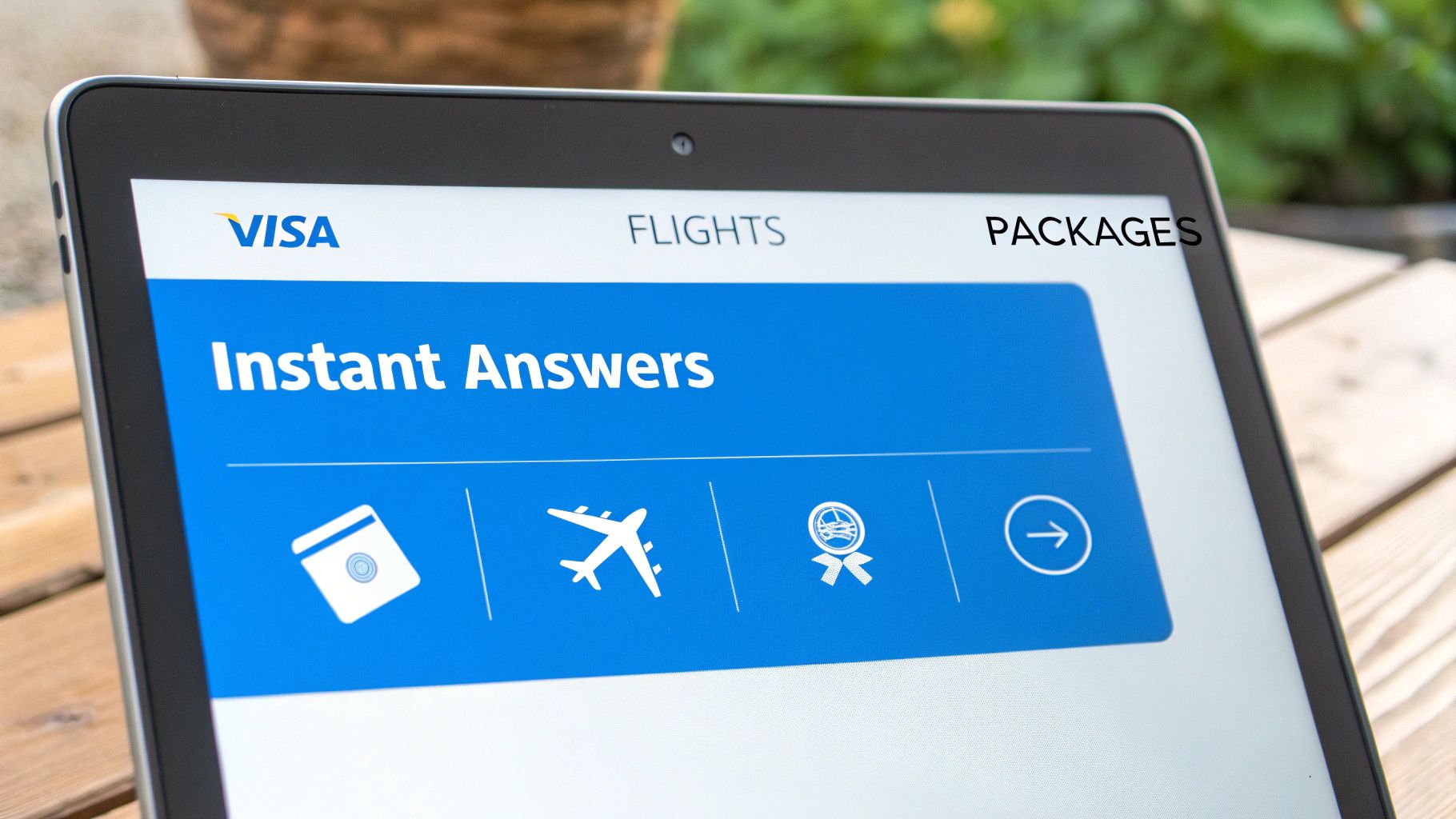
At its heart, an AI chatbot for travel agencies provides instant, automated support around the clock. It tirelessly handles the same repetitive questions that clog your inbox—queries about visa rules, what’s included in a package, or your cancellation policy.
This kind of automation isn't just about efficiency; it directly translates into a better experience for your customers. Modern travelers expect answers now, not tomorrow. An AI chatbot gives them what they need, the moment they need it.
Suggest Travel Packages and Generate Leads
Your chatbot also works as a powerful lead generation tool that never sleeps. When a potential traveler browses your website late at night, the bot can proactively engage them, qualify their interest, and capture their contact details for a follow-up.
For example, a visitor on your "Bali Getaway" page at 11 PM might see a pop-up: "Hi there! I see you're interested in our Bali trip. I can answer questions about flight inclusions or daily activities." The bot can then guide the conversation, gathering key details like travel dates and budget. By morning, your sales team has a qualified lead waiting.
Streamline Bookings and Payments
Beyond answering questions, a well-integrated chatbot can streamline the entire booking process. It can check availability, provide quotes, and even guide users through making a secure payment directly within the chat interface.
This reduces friction and makes it incredibly easy for a customer to move from interest to purchase. For your team, it means you can significantly slash administrative time spent on manual booking entries and follow-ups.
How to Implement Your Agency's AI Chatbot
Building a smart AI assistant for your travel agency sounds complex, but modern tools have made it surprisingly simple. You don't need to be a coding whiz. Think of it like training a new team member—you just need to teach it the ropes of your business.
The process is about feeding the bot your agency's unique knowledge. A platform like FastBots.ai can digest your existing content, turning it into a reliable brain that the chatbot uses to answer customer questions accurately and in your specific brand voice.
Step 1: Source Your Chatbot's Knowledge
The smartest AI chatbots for travel agencies learn directly from the documents you already use. You can provide this information in a few simple ways to give your bot the expertise it needs.
Common data sources include:
- Your Website: Just provide a link. The AI will crawl your tour pages, blogs, and FAQs to understand your offerings.
- PDF Brochures: Upload your beautifully designed travel brochures. The bot can extract key details about itineraries, inclusions, and pricing.
- Word Documents & Spreadsheets: An FAQ document or a spreadsheet of destinations and prices is a quick way to teach the bot your policies and data.
Using your own materials ensures the chatbot's answers are always consistent with your official information. For a deeper look, check out our guide on how to train a chatbot on your own data.
Step 2: Define Your Chatbot's Persona
Once your bot is knowledgeable, it's time to give it a personality. How do you want it to come across? The tone it uses is a huge part of making every conversation feel like a genuine extension of your brand.
For example, do you want it to sound adventurous and fun? Or should it be more sophisticated and professional? Nailing this persona ensures consistency and helps the chatbot connect with your target audience.
Step 3: Integrate and Go Live
An AI chatbot truly shines when it’s woven into your daily operations. The most obvious first step is putting it on your website to greet visitors and capture leads.
From there, consider connecting your AI assistant to the messaging apps your clients use, like WhatsApp or Facebook Messenger. Integrations with tools like Zapier or Make can automate tasks like adding new leads to your CRM, creating a truly connected workflow.
What to Watch Out For: Limitations and Considerations
Let's be honest: while AI chatbots are powerful, they aren’t magic. To build trust with travelers, you have to be upfront about what they can and can’t do. Knowing their limits helps you set the right expectations for both your clients and your team.
A chatbot is only as smart as the information you give it. If you haven't trained it on your new safari package, it won't know it exists. Keeping its knowledge base updated with current info is an ongoing task, not a one-time setup.
The Need for a Human Touch
Some situations just need a human. A traveler navigating a last-minute emergency or dealing with the frustration of a canceled flight requires empathy that a bot typically can't provide. A pre-written response can feel cold and miss the mark.
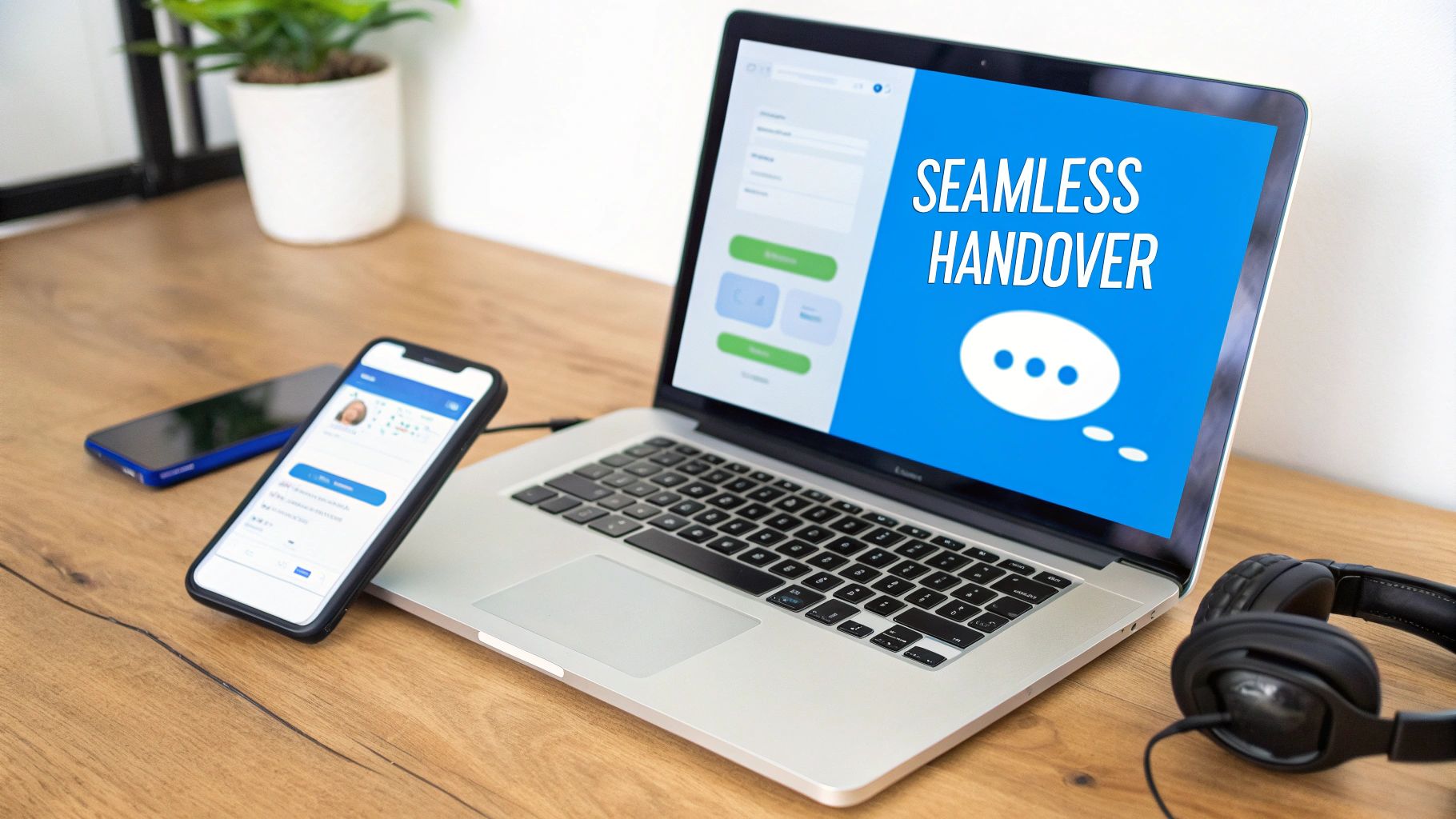
This is why a smooth handoff to a human agent is non-negotiable. A well-designed AI chatbot for a travel agency should know when to step aside. It can be programmed to spot signs of distress or complexity and immediately offer to connect the user with a person who can help.
Data Security and Ongoing Maintenance
When you use a chatbot, you're handling personal data. That makes security a top priority. It’s critical to choose a platform that complies with regulations like GDPR to protect your clients’ information.
Finally, a chatbot isn't a "set it and forget it" tool. You'll want to review chat logs regularly. This is a great way to see where the bot gets stuck, discover new questions travelers are asking, and identify opportunities to improve its responses. You can even learn how to measure the ROI of your chatbot for business growth to track its impact.
Actionable Takeaway: Your Quick Launch Checklist
Ready to bring an AI assistant on board? It's more straightforward than you might think. We've boiled it down into a simple checklist to get you from idea to launch without the guesswork.

Here’s how you can apply this in your business today:
- Define Your #1 Goal: What's the most important job for this bot? Is it capturing leads 24/7, automating itinerary questions, or handling FAQs? Start with one clear objective.
- Gather Training Materials: Collect the documents that will become your chatbot's brain. Grab your top travel package brochures (PDFs), your main FAQ document (DOCX), and links to key web pages.
- Decide on a Persona: How should your bot sound? Jot down 3-5 adjectives that describe your brand’s voice (e.g., "adventurous, friendly, reliable").
- Choose Your Channels: Where will your chatbot live? Your website is the perfect start. Later, you can add channels like WhatsApp to meet travelers where they are.
- Plan Your Human Handoff: Decide when a conversation should escalate to a human. This could be triggered by keywords like "complaint" or when a user requests a complex, custom quote.
One way to approach this is to start small. Focus on automating your top 10 most common questions. This lets you score a quick win and see immediate value before giving your bot more responsibility.
Next Steps: Getting Started with Your Travel Chatbot
Implementing an AI chatbot for your travel agency is one of the most effective ways to scale your operations, enhance the customer experience, and turn more website visitors into booked clients. By handling routine tasks 24/7, it frees your expert agents to focus on building relationships and crafting unforgettable trips.
The technology is more accessible than ever. Many agencies are seeing significant returns by automating queries and streamlining their booking process. With a clear plan, you can have a valuable AI assistant working for your team in no time.
Ready to build a smarter way to engage travelers? With FastBots.ai, you can create a custom travel chatbot trained on your agency's content in minutes. Start exploring a better way to manage inquiries and boost bookings today. Explore our travel chatbot solutions.