A Practical Guide to AI Chatbots for Retail Stores

Thinking about AI chatbots for retail stores? They're more than just a pop-up window on your website. You should think of them as your best digital sales assistant, one that works 24/7 to answer product questions, dish out recommendations, and guide shoppers from browsing to buying.
For any retail business with heavy online traffic, AI chatbots are quickly moving from a "nice-to-have" to a "can't-live-without." They act as a tireless digital shop assistant, ensuring you never miss an opportunity to engage a customer.
Why AI Chatbots Are Reshaping Retail
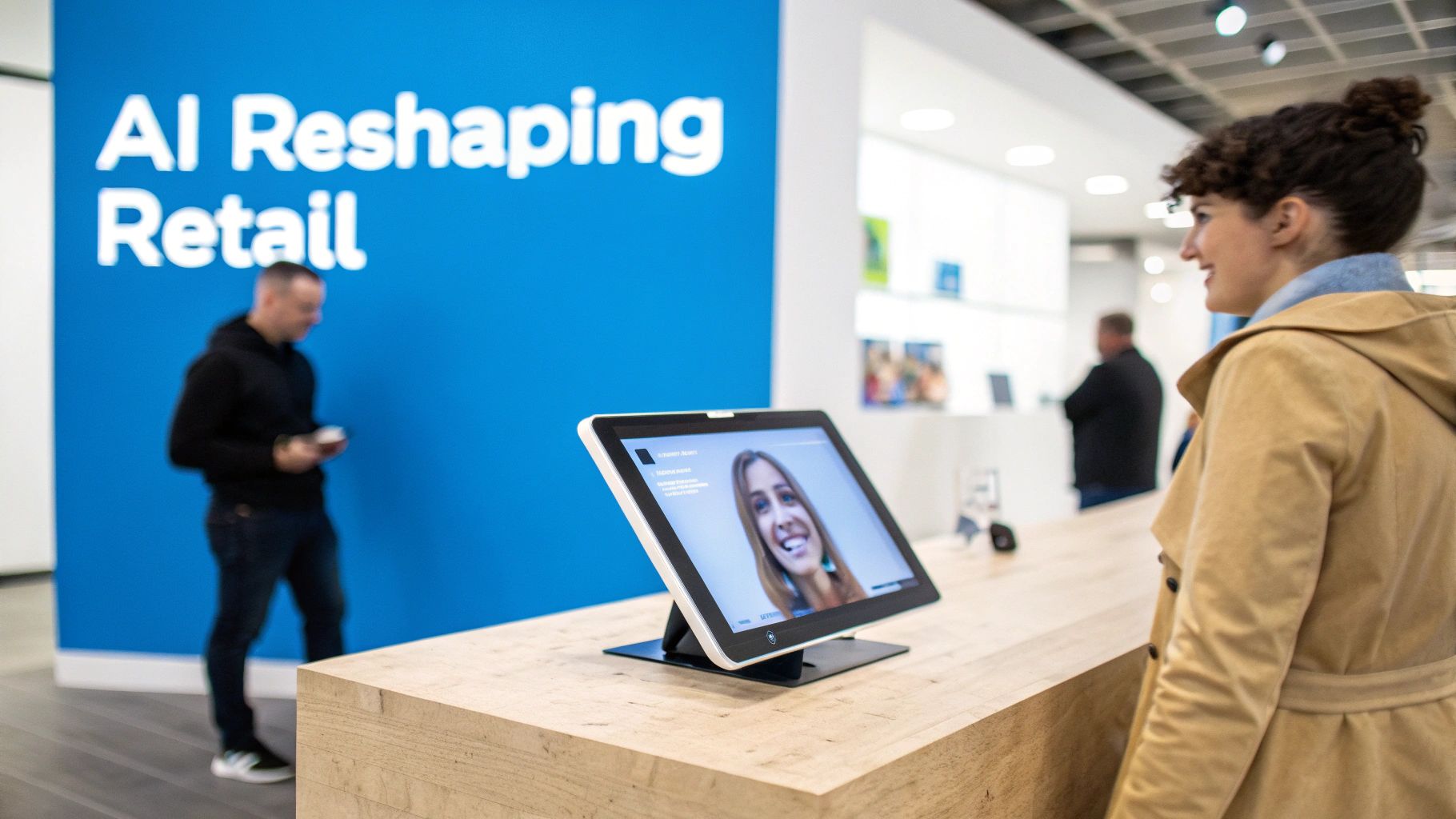
Let's be honest, the way we all shop has completely changed. Your customers want instant answers and a personal touch, whether they're browsing at 2 AM on a Tuesday or in the middle of a holiday sales rush. For many retail businesses, staffing a human team around the clock just isn't realistic.
This is exactly where AI chatbots for retail stores come into play. They engage with every single visitor who lands on your site. Instead of leaving a potential customer to click around aimlessly, a chatbot can proactively offer help, creating an experience that feels a lot like talking to a helpful employee in a brick-and-mortar store.
Meeting Modern Customer Expectations
Today's shoppers don't like to wait. A slow response isn't just frustrating; it's often a deal-breaker. We know that many consumers expect immediate service and are even willing to spend more with businesses that solve their problems quickly.
An AI chatbot tackles this problem head-on by delivering instant answers to the most common questions. This frees up your human agents to handle the more complex or sensitive issues that truly need a personal touch.
Turning Conversations into Conversions
Beyond just answering FAQs, these AI assistants are powerful sales tools. They can solve some of the biggest problems in e-commerce that directly hit your bottom line.
For example, when a shopper is about to abandon their cart, a chatbot can pop up to offer a small discount or answer a last-minute question about shipping. This simple intervention can often be the difference between a lost sale and a completed purchase.
By looking at what a visitor is browsing, a chatbot can also suggest other products they might love. This doesn't just make the shopping experience better; it's a proven way to boost your average order value.
The numbers back this up. Some reports suggest that by 2027, digital assistants will be the main customer service channel for 25% of all businesses. That’s a massive opportunity for retailers who get on board now.
The Core Capabilities Your Retail Chatbot Needs
To really get value from AI chatbots for retail stores, you have to think beyond basic, scripted answers. The best bots are more like digital shop assistants, guiding customers through their journey with smart, genuinely helpful interactions.
At the heart of a modern AI chatbot is sophisticated natural language processing (NLP). This is what allows it to figure out what a customer is actually asking, even if they use slang or make a typo.
Personalized Shopping and Recommendations
One of the most powerful things a retail bot can do is offer personalized product recommendations. A smart chatbot can look at a user’s browsing history and what’s in their cart to suggest items they'll actually want.
For instance, if a customer is looking at a summer dress, the bot can suggest a matching pair of sandals. It’s contextual cross-selling that feels helpful, not pushy. Our guide on creating a virtual personal shopping assistant dives deeper into how this transforms the customer journey.
Real-Time Inventory and Order Management
Nothing kills a sale faster than a customer finding the perfect item, only to see it's out of stock. A must-have capability is a deep connection to your inventory systems, whether that's Shopify or WooCommerce.
This gives your chatbot the power to check stock levels in real-time. This capability is just as crucial after the purchase, where bots can field common questions like checking an order's shipping status or providing tracking numbers.
Seamless Checkout and Transaction Support
The checkout is where many potential sales fall apart. A chatbot can smooth out this make-or-break moment by offering assistance right when it's needed.
It can help customers apply discount codes, clarify shipping costs, or answer those last-minute questions that create hesitation. For some businesses, the chatbot can even support the entire transaction right there in the chat window, creating a frictionless path to purchase.
How to Implement Your Retail Chatbot
Alright, let’s get practical. Moving from theory to action is easier than you might think. Modern platforms are built for business owners, not developers, so you can get a powerful assistant running without touching a line of code.
It all starts with a simple question: What, exactly, do you want this chatbot to do? Nailing this down first will steer every other decision you make.
Step 1: Define Your Goals and Prepare Your Data
Before you even think about building, you need a clear mission. Are you trying to reduce the load on your support team? Is your main focus boosting online sales?
Once your goals are set, it’s time to gather the fuel for your AI: your data. Your chatbot is only as smart as the information you give it. Start collecting your product catalogs, detailed FAQs, shipping info, and any store policy documents.
Step 2: Train and Test Your Chatbot
With its knowledge base loaded, it’s time for training and testing. This is where you shape its personality and make sure its answers are spot-on. You can tweak its tone to perfectly match your brand, whether you’re aiming for friendly and casual or professional and straight to the point.
Then, put on your customer hat. Grill your new bot with a ton of questions. This hands-on testing will quickly show you where the knowledge gaps are. If it struggles, you can simply upload more documents to sharpen its performance.
Step 3: Integrate With Your Existing Systems
A chatbot on its own is useful, but a chatbot connected to your other business tools is a powerhouse. The real magic happens when you sync your bot with the systems you already rely on.
For example, connecting your chatbot to your inventory system lets it give customers real-time stock updates. If you're on Shopify, our guide on how to connect a custom chatbot to Shopify breaks down the entire process. Linking to customer experience platforms like Sprinklr can also broaden your customer view.
What to Watch Out For: Limitations and Considerations
Bringing in new technology comes with a learning curve. While AI chatbots can be a massive win for retail stores, knowing the potential roadblocks helps you build a strategy that’s both ambitious and grounded in reality.
A classic mistake is overhyping what your chatbot can do. If you launch it and tell everyone it's a human-like expert, customers will find its limits fast and get frustrated. It’s much better to be transparent with a simple welcome like, "Hi, I'm your AI shopping assistant."
Data Privacy and Security
The moment you launch an AI chatbot for retail stores, you become a custodian of customer data. You have a serious responsibility to protect this information, as customers are rightly concerned about how their data is used.
Making sure your chatbot platform is secure and compliant with rules like GDPR is non-negotiable. You need to be crystal clear with users about what data you’re collecting and why. Building this trust is everything.
The Human Handover
No matter how smart your AI gets, some situations will always need a human touch. A customer might have a complex problem, or maybe they’re just too frustrated to keep talking to a machine.
Your chatbot must have a simple way to escalate a conversation to a live agent. This handover needs to be seamless, passing the entire chat history to the human so the customer doesn't have to repeat themselves. Think of it as the safety net that protects the customer experience.
Actionable Takeaway: Quick Checklist
To navigate these challenges successfully, here's how you can apply this in your business:
- Set Clear Expectations: Use the bot’s welcome message to be upfront about what it can and can’t do.
- Prioritize Security: Only work with a platform that is GDPR compliant. Be transparent in your privacy policy.
- Plan for Initial Gaps: Focus the initial training on your most frequent and important customer questions.
- Build a Flawless Handover: Make sure there’s a simple option to connect with a human agent. Our platform has built-in live chat for retail store chatbots, ensuring you always have that crucial human connection.
Measuring Success and Iterating for Growth

Getting your chatbot live is a fantastic milestone, but the real work is just beginning. The true power of AI chatbots for retail stores is in the continuous cycle of measuring, learning, and improving.
Think of your chatbot’s launch day as its first day on the job. Like any new employee, it will learn and get better with experience. Your job is to act as its manager, using real data to guide its development.
Key Performance Indicators for Your Retail Chatbot
You can't improve what you don't measure. For retail, you need to track the numbers that tie directly to your bottom line and your customers' happiness.
We recommend keeping a close eye on metrics like the conversion rate from chat, the cart abandonment recovery rate, and customer satisfaction (CSAT) scores. These retail-specific metrics shift the conversation from "Is the bot busy?" to "Is the bot making us money and delighting our customers?"
Using Analytics to Drive Improvements
Your chatbot’s analytics dashboard is packed with insights. You’ll spot trends in conversation volume, see your busiest times, and identify the most common questions.
Regularly reading through actual conversations is one of the most valuable things you can do. Pay special attention to chats that got escalated to a human. This is where you’ll discover what your customers really want and where the bot needs more training. You can learn more about measuring a retail store chatbot's effectiveness in our dedicated guides.
Your Next Steps
We've covered why AI chatbots for retail stores matter, what they can do, and how to implement one thoughtfully. By acting as a 24/7 digital shop assistant, they can guide shoppers, answer product questions, recommend items, and support transactions.
This technology isn't just a trend; it's a fundamental shift in how retail operates, offering a way to meet modern customer expectations at scale. With the right approach, you can build a chatbot that not only solves problems but also drives real growth for your business.
Ready to see how an AI-powered assistant can actually work for your online store?
Explore our retail chatbot solutions today!