How AI Chatbots for Restaurants Can Boost Your Bookings and Delight Diners

Picture this: it's your busiest night. The phone is ringing off the hook, your host is swamped, and every interruption pulls your team away from the guests already seated. This isn't just chaos; it's the sound of missed opportunities.
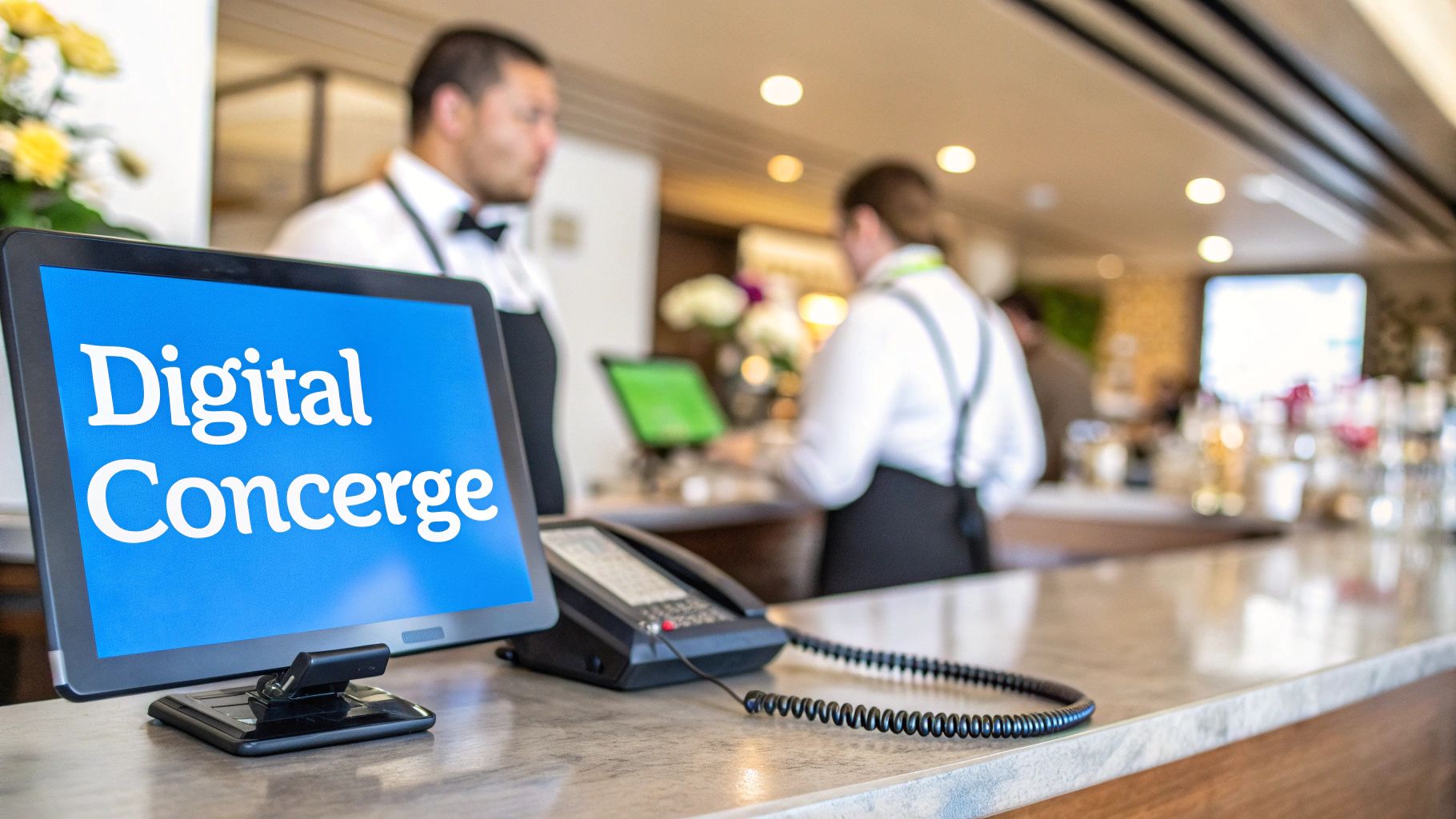
This is where AI chatbots for restaurants step in, acting as your 24/7 digital concierge. We see them turn that chaotic scramble into a smooth, seamless experience for everyone. This technology automates repetitive tasks—like booking tables and answering menu questions—so your team can focus on what they do best: crafting unforgettable dining experiences.
Why Your Restaurant Needs a Digital Assistant
On a packed Friday night, a constantly ringing phone doesn't just annoy your staff. It frustrates potential customers who might hang up and go elsewhere, which means lost revenue and a poor first impression. AI chatbots for restaurants are designed to solve this exact problem.
Instead of stretching your team thin, a chatbot gives instant, accurate answers to every person who lands on your website. It works around the clock, ensuring you never miss a reservation request or a simple question about your hours, even long after you've locked up for the night.
Free Up Your Most Valuable Asset: Your People
Your staff's real talent lies in creating a warm, welcoming atmosphere. But when they're constantly pulled away to answer routine questions ("Do you have outdoor seating?"), the quality of that in-person service can dip.
This is where automation makes a tangible difference. A chatbot can handle the high-volume, low-complexity tasks, empowering your human team to focus on high-touch hospitality. It’s not about replacing people; it's about supporting them. We explore this concept in our guide on virtual concierge software.
For example, a busy urban bistro we know used to have a host dedicated almost full-time to the phone. After deploying a chatbot for reservations and FAQs, that same host could focus on greeting guests, managing the waitlist, and ensuring a smoother flow on the floor.
Core Capabilities You Can Unlock Today
Let's move past the theory and talk about what an AI chatbot can actually do for your restaurant. Think of it as hiring a super-efficient employee who never calls in sick and can handle multiple jobs at once.
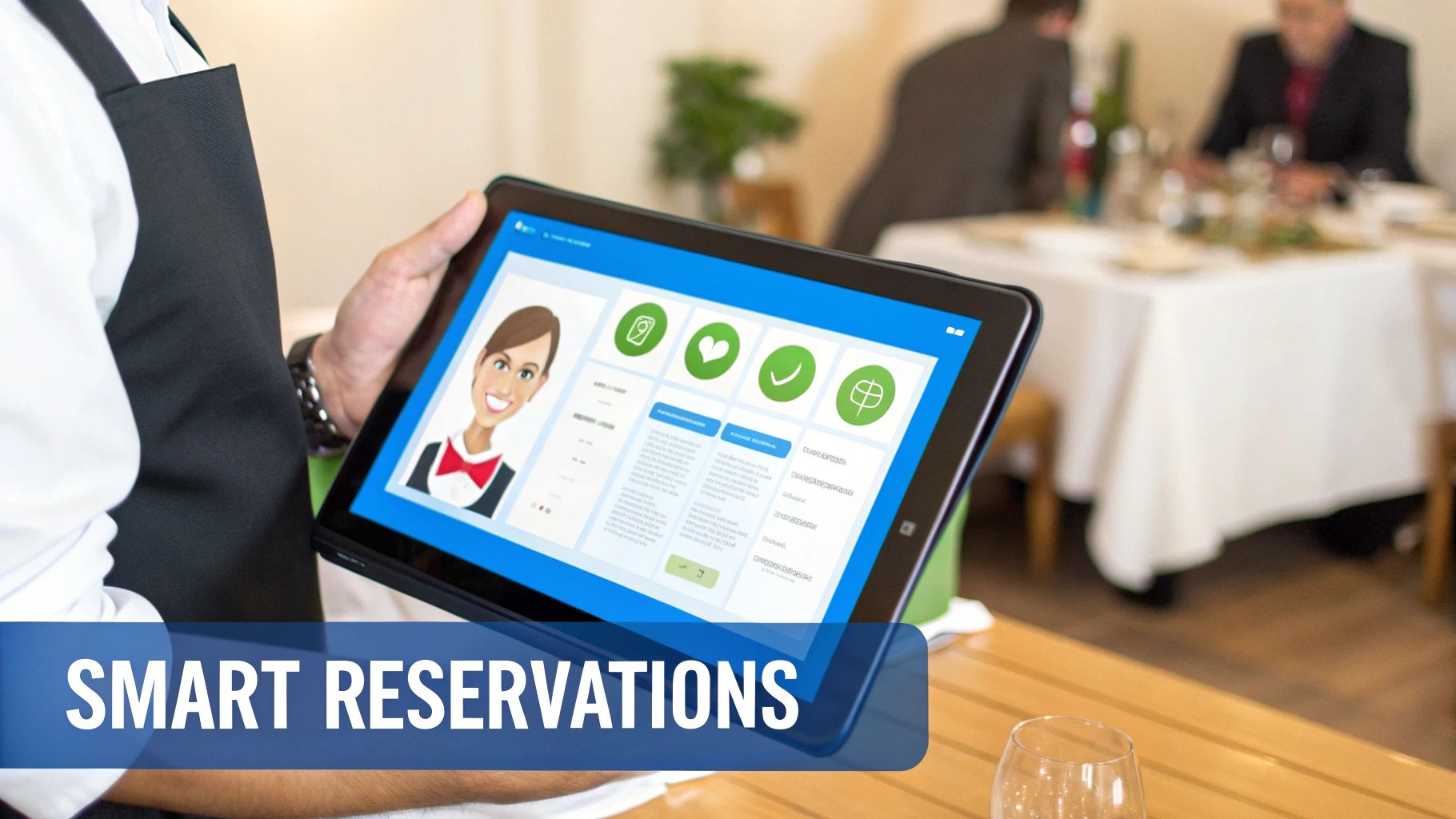
First, you can tackle one of your biggest operational headaches: managing reservations. Your chatbot can book, confirm, and even change appointments directly through your website or messaging apps. It can also send automated reminders to diners, a simple touch that typically cuts down on costly no-shows.
Become an Interactive Menu and Dietary Guide
Imagine your menu coming to life. A chatbot becomes a dynamic, interactive guide for your customers. It can instantly answer questions about ingredients, flag potential allergens like nuts or gluten, or highlight daily specials without a staff member stepping in.
This naturally extends to making takeout and delivery a breeze. An AI chatbot for your restaurant walks customers through the ordering process, suggests add-ons, and sends the final order to your kitchen. This kind of automation significantly reduces the risk of human error from a noisy phone line.
Many restaurants are seeing success here. For a broader look at how automation is changing the industry, you can read more about how AI is reshaping restaurant orders and see how accessible this tech has become.
Collect Feedback and Build Loyalty
Beyond day-to-day tasks, your chatbot is a powerful tool for building loyalty. Every conversation is a chance to gather valuable info and grow your marketing list.
A well-designed chatbot can politely ask for an email to send a booking confirmation and, with permission, a future special offer. It can also ask for a quick rating right after a customer places an order, making it easy to collect feedback while the experience is still fresh in their mind. These small, automated steps help turn website visitors into a community of loyal fans.
Your 5-Step Plan to Implement an AI Chatbot
Getting an AI chatbot running for your restaurant is more straightforward than you might think. You don't need a team of developers. Here's a practical, five-step plan to get your first bot live.
Step 1: Define Your Primary Goal
First, decide on the single most important job for your chatbot. Trying to make it do everything at once can lead to a clunky experience.
Start with one clear objective. For example, a busy downtown spot might want to reduce phone calls by automating reservations. A popular takeaway joint could focus on streamlining online orders to manage the dinner rush.
Step 2: Choose the Right Platform
With your goal set, it’s time to pick your tool. Look for a solution that’s simple to use and doesn’t require coding.
Consider platforms where you can just upload your menu, FAQs, and business hours as simple files (like a PDF). Also, check if it integrates smoothly with your website and other channels like WhatsApp or Facebook Messenger.
Step 3: Train Your Chatbot with Your Knowledge
Your chatbot is only as smart as the information you give it. Think of it like training a new staff member. You need to provide all the details it needs to answer questions correctly.
Gather your core business info and upload it. This should include your full menu, a list of frequently asked questions (hours, location, parking), and details on dietary options. The better your source material, the more helpful your AI chatbot for your restaurant will be.
Step 4: Customise and Test
Now you can give your bot some personality. You can make it formal for a fine-dining restaurant or casual for a family cafe. Customise its colors to match your website’s design.
Before you go live, test it thoroughly. Pretend you're a customer and ask it all sorts of questions, from "What time do you close?" to "Do you have any nut-free desserts?" This is how you find and fix gaps in its knowledge. For a closer look, see our step-by-step guide to creating your own chatbot.
Step 5: Deploy and Monitor
Once you’re happy with its performance, it’s time to launch. Most platforms make this simple, usually with a snippet of code you can copy onto your website. Don't forget to let customers know you have a new, instant way to get answers.
What to Watch Out For: Limitations and Considerations
Jumping into AI chatbots is exciting, but a little realism goes a long way. Diving in without a solid plan can lead to headaches for both you and your guests. A thoughtful approach helps you sidestep common pitfalls.
The biggest mistake we see is giving the chatbot a scope that’s too broad. If you only train a bot on your menu and hours, it will freeze up when asked about a special event or a complex complaint. This leads to a frustrating dead-end conversation.
Know Your Bot's Boundaries
Before you go live, you need to define what your chatbot should do—and just as importantly, what it shouldn't. A bot built for reservations will excel at that job, but it will fail if a customer asks about job openings unless you've taught it how to respond.
For instance, a family-owned Italian spot we know launched a bot that did two things perfectly: booking tables and answering dietary questions. Because of that focus, it did its job exceptionally well, delighting diners who just needed quick answers.
Plan for a Seamless Human Handover
No matter how smart your AI gets, some situations will always need a human touch, like a guest with a severe allergy or someone booking a large corporate party.
The switch from bot to human has to be seamless. Nothing kills a customer experience faster than getting stuck in a frustrating loop. Ensure your system has a clear "talk to a human" button that connects them to your team through live chat or provides clear contact info.
Actionable Takeaway: A Quick Checklist for a Smooth Launch
Here’s how you can apply this in your business. Run through this checklist before you go live.
- Define One Core Task: What is the #1 problem your bot will solve? (e.g., "Automate dinner reservations.")
- Prepare Your Knowledge Base: Have your menu, FAQs, and hours ready to upload.
- Set Clear Boundaries: Decide what the bot won't handle and create a polite response directing users to the right channel.
- Create a Handover Plan: Design a clear and easy path for users to reach a human staff member when needed.
- Prioritize Data Privacy: Choose a platform that is transparent about how it handles customer data and is compliant with regulations like GDPR.
Taking these points seriously will help you roll out your AI chatbot for your restaurant without a hitch, avoiding common frustrations and building trust with your diners.
How to Measure Your Chatbot's Performance
So, you’ve launched your new chatbot. The real question is: is it actually working? You need to know if it's delivering real, measurable value for your restaurant.

This isn't just about counting chats. It's about connecting the bot's activity to what impacts your bottom line and smooths out operations. A solid analytics dashboard is your best friend here, turning raw data into a clear story about your return on investment (ROI).
Key Metrics That Truly Matter
To get a real picture of your chatbot’s impact, you should focus on numbers that tie directly to your business goals.
Here are a few essential performance indicators you should watch:
- Reservations Booked Automatically: How many tables did the bot fill without a staff member lifting a finger?
- Reduction in Inbound Phone Calls: Compare your phone call volume before and after the bot went live. A noticeable drop means your team is less distracted.
- Customer Satisfaction (CSAT) Scores: A quick rating request after a chat tells you a lot. Are customers finding the bot helpful?
Tracking the right data is the difference between thinking the chatbot is working and knowing it booked 30 tables last week, saving your team hours of work.
Uncovering Hidden Customer Insights
Don’t just look at the numbers—the conversations themselves are a goldmine. Your chatbot’s chat logs give you an unfiltered look into what your customers are asking. This is a crucial part of understanding the metrics we cover in our guide to chatbot analytics.
For example, are you seeing a dozen questions a day about vegan options? That’s a huge clue that it might be time to highlight those dishes. Are people constantly asking about parking? Adding a clear "How to Find Us" section to your site could help new visitors.
This qualitative feedback is often just as valuable as any hard metric you can track.
Next Steps: Getting Started
You now have a framework for how AI chatbots for restaurants can streamline your operations, from managing reservations and answering menu questions to collecting valuable customer feedback. By starting with a clear goal and focusing on a great user experience, you can free up your staff to do what they do best—create amazing dining moments.
The key is to automate the repetitive so your team can elevate the exceptional. This technology isn't about replacing the human touch; it's about enhancing it.
Ready to see how an AI chatbot can transform your restaurant's operations and delight your customers? FastBots.ai makes it easy to build a custom AI assistant trained on your menu and business info in minutes. Build your free restaurant chatbot today.