How AI Chatbots for Car Dealerships Can Be Your 24/7 Sales Assistant
Think of an AI chatbot for your car dealership as your ultimate digital salesperson—one that never sleeps. It's the first point of contact for potential buyers the moment they hit your website, ready to answer questions about inventory, financing, and trade-ins. Day or night, you can turn your website from a simple brochure into a lead-generating powerhouse.
Why Your Dealership Needs a 24/7 Sales Engine
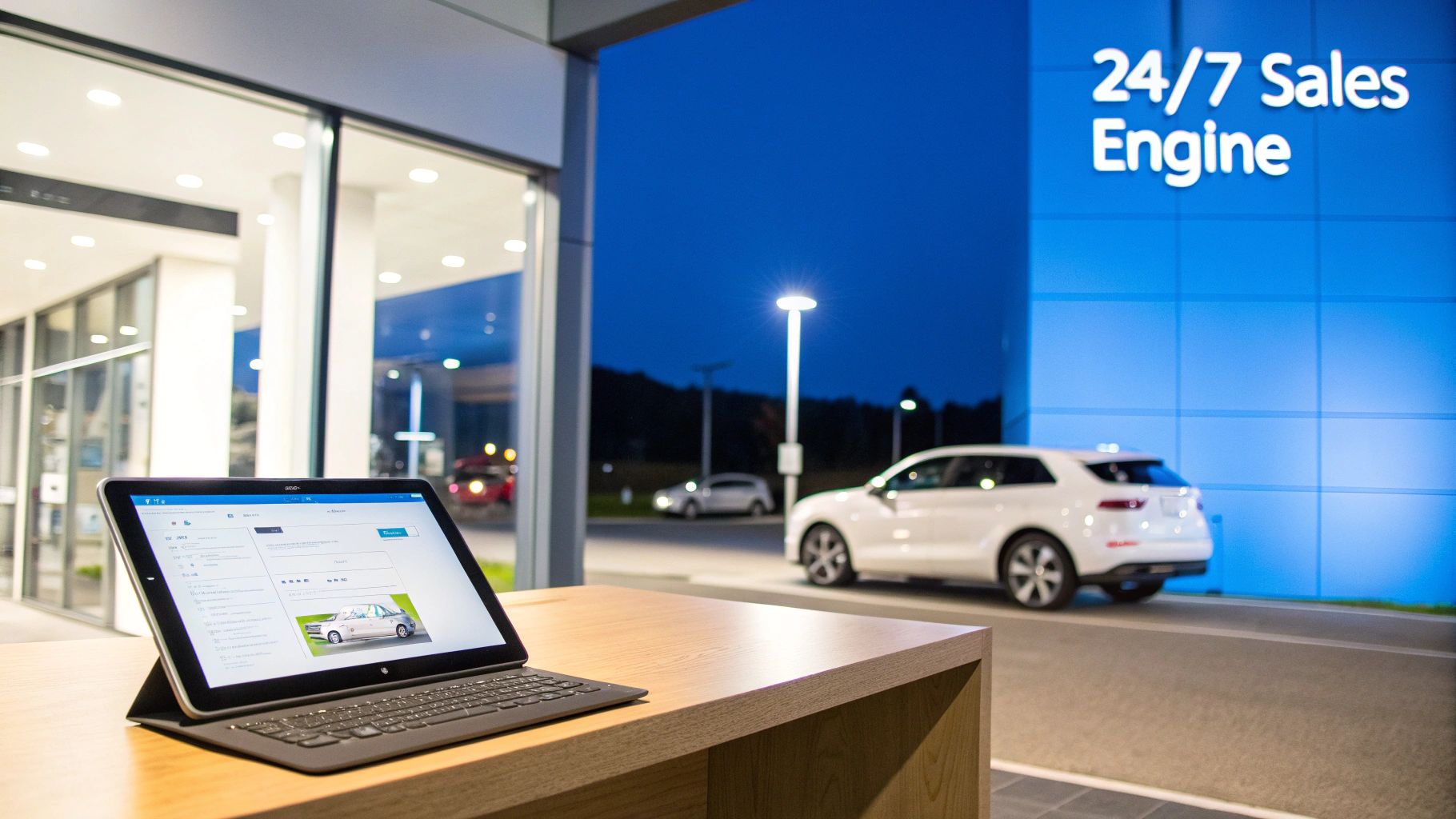
Imagine if your showroom doors were always open, with an expert on hand to greet every single person who walks in. That's exactly what an AI chatbot does for your online presence. Instead of forcing interested buyers to fill out a bland "contact us" form and wait, you're giving them instant, professional service right when their curiosity is highest.
A properly trained AI chatbot becomes a vital part of your sales funnel. It effortlessly handles those repetitive, time-consuming initial questions, freeing up your sales team to focus their energy on high-intent buyers who are actually ready to talk business.
Turn Website Traffic Into Showroom Visits
Let's be honest: the modern car buying journey kicks off online. Your customers are deep into researching models, comparing prices, and checking your stock long before they even think about setting foot on the lot. An AI chatbot meets them exactly where they are—on your website—delivering the instant answers and support they expect.
This isn't just a trend; it's a proven strategy. A recent Cox Automotive study revealed that 52% of auto dealers have already integrated AI-powered chatbots. Dealerships using these tools are typically setting 27% more showroom appointments than their competitors. That's a significant advantage.
Core Capabilities of a Dealership Chatbot
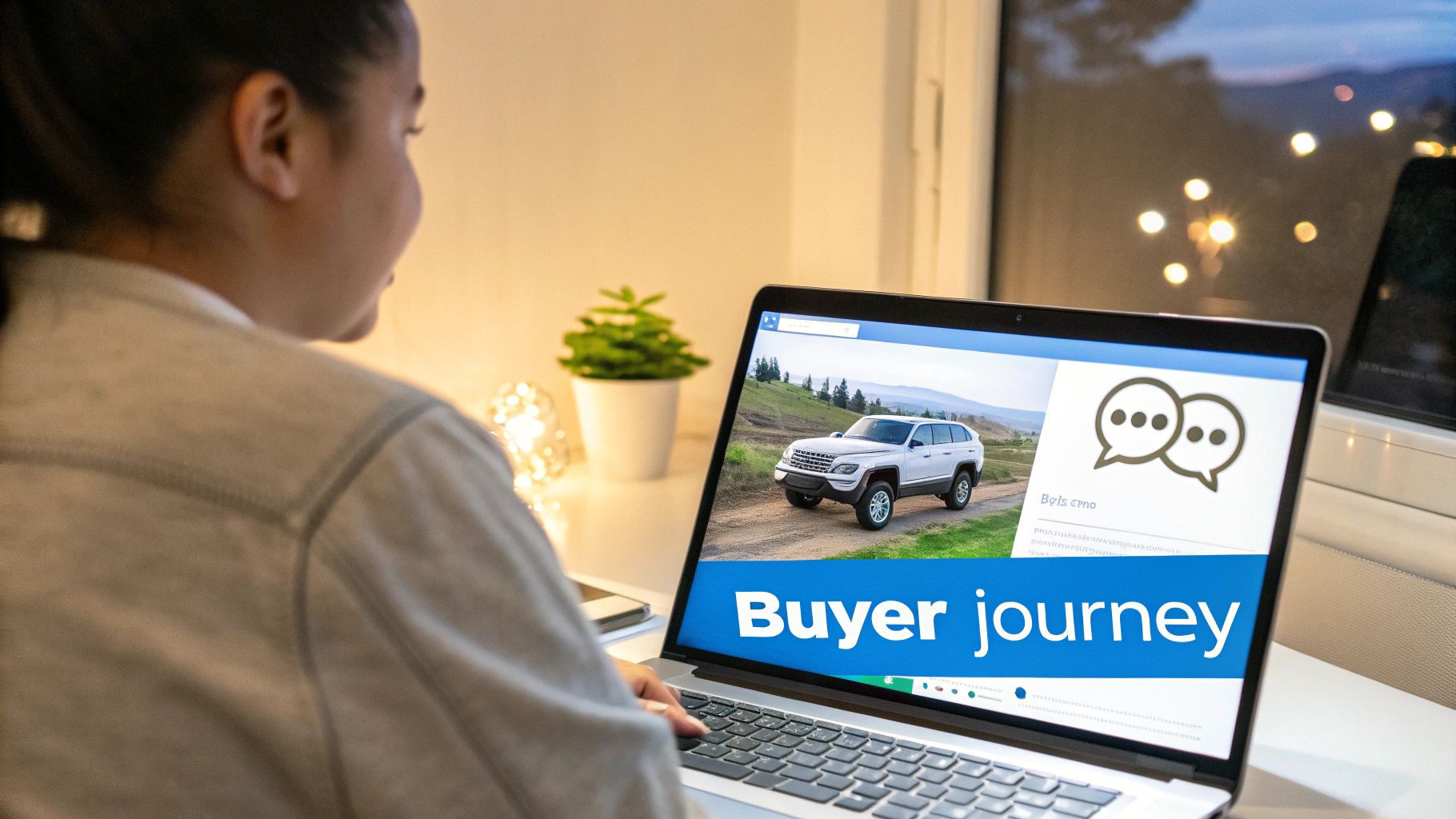
To really get a feel for how AI chatbots for car dealerships work, let’s walk through a real-world example. Imagine a potential buyer we'll call Sarah. It’s late on a Tuesday night, long after your showroom lights have gone dark, and she lands on your website looking for a specific SUV.
Without a chatbot, Sarah might click around for a minute, maybe find a few details, and then leave. Just like that, you’ve lost an opportunity. But with an AI assistant on the job, the whole story changes.
Answering Inventory and Finance Questions Instantly
The moment Sarah arrives, a chatbot greets her. She asks, "What colors does this SUV come in?" Instead of making her hunt for the answer, the bot instantly pulls from your live inventory data and lists the available options. That immediate answer keeps her hooked.
Her questions get more specific: "Does the silver one have a panoramic sunroof?" Again, no delay. The chatbot checks the vehicle’s feature list and gives her a straight "Yes." This seamless access to information builds trust and naturally leads to her next question about financing. The bot guides her toward a pre-qualification form, explaining the steps and letting her start the process right there.
Qualifying Leads and Scheduling Test Drives
With her main questions answered, the AI assistant makes its move. It proactively asks, "Would you like to schedule a test drive for this weekend?" Because the chatbot can plug right into your dealership’s calendar, it shows Sarah the exact time slots available.
She picks a time on Saturday afternoon, and the bot confirms the appointment on the spot. In just a few minutes, the chatbot has answered specific questions, offered financing guidance, captured Sarah's contact information, and booked a qualified appointment. This entire interaction shows how AI chatbots for car dealerships turn a passive website visit into a productive conversation. To learn more, check out our guide on how chatbots qualify leads to streamline sales.
The Power of a Hybrid Approach
The smartest way to use this technology isn't about replacing your team—it's about making them more powerful. When a conversation gets complex, the bot can execute a seamless handover to a live agent. Nailing this blend of AI and human touch is crucial, and you can learn more about finding that perfect balance in our guide to hybrid AI chatbots.
How to Implement Your Dealership Chatbot

Getting an AI chatbot up and running on your website is a lot simpler than you might imagine. By following a few focused steps, you can go from an idea to a fully working digital assistant.
Step 1: Define Your Goal and Gather Knowledge
Before you do anything else, decide on the number one job for your chatbot. Is it to book more test drives? Or is the priority to handle late-night financing questions? This primary goal will guide every other decision.
Next, give your chatbot the information it needs. You don't need to write new content; just use what you already have. A solid knowledge base typically includes inventory lists (PDFs or spreadsheets), financing information, and a list of Frequently Asked Questions (FAQs). With a modern platform like FastBots.ai, you just upload these files, and the AI instantly learns from them.
Step 2: Customise and Integrate
Now, it's time to give your bot some personality. You'll want to tweak the visual elements—like your dealership's logo and brand colors—to match your website. You should also define its tone of voice to ensure every conversation feels consistent with your showroom experience.
The most critical step is integrating the chatbot with your CRM or Dealer Management System (DMS). This connection means every lead it captures is automatically logged and sent to the right salesperson, eliminating manual data entry. Some essential chatbot features for enhancing user engagement rely on these integrations.
Step 3: Deploy and Test
Once your integrations are hooked up, putting the chatbot on your website is usually as easy as copying and pasting one line of code. Just like that, it's live and ready to engage customers 24/7.
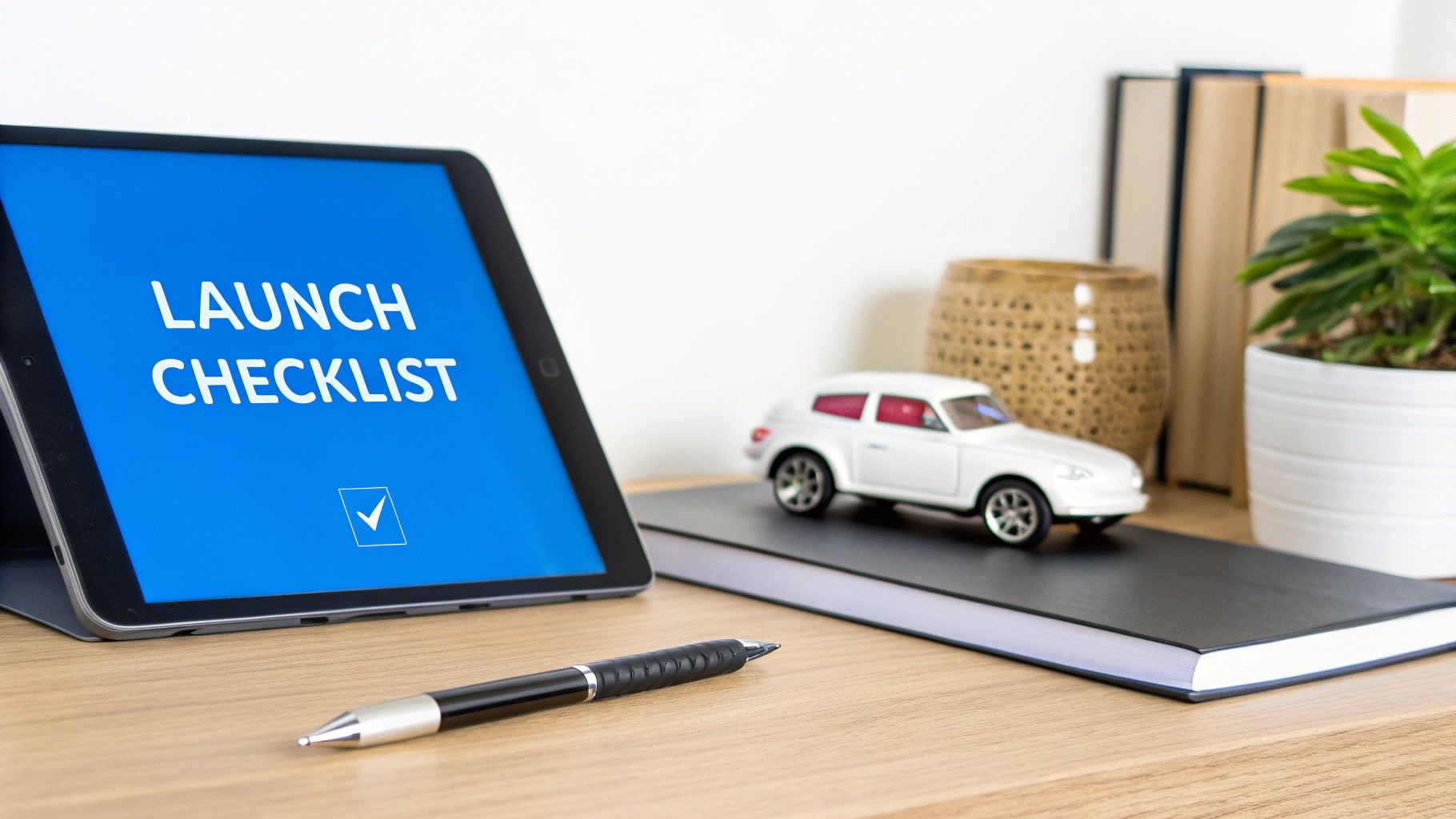
Actionable Takeaway: Quick Launch Checklist
- Define Goal: What is the #1 task for the bot (e.g., book test drives)?
- Upload Knowledge: Have you provided inventory lists, financing docs, and FAQs?
- Customize Appearance: Do the bot's color and logo match your brand?
- Connect Your CRM: Is the chatbot successfully sending leads to your sales system?
- Deploy and Test: Add the code snippet to your site and ask your top 5 customer questions to check its accuracy.
What to Watch Out For: Limitations and Considerations
AI chatbots are powerful, but they aren't a "set it and forget it" solution. A botched launch can create a frustrating experience for the very customers you’re trying to impress.
Keeping Your Bot's Knowledge Fresh
One of the biggest blunders is training your chatbot with outdated information. If you feed it last month's inventory PDFs, it might confidently tell a customer a car is in stock when it was sold last week. That's an instant deal-breaker.
The fix is to make data updates a routine. For example, a dealership we work with in Texas makes it part of their Monday morning process. They upload the latest inventory spreadsheet and any new promotional PDFs. This simple habit ensures their bot always works with the freshest information.
Knowing When to Hand Off to a Human
Another common mistake is trying to make a bot do everything. It needs to know when to raise its hand and ask for help.
Your bot should be smart enough to spot complex sales questions, signs of frustration, or a direct request to "speak with a person." When that happens, it needs to execute a seamless handoff to your sales team. This gets a high-intent buyer to an expert who can close the deal, instead of trapping them in an automated loop.
Being Transparent with Customers
Finally, don't try to fool your customers. Be upfront that they're interacting with an AI assistant. A simple greeting like, "Hi, I'm your dealership's automated assistant! I can help with inventory questions and test drives," works perfectly. This honesty builds trust and sets the right expectations from the start.
Measuring Your Chatbot's Success
Putting an AI chatbot on your website is one thing, but proving it's actually pulling its weight is another. To know if your investment is paying off, you need to track the right Key Performance Indicators (KPIs).
Focus on the metrics that directly impact your dealership's bottom line. For any dealership, the most important KPI is qualified leads generated. This is a conversation where a potential buyer gives you their name, email, and phone number.
Just as critical is appointments scheduled. When you can definitively say, "Our chatbot booked 15 test drives this month," you have a clear measure of its return on investment. Tracking these metrics is similar to how savvy businesses measure SEO ROI effectively; you need a solid framework to assess your chatbot's real-world impact.
A good analytics dashboard will give you a bird's-eye view of these key metrics, helping you spot trends instantly. It shows you how many chats are happening, how long they last, and which of your documents the bot is pulling answers from the most.
Next Steps: Bringing an AI Assistant to Your Dealership
Ready to see how an AI assistant can transform your dealership’s lead generation and customer service? FastBots.ai makes it easy to build a custom chatbot trained on your inventory and sales process in minutes.
Start your free trial today and build your dealership's 24/7 sales assistant!