AI Chatbot for Business A Strategic Guide

Picture this: you hire a new team member who works 24/7, speaks every customer's language, and juggles thousands of conversations at once without ever needing a coffee break. That's the kind of power an AI chatbot for business brings to the table. These aren't just the clunky automated responders of the past; they are intelligent agents built to understand, help, and engage with customers on a surprisingly human level.
What Exactly Is an AI Chatbot for Business?

At its core, an AI chatbot for business is a smart piece of software that holds human-like conversations with people through text or voice. It's a massive leap from the old-school, rule-based bots that forced you down a rigid, frustrating script.
Think of it like this: a rule-based bot is a simple phone tree. It makes you follow a strict path ("Press 1 for sales, Press 2 for support"). An AI chatbot, on the other hand, is like talking to a sharp, well-trained employee. It gets the intent behind a question, no matter how someone phrases it. A customer can type "Where's my stuff?" or "track order," and the bot instantly knows what they need.
The Technology That Makes It Work
This intelligence comes from the bot's ability to learn and adapt. We train the chatbot on a specific set of your company's data—your website content, product manuals, FAQs, and support documents. This process essentially creates a digital "brain" that becomes an expert on your business.
A modern AI chatbot has some key skills:
- Intent Recognition: It figures out what a user wants to do, even if they use slang or make a typo.
- Contextual Awareness: It remembers what was said earlier in the conversation, so the dialogue flows naturally and responses make sense.
- Continuous Learning: The best platforms don't stand still. They analyse interactions to get smarter and more accurate over time.
Of course, when you’re talking about business data, security is everything. That’s why modern solutions rely on secure conversational AI layers for business data to protect customer information while delivering those seamless chats.
An AI chatbot isn’t just a tool for deflecting support tickets; it’s a strategic asset for scaling communication. It ensures every customer gets an instant, accurate, and on-brand response, day or night.
A New Standard for Business Operations
The rapid adoption of this technology shows a real shift in how companies are running things. By November 2025, a whopping 78% of organisations worldwide were using AI in at least one part of their business—a huge jump from just 55% the year before. This tells us that an AI chatbot is no longer a cool gimmick; it's a core part of a modern business strategy.
To really get a handle on how these bots tick, check out our deeper guide on what AI chatbots are and how they function.
How AI Chatbots Drive Real Business Growth
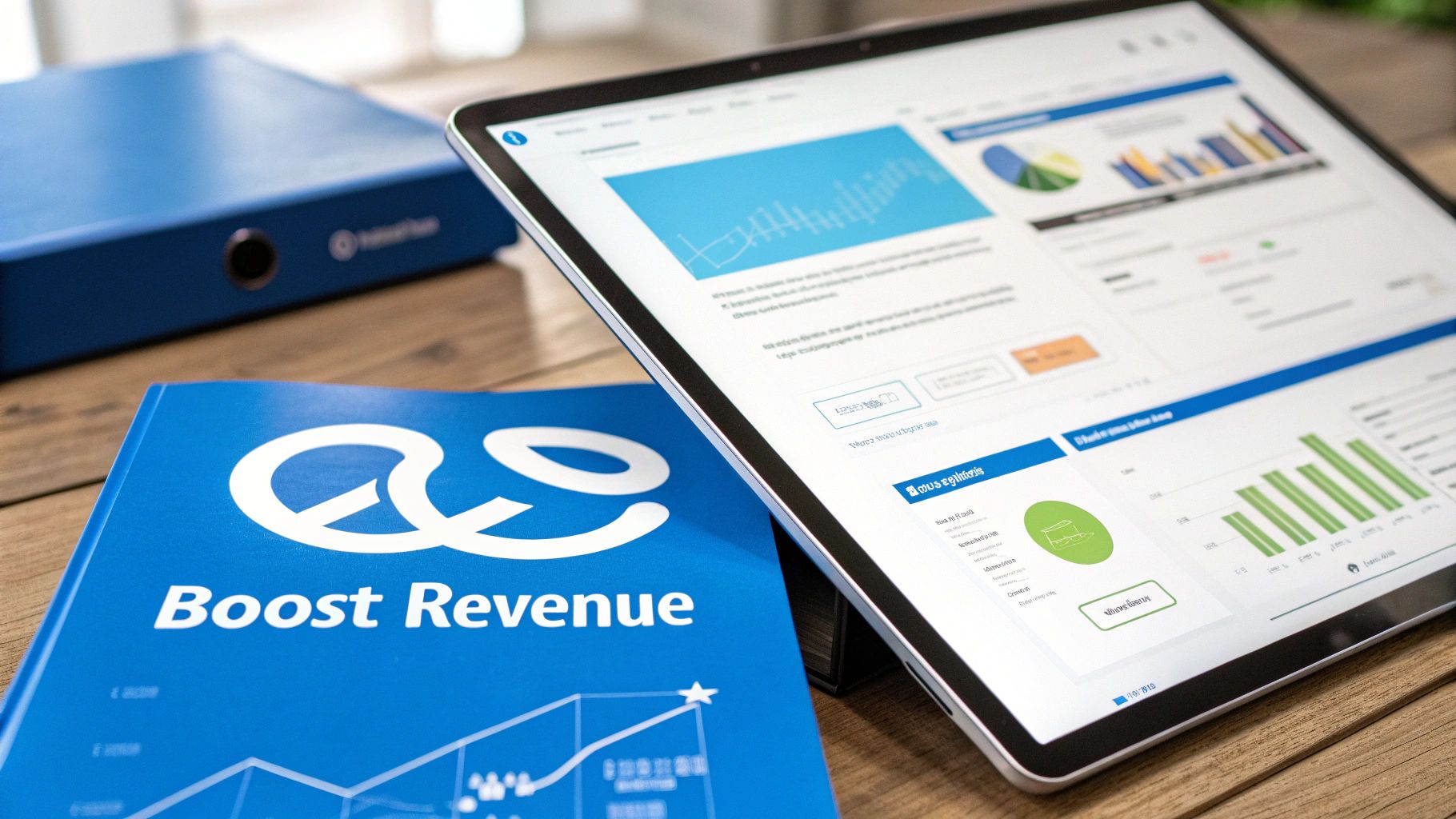
Putting an AI chatbot on your website is more than just a cool tech upgrade—it's a direct investment in real, measurable growth. Think of these assistants as force multipliers, connecting your day-to-day operations straight to your bottom line. They're the tireless employees who never sleep, making sure your business is always open, always responsive, and always ready to help.
This 24/7 availability completely changes the game for customer experience. No more waiting for business hours. Customers get the answers they need, right when they need them, which is a massive win for satisfaction and loyalty. By automating the repetitive but necessary stuff, chatbots free up your human team to focus on the high-value conversations that really need a personal touch. This isn’t just about cutting costs; it’s about elevating your entire service model.
Slashing Costs and Boosting Efficiency
One of the first things you'll notice with an AI chatbot is its knack for handling a huge volume of routine questions without any human help. We all know the ones: "What are your hours?" "Where's my order?" "Can I get a copy of your return policy?"
An AI assistant answers these in a heartbeat, which dramatically shrinks the support ticket queue. This automation leads to some serious cost savings and lets your skilled agents pour their energy into complex problem-solving. It's the simplest path to getting more done with the team you already have.
If you want a deeper dive into making this happen, this complete guide to streamlining business processes with AI automation is a fantastic resource.
Accelerating Sales and Lead Generation
Don't mistake a chatbot for just a support tool. It's a powerhouse for generating revenue. It acts like a proactive sales assistant on your website, engaging visitors the second they show a flicker of interest.
Here’s how it helps drive sales:
- Instant Engagement: The bot can pop up with a personalized greeting, offering to help or pointing visitors toward the right products.
- 24/7 Lead Qualification: It asks the right questions to qualify leads in real-time—even at 3 AM. It gathers contact info and figures out if a visitor is a hot lead for your sales team.
- Seamless Funnel Progression: By answering product questions and even scheduling demos right in the chat window, the bot smooths out the entire buying journey.
This automated process ensures that no potential customer ever falls through the cracks. It turns passive website browsers into a steady flow of qualified leads for your sales pipeline.
The numbers don't lie. By 2025, the impact of AI chatbots was clear, with 69% of businesses adopting them as their go-to AI tool. This wasn't just for show; companies using chatbots saw a 23% increase in conversion rates and an 80% positive customer experience rating. On top of that, they slashed the average ticket resolution time to just over six minutes.
The data makes it crystal clear: an AI chatbot for business is not just about deflecting support tickets anymore. It's a central piece of a modern growth strategy, directly fueling how you find and keep customers. For more details, check out our post on how AI chatbots are driving business growth.
By letting bots handle the routine, you empower your team to handle the extraordinary. That’s how you build a smarter, more scalable business.
Putting Your AI Chatbot to Work
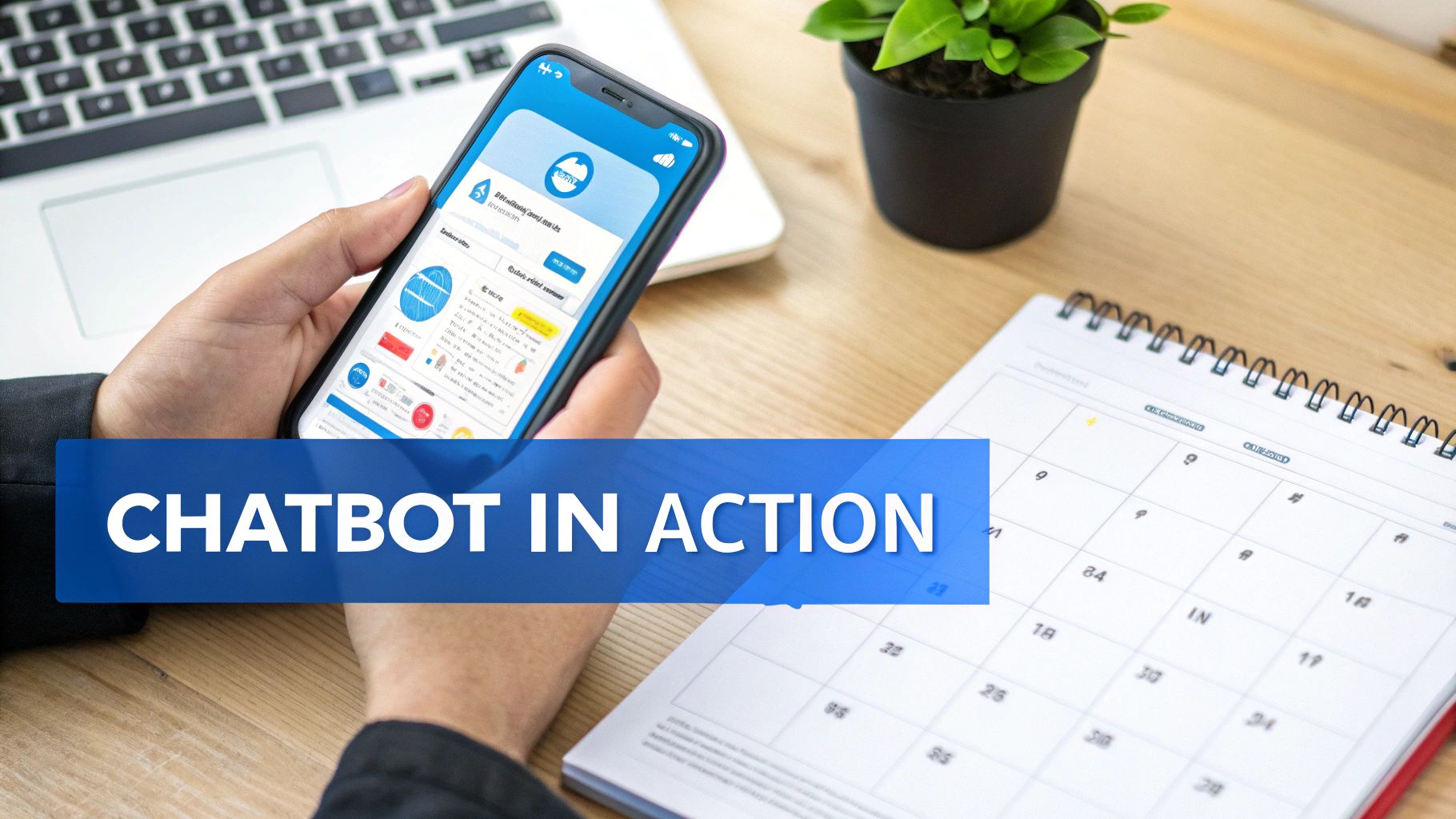
Alright, we've covered the "what" and "why" of AI chatbots. Now for the fun part—seeing what these things can actually do. This is where the real value kicks in.
Think of a chatbot less like a single piece of software and more like a Swiss Army knife for your business. It can be a support agent, a salesperson, and even an internal HR assistant, all at once. Let's break down the key roles it can play and where you'll see the biggest wins.
Your First Line of Customer Support
By far, the most popular starting point for any business is customer support. An AI chatbot becomes your tireless, 24/7 frontline agent, instantly handling all the common questions that clog up your support team's inbox.
This isn’t just about knocking down ticket volume; it’s about giving customers instant answers. When someone can find out their order status at 10 PM on a Sunday without waiting for a reply, their entire experience with your brand gets a boost.
Here’s what a support bot nails right out of the box:
- Answering FAQs: It gives instant, accurate replies to questions like, "What are your shipping options?" or "How do I reset my password?"
- Order Tracking: Customers can just ask, "Where's my order?" and the bot can pull up live tracking info. Simple.
- Policy Explanations: It can clearly explain your return, warranty, or service policies, ensuring everyone gets the same consistent information every single time.
By taking care of these repetitive queries, your human agents are freed up to handle the tricky, high-value problems that actually require a human touch.
A Tireless Sales and Lead Generation Engine
Beyond just answering questions, a chatbot can be an absolute powerhouse for your sales team. It can proactively engage with visitors on your website, figure out who’s a serious prospect, and guide them into your sales funnel—all without a human lifting a finger.
This turns your website from a static brochure into an active selling tool.
Imagine someone is looking at your pricing page. A chatbot can pop up and say, "Have any questions about our plans? I can help you find the right fit." That one interaction can be the difference between a visitor who leaves and a lead who converts.
An AI chatbot transforms your website into an interactive experience. It doesn't wait for a customer to fill out a form; it starts the conversation, qualifies interest, and captures valuable information around the clock.
This proactive approach means you stop missing opportunities. While your team is asleep, the bot is busy vetting prospects and can even book demos directly onto their calendars for the next morning.
Smarter Internal Operations
The magic isn't just for your customers. Internally, a chatbot can be an incredible resource for your own team, cutting down on the administrative busywork that bogs down departments like HR and IT.
Think about a new employee’s first week. Instead of pinging HR with dozens of questions about benefits, company policies, or getting software access, they can just ask the internal chatbot. They get instant answers, and HR can focus on the more strategic parts of onboarding.
Here are a few key internal uses:
- HR Assistance: Answering common questions about payroll, time-off policies, and employee benefits.
- IT Helpdesk: Acting as the first point of contact for simple IT issues like password resets or basic software troubleshooting.
- Knowledge Management: Serving as a searchable brain for all your internal documents, training guides, and company procedures.
This kind of internal assistant empowers your team to find information for themselves, creating a more efficient and self-sufficient workplace. It’s a simple change that makes a big impact on employee experience and your bottom line.
Your Step-by-Step Implementation Roadmap
Putting an AI chatbot for business to work doesn't have to be a massive, code-heavy project. Honestly, your most powerful tool isn't a team of developers—it's a clear plan. This roadmap breaks the whole journey down into simple, manageable stages. We'll walk you through everything, from that first spark of an idea to a fully functioning assistant that actually adds value.
The journey starts with strategy, not technology. Before you write a single line of code or upload a single document, you need to know why you're building a bot in the first place. A great implementation is always built on a specific, measurable goal.
Define Your Primary Objective
What's the one big thing you need this chatbot to accomplish? If you don't have a clear answer, you'll end up with a tool that does a little bit of everything but nothing particularly well. Start by pinpointing a real headache in your business that a chatbot can realistically solve.
Your goal needs to be concrete. Something you can actually measure. Here are a few solid examples:
- Reduce support ticket volume for the same old questions by 25% within three months.
- Increase qualified leads coming from our website by 15% every month.
- Improve first-response time to under one minute for every new customer chat.
This single, focused goal becomes your north star. It will guide every decision you make down the line, from picking your data sources to designing the chat flow, ensuring all your effort pays off with a real business outcome.
Prepare Your Knowledge Sources
An AI chatbot is only as smart as the information it's fed. Think of this step like creating the training manual for your newest employee. The quality and clarity of your data will directly decide how accurate and helpful your bot can be.
Start gathering the documents and resources that hold the answers your customers are always looking for. With modern platforms like FastBots.ai, this part is refreshingly simple. You just upload your existing content, and the AI takes it from there.
Your knowledge base is the chatbot's brain. Feeding it clean, well-structured, and up-to-date information is the single most critical factor for ensuring it provides accurate and helpful responses.
Kick things off by collecting these essentials:
- Website Pages: Your "About Us," "Pricing," and key service pages are the foundation.
- FAQ Documents: This is the low-hanging fruit—it's literally a list of questions and answers.
- Product Manuals and Guides: For those detailed, technical product questions, these are gold.
- Support Ticket History: Digging into past customer chats can uncover common problems you need the bot to handle.
By getting this content ready, you’re building a single source of truth for your chatbot. This ensures it speaks with the authority and voice of your brand, every single time.
Design the Conversation and User Experience
Okay, now for the fun part: thinking about how your bot will actually talk to people. The goal is a conversation that feels natural and helpful, not clunky and robotic. A good starting point is to map out the most common paths a user might take, based on that primary objective you set earlier.
For instance, if your main goal is capturing leads, the conversation flow might look something like this:
- Greeting: A friendly, proactive message to welcome the visitor.
- Qualification: The bot asks a couple of simple questions to figure out what the user needs.
- Information Capture: It gently asks for contact details, like an email address or phone number.
- Action: The bot either schedules a demo right then and there or passes the qualified lead to your sales team.
Here's the crucial bit: you must have a plan for when the bot gets stuck. A seamless human handover process isn't just a nice-to-have; it's essential. If a chat gets too complicated or the customer just asks for a person, the bot needs to transfer them—along with the chat history—to a live agent without a hitch. Our step-by-step guide to implementing AI in your customer support dives deeper into this. This safety net prevents frustration and makes sure every customer gets the help they need, cementing the chatbot as a reliable part of your team.
Choosing the Right AI Chatbot Platform
Picking the right technology partner is a huge decision for your business. With so many options out there, it’s easy to get lost in a sea of features and buzzwords. But the secret is to ignore the noise and focus on a few core things that actually matter for performance, ease of use, and your ability to grow.
This isn't just about buying software; it's about laying the foundation for better conversations with your customers. The best AI chatbot for business should feel like a natural extension of your team—simple to train, easy to manage, and powerful enough to make a real impact. Let's break down what you really need to look for.
Core Capabilities and Customization
First things first: can the platform actually do what you need it to? And can you do it, without needing a team of developers on standby? Look for a platform that puts you in the driver's seat, letting you shape the chatbot's knowledge, personality, and look to perfectly match your brand.
Here’s what really counts:
- Easy Data Training: The platform has to make it dead simple to upload your existing content. Think PDFs, Word documents, spreadsheets, or even just a link to your website. The bot needs to learn from your information to become a true expert on your business.
- Persona and Tone Control: You need total control over the chatbot's voice. Is it professional and straight-to-the-point, or friendly and casual? A great platform gives you simple tools, like sliders and prompts, to craft a personality that feels like it’s genuinely part of your team.
- Branding and Appearance: The chatbot shouldn't look like a generic widget tacked onto your site. Look for options to customize colors, upload your logo, and tweak the welcome messages. It needs to feel like it belongs.
The screenshot below from FastBots.ai shows just how straightforward this should be. You get a clean interface where you can easily upload all sorts of data sources to train your AI.
This is what you want to see. Modern platforms are moving away from complex coding and toward intuitive, user-friendly systems where you can just upload a file and go.
Integrations and Connectivity
A chatbot that works in a silo is a missed opportunity. Its real power is unlocked when it talks to the other tools you use every single day. When your chatbot is connected, it stops being a simple Q&A tool and starts becoming an active part of your business operations.
Imagine a bot that doesn't just answer questions, but also pushes new leads directly into your CRM. Or one that books meetings on your calendar and sends customer info straight to your helpdesk software. That’s the goal. This kind of connectivity automates entire workflows, saving your team from hours of mind-numbing manual data entry. Look for platforms that integrate with tools like Zapier and Make, if not directly.
A truly effective AI chatbot doesn't just talk; it acts. Its ability to connect with your existing business systems is what separates a simple widget from a strategic operational tool.
Security and Data Privacy
When you use an AI chatbot for business, you're handing it the keys to valuable company and customer data. That means security and privacy aren't just features; they're non-negotiable requirements. The platform you choose absolutely must have a serious, verifiable commitment to protecting that information.
Here’s a quick checklist for vetting a platform’s security:
- Compliance Certifications: Look for proof they take this seriously, like SOC 2 or GDPR compliance. These aren't just acronyms; they mean the provider has passed rigorous, independent audits of their security practices.
- Data Encryption: Make sure all data is encrypted, both in transit (as it travels across the internet) and at rest (when it's stored on their servers). This is a baseline standard.
- Access Controls: The platform should let you control who in your own organization can access the chatbot’s backend and see conversation data. You need to be in charge of your own information.
Choosing a platform that’s built on a foundation of security isn't just a technical detail—it's how you protect your customers' trust and your business's reputation.
Measuring Success and Optimizing Performance
Launching your AI chatbot is the starting line, not the finish. The real value comes from treating it like a dynamic member of your team—one that learns and gets better over time. Continuous tweaking is what turns a good bot into an indispensable asset. It all comes down to tracking the right numbers and using that data to sharpen its performance.
Think of it like coaching a new employee. You wouldn't just hire someone and walk away. You’d check their work, offer feedback, and give them the information they need to handle new challenges. An AI chatbot for business needs that exact same attention to really deliver a return on your investment.
Defining Your Key Performance Indicators
To know if your chatbot is winning, you need a scoreboard. Vague feelings about whether it's "working" won't get you very far. Instead, you need to lock in on a few key performance indicators (KPIs) that connect directly to the goals you set in the first place.
These are the metrics that actually matter:
- Containment Rate: What percentage of conversations does the bot handle all by itself, without ever needing to pass the chat to a human? A high containment rate is a crystal-clear sign of an efficient bot and a solid knowledge base.
- Customer Satisfaction (CSAT) Score: It’s easy for a bot to ask a simple follow-up like, "Was this answer helpful?" Tracking these scores gives you direct, unfiltered feedback on the user experience and how good the bot's answers really are.
- Lead Conversion Rate: If you're using the bot for sales, this is your money metric. Track how many chats lead to a captured lead, a booked demo, or a finished purchase. This KPI ties the bot's activity directly to revenue.
- Resolution Time: How long does it take, on average, for the bot to give a user a successful answer? Quicker resolutions mean happier customers and more efficient conversations all around.
Don't just launch your chatbot and hope for the best. Actively measure its performance with clear KPIs. The data you gather is the fuel for making it smarter, more effective, and more valuable to your business month after month.
Analyzing and Refining Performance
Your chatbot's analytics dashboard is a goldmine of customer insights. The key to making it better and better is to regularly review the conversation logs and performance data. This is where you shift from just measuring things to actively making them better.
Start by digging into the conversations where the bot stumbled or the user got frustrated. These moments are your best learning opportunities. Look for patterns in the questions it couldn't answer—this usually points to a gap in its knowledge base that you can patch by adding a new document or updating an old one.
At the same time, look at the most common questions the bot is answering successfully. This tells you what your customers care about most, which can inform everything from your marketing messages to your product roadmap. This continuous feedback loop is what allows your chatbot to evolve right alongside your business and your customers, becoming a smarter partner in your growth.
Frequently Asked Questions
Jumping into the world of AI chatbots brings up some good questions. Before you pull the trigger on a new solution, it’s smart to get a handle on the costs, data security, and how it’ll actually affect your team. Here are the real-deal answers to the questions we hear most often.
How Much Does an AI Chatbot for Business Cost?
The price tag for an AI chatbot for business can swing pretty widely, but it’s a lot more affordable than most people think. There’s no one-size-fits-all cost; it really boils down to your specific needs and how much you plan to use it.
Most platforms run on a tiered subscription model. A basic plan could be perfect for a small business just getting its feet wet, while a larger company might need a higher-tier plan with more monthly conversations and advanced features. The final cost usually comes down to a few key things:
- The number of conversations your bot handles each month.
- The amount of data you need to train it on (think documents, website pages, etc.).
- Access to premium features like API integrations or removing the provider’s branding (white-labeling).
A lot of providers, including us, offer a free tier so you can build and test a bot without spending a dime.
Is My Company Data Safe with an AI Chatbot?
This one’s a big deal. Data security is completely non-negotiable, and any chatbot platform worth its salt will make it a top priority. When your bot is chatting with customers, it’s handling sensitive info, so you have to be sure that data is locked down tight.
Look for a vendor that’s upfront about its security measures. The big things to check for are end-to-end encryption (which scrambles the data as it travels) and compliance with major privacy rules like GDPR and SOC 2. These certifications aren't just fancy badges; they mean the platform has passed tough, independent audits of its security. It’s your proof that both your company and customer data are in good hands.
A trustworthy AI chatbot provider won't just tell you they're secure—they'll prove it with industry-standard compliance and clear policies. Your customers' trust is your most valuable asset, and your chatbot partner has to help you protect it.
Will an AI Chatbot Replace My Support Team?
We hear this one all the time, and the answer is a firm no. An AI chatbot doesn’t replace your human team; it supercharges them. Think of the bot as the world’s most efficient assistant, handling all the repetitive, high-volume questions that eat up your team’s day.
The bot is a rockstar at instantly answering common questions, checking on order statuses, and giving out basic info 24/7. This frees up your human agents to focus on the tricky stuff—solving complex issues, building real customer relationships, and handling situations that need a dose of empathy and critical thinking. It’s the ultimate partnership: technology handles the routine, and your people handle the moments that truly matter.
Ready to see what an AI-powered assistant can do for your customer conversations? With FastBots.ai, you can build a custom chatbot trained on your own business data in just a few minutes. Start building for free and launch your AI chatbot today.